 I seem to recall Canadian poprock iconoclast Gregory Pepper saying something about two minute songs. For him, anything more was surplus to requirements. But stitching together a meaningful short song is harder than it looks. Fools tend to rush in to verses and a chorus and run out of song before they know it. Today we feature two masters of the exquisitely short song, Stephen Merritt’s Magnetic Fields and Philadelphia indie pop combo 2nd Grade.
Like many people, I fell in love with Merritt’s work after just a few listens of 1999’s sprawling, three CD set, 69 Love Songs. The humour, the pathos and, most importantly, the hooks kept me hitting replay again and again. Since then he’s gone in a number of directions with his work (e.g. the rockier Distortion) but regularly delivers solid songwriting, often in abundance. Case in point, his recent 50 Song Memoir witnessed Merritt handling all the vocals on a project that documented each of his 50 years with a separate tune. Now MF are back with a brand new album and Quickies sees Merritt re-assembling the full band, complete with his usual collection of vocalists. The songs are short, definitely sharp and often shocking. I mean, only Merritt could craft a catchy number about “The Biggest Tits in History” or “The Day the Politicians Died” but both tracks really work, with smart lyrics and eminently hummable tunes. A song about bathroom sex? Got that covered on “Bathroom Quickie.” Merritt’s songwriting sometimes comes off like a stream of consciousness riff on his lifetime encounter with popular culture, like on “Kraftwerk in a Blackout.” And nothing is sacred, as is clear on “I’ve Got a Date with Jesus” and “You’ve Got a Friend in Beelzebub.” With 28 songs, I can’t go into everything on this record but like a deluxe box of Quality Street chocolates, there’s plenty to like here and a lot to savor. If you’ve liked past Magnetic Field efforts, you won’t be disappointed.
2nd Grade offer up what we might call a ‘two-four’ of songs here in Canada on their latest long player, Hit to Hit: 24 tracks, most clocking in at 2 minutes or less. As a songwriting strategy, it really works here. The material is snappy, fresh, vibing a bit of Apples in Stereo or recent Mo Troper. Ranging over the selections, the band are lyrically playful on songs like “Dennis Hopper in Easy Rider” and “When You Were My Sharona,” punk things up “W2” and “Trigger Finger,” or just offer up straight ahead poprock on “Shooting From the Hip” (with a touch of mid-period Fleetwood Mac here) and “Sunkist.” Tempo shifts include more low key folkie material like “Something I’ll Have to Remember” or the nicely Elliott Smith-paced “Maybe I.” My personal faves are probably the mildly urgent “Over and Over” and the seasonal smash, should be hit “Summer of Your Dreams.” But hey, with so many choices why settle on a strict ranking just yet? I’d recommend hitting random play and see what moves you. There’s a lot of serious goodness here to discover.
Short songs, long albums – variety! That’s what you’ll be getting with these offerings. It’s a nice twist on the usual thing. So check out Magnetic Fields and 2nd Grade’s latest magnum opi, live with them a bit, and see if you don’t just want to listen to them a bit more.
 In the 1970s and most of the 1980s, I grew up in Vancouver, Canada’s largest city on the country’s west coast. I still love the town’s abundance of Edwardian architecture, kooky downtown neighbourhoods, and even its long stretches of gray, rainy weather. But it wasn’t until I moved away that I realized just how isolated it was from the rest of urban North America. Many was the time that major music acts would skip Vancouver on their tours – it just wasn’t economical for a lot of bands to make the trek so far from touring circuits based out of Los Angeles or Chicago or New York City. Yet this geographic reality, combined with Canadian content laws introduced in the 1970s to help Canadian music get on the radio, contributed to a pretty cool music scene.
 When I say I get mail, I mean messages, email, notifications, etc. And that’s a good thing given what I’m hearing about the challenges moving music through the conventional mail services right now. Rain, sleet, snow, hail? Clearly they’re easy-peasy compared to Covid 19. Well the pandemic will not get in the way of today’s delivery of loud guitars, bedroom pop, finely crafted songscapes, and much more.
 We tend to be inspired by the world we live in so it’s not surprising that some artists are ruminating musically about our present pandemic. While the artists featured below are all over the map in terms of their responses to the situation, the results are all music to my ears!
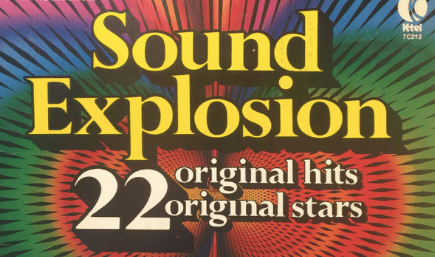 Thirteen original artists! Twenty featured songs! Springtime 2020 is witnessing an explosion of sounds, curated here specifically to ease your pandemic-induced isolation. It’s not K-Tel, but it’s the next best thing. And the best part? No groove-cramming or adverts for a bogus, non-working record selector. So get ready to add some hooks to your springtime playlists.
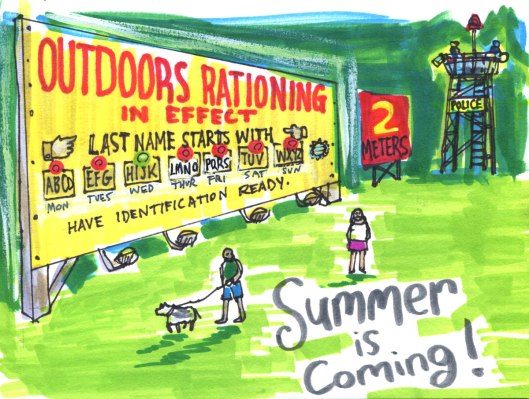 With sunshine and a hint of spring heat in the air, people are starting to think about summer. And just what is summer going to be like with face masks and gloves and social distancing? It’s going to look like a very polite zombie apocalypse, that’s what. Acerbic Toronto-based pop artist Rob Elliott colourfully captures our likely regimented future in the above graphic (check out his hilarious, biting
 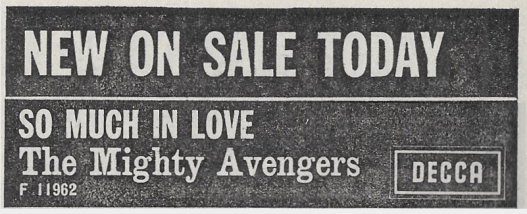 Digging through my vinyl collection I came upon a 1974 Deram/London (Decca in the UK) Records release entitled Hard Up Heroes, a compilation focused mostly on lesser known tracks from British artists from the ‘beat’ era (roughly 1963 to 1967). It’s got some cool stuff on it but the real find was a track called “So Much in Love” recorded by The Mighty Avengers. What a tune! So subtle in its earwormy effects. Now imagine my surprise to discover it was a Jagger/Richards cast off from a period when they were trying to mimic the Beatles’ songwriting largesse by giving away their excess material to other artists. And what makes the story even more intriguing is just how many acts tried to make this a hit – unsuccessfully! Most of the versions came out in the mid-1960s period, with a few in the 1970s, one in the 1990s, and then one last version in 2018. And, of course, there may be other versions I’ve yet to find. I won’t feature them all here, just the ones that take the song in slightly different directions.
 What’s not to like about compilation albums? They’re like a load of presents crammed onto one or two pieces of vinyl, or they’re akin to a kind of melody buffet tempting to you to gorge on each one. This post runs the gamut of definitive compendiums on a theme (XTC) to compilations based on style (sunshine psychpop) to diverse collections serving other purposes altogether (the Wild Honey and Lame-O collections). Let’s dig in!
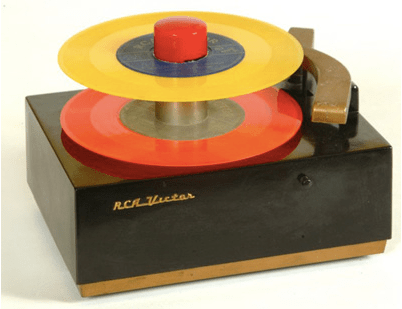 Today’s single file is bulging with digital 45s just itching for an e-spin. There’s a bit blues and rock and roll and, of course, strummy poprock in the rotation.
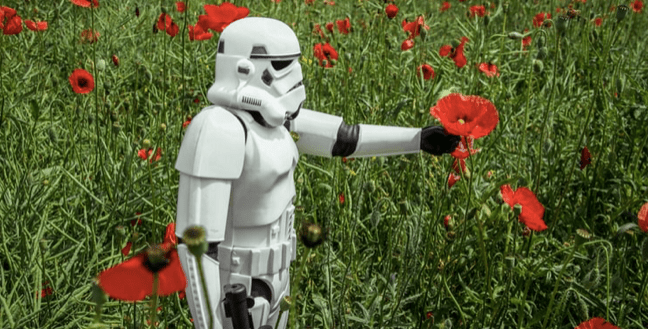 So far, the end of world sounds more like “The Sounds of Silence” than the rumble and destruction of a Simpsons-esque apocalyptic crowd waving torches. But if this is the end of the world, what should our soundtrack sound like? Not the obvious choices, obviously (yes R.E.M., I mean you). At the very least the end of times should give struggling indie artists the spotlight for once.
