
Tags
Andrew Loog Oldham, Charles Dickens, Cheek, Ian and the Zodiacs, Ian Crawford, Jagger/Richards, Johnny Chester and the his Chessmen, Roxanne Fontana, The Hitmakers, The Inmates, The Lonely Boys, The Mighty Avengers, The Rolling Stones
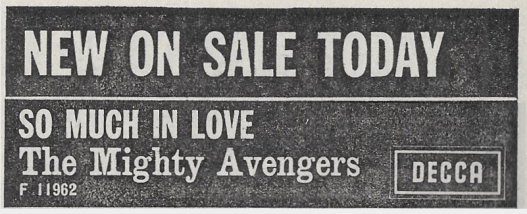 Digging through my vinyl collection I came upon a 1974 Deram/London (Decca in the UK) Records release entitled Hard Up Heroes, a compilation focused mostly on lesser known tracks from British artists from the ‘beat’ era (roughly 1963 to 1967). It’s got some cool stuff on it but the real find was a track called “So Much in Love” recorded by The Mighty Avengers. What a tune! So subtle in its earwormy effects. Now imagine my surprise to discover it was a Jagger/Richards cast off from a period when they were trying to mimic the Beatles’ songwriting largesse by giving away their excess material to other artists. And what makes the story even more intriguing is just how many acts tried to make this a hit – unsuccessfully! Most of the versions came out in the mid-1960s period, with a few in the 1970s, one in the 1990s, and then one last version in 2018. And, of course, there may be other versions I’ve yet to find. I won’t feature them all here, just the ones that take the song in slightly different directions.
In my view, arguably the ‘best’ version of “So Much in Love” was the 1964 original by The Mighty Avengers. They were a Coventry band that were briefly a part of Rolling Stones manager Andrew Loog Oldham’s stable of artists (as he attempted to mimic Beatles manager Brian Epstein’s success managing multiple acts). Oldham procured the song for them from the Stones and then produced the cut, with help from future Led Zeppelin member John Paul Jones. I love the sound of this era of British poprock and the band squeezes a nice amount of hookiness out of the tune, helped by some great plinky piano and a straight up early Moodies-style vocal.
The Mighty Avengers
Subsequent versions of the song split between more poppy and rocky takes. In 1965, three covers of the song typify this division. Australia’s Johnny Chester and his Chessman offer up a very genteel, mannered pop arrangement that stylistically would not be out of place as an Everly’s album deep cut. Ian Crawford amplifies the song’s pop elements with horns and fancy background vocals. By contrast, Liverpool’s Ian and the Zodiacs deliver a classic Merseybeat version. Three more covers in 1966 continue this trend with The Herd rocking things with plenty of soul organ, Denmark’s The Hitmakers blowing up the pop sound, particularly on the vocals, while sometime fashion photographer Charles Dickens vibes a little Beach Boys with production help from Andrew Loog Oldham.
Johnny Chester and the his ChessmenIan CrawfordIan and the ZodiacsThe HerdThe HitmakersCharles Dickens
Despite its failure in the 1960s bands would continue to keep trying to push “So Much in Love” onto the charts. Arguably the most successful was Australian band Cheek, whose 1977 version briefly made that country’s top 50. However, the band broke up shortly afterwards, having released only two singles and no album! Three years later UK pub rock/new wave band The Inmates featured a rollicking version of the song on their second album, A Shot in the Dark. The next cover came 15 years later from a band that technically didn’t exist. The Lonely Boys were created to provide the music for a fictional 1960s band featured in a 1990s book and movie of the same name. The band’s performance exceeded all expectations, producing a strong debut album and a killer version of “So Much in Love” that seemed to out-sixties the actual 1960s recordings. Most recently Roxanne Fontana turned out a peppy yet understated classic rock and roll rendition of the tune in 2018.
The InmatesThe Lonely BoysRoxanne Fontana
Discovering this great lost Jagger/Richards tune has got me thinking there has to be a Songs the Stones Gave Away collection out there somewhere, full of overlooked gems, even if their efforts did not bear the same fruit as their Merseyside competitors.
This post benefited from research insights from PopArchives.com and SecondHandSongs.
 What’s not to like about compilation albums? They’re like a load of presents crammed onto one or two pieces of vinyl, or they’re akin to a kind of melody buffet tempting to you to gorge on each one. This post runs the gamut of definitive compendiums on a theme (XTC) to compilations based on style (sunshine psychpop) to diverse collections serving other purposes altogether (the Wild Honey and Lame-O collections). Let’s dig in!
 It’s hard to believe how much Graham Gouldman has given us. Back in the 1960s he wrote such iconic hits as “For Your Love” for the Yardbirds and “Bus Stop” for The Hollies and a host of other great songs. Then in the 1970s he was one of the four talented guys that made up 10cc, contributing to hits like “I’m Not in Love” and “The Things We Do For Love.” I remember being so blown away by “For Your Love” when first heard it on Vancouver FM radio station CFMI’s annual ‘BC 500’ marathon of the top rock and roll songs in 1980 that I immediately hopped a bus to Kootenay Loop to visit a used record shop that specialized in re-issued oldies 45s. I’d barely gotten home with the single when CFMI played “Heart Full of Soul” and I was back on the bus! Over the decades Gouldman has accumulated an impressive catalogue of material, covered expertly by himself and others.
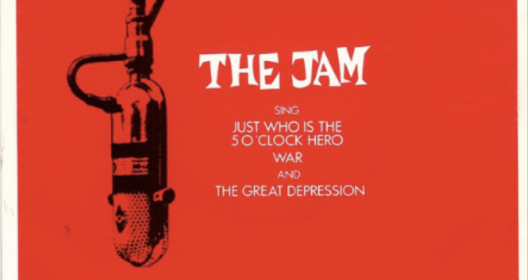 I have an unerring knack of discovering artists or bands at the very point their career is about to implode, call it quits, or forget how to write songs. So it was with The Jam. Living in my parents’ basement in godforsaken North Burnaby I somehow got wind of “A Town Called Malice” in grade 11 and I was hooked. I was an instant Jam-o-phile! The band’s tight Who-meets-Beatles sort-of new wave sound was right up my alley. From then I only got to enjoy the two extended singles (“The Bitterest Pill” and “Beat Surrender”) before they disbanded in 1982. Sure, I signed on to The Style Council and their first few records were nice but it just wasn’t the same. Not even close. But after the Style Council split I thought perhaps Weller would get back to some Jam-like stuff as a solo artist. For the most part I’m still waiting.
 Today’s single file is bulging with digital 45s just itching for an e-spin. There’s a bit blues and rock and roll and, of course, strummy poprock in the rotation.
 He’s got regular gigs already, serenading the ladies who win K-EARTH 101’s daily ‘Office of the Day’ contest in Yuma, Arizona and laying down hot licks with Dwight Yoakam’s back up band. So that might explain why there’s been no follow up to Eugene Edwards’ amazing 2004 debut album, My Favorite Revolution. But that’s a shame because the record seemed like just the first of many inventive, career-spanning releases (along the lines of an Elvis Costello or Tom Petty). I mean, listening to just this one album, man can this guy write songs!
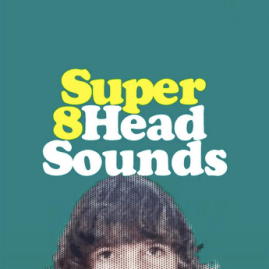 Head Sounds is another super-Cali-fantastic release from Paul Ryan aka Super 8! Imagine Ray Davies joining the Beach Boys sometime in 1968 for a one-off album outing and you kinda get the picture. Ryan aces that late 1960s California poprock sound on tracks like “Dragonfly,” with its sometimes dreamy, sometimes swinging groove and timely sentiments about ‘what if you could only live for a day’? And things just get more groovy from there. Five of Head Sounds numbers already appeared on an EP of the same name but the expansion really fills out the original sunny, sand-flecked ambiance. Dig the happy township jive animating “BoNes,” or the addictive rhythmic hook undergirding “BeBopALuLa,” as well as inspired covers of both the Beatles (“Across the Universe”) and Beach Boys (“In My Room”). There a Roddy Frame/Aztec Camera quality to “Love Like Ours,” a skipping-on-a-sunny-day feel to “Millionaire,” and a laid-back let it be vibe to “Keep the Home Fires Burning.” If sunshine had a soundtrack, it might sound like Head Sounds. Drop the needle anywhere on this disc and groove your cares away.
 No pandemic is gonna stop us twisting that radio dial to find out just what is out there music wise! Today’s featured acts take ‘moody’ and ‘strange’ in all sorts of melodic and unexpected directions.
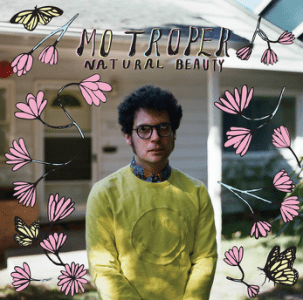 All my favourite poprock artists are growing up. Here with another 30-something pre-midlife crisis album is Mo Troper and his wrenching pain and discomfort adds up to 34 minutes of sweet sweet listening pleasure for us on his latest, Natural Beauty. Similar to Gregory Pepper (whose recent I Know Why You Cry is another winning sonic rendering of 30-something issues), Troper is toting up his 20s shortcomings with a bevy of frank, focused, but still melodious tunes. And like Pepper, Troper’s latest may be his most mature, fully realized work to date. “I Eat” kicks things off and sets the tone for the album, with its serious theme and carefully manicured production. Natural Beauty is just full of wonderfully layered sounds, strikingly varied keyboard flourishes, and an often naked honesty on the vocals front. Then again, “Your Boy” is the other side of this record, a textbook poprock masterpiece, anchored by a brilliant La’s-like jangle guitar hook at the start which just keeps mutating across piano, electric guitar and a slew of melodic vocals. This song is the soundtrack to a 1960s montage sequence where the boy meets a girl and joins a band and then a host of happy stuff happens. More serious themes emerge on “Potential,” “Lucky Devils” and “Better Than Nothing” but still they remain perky, poppy numbers. Possible influences abound here, with perhaps a bit indie 10cc or McCartney-meets-Morrissey on “In Love With Everyone” or a McCartney/Shins combo on “Your New Friend,” while “Everything” really reminds me of Apples in Stereo’s “Seems So” period. Personal fave: the new wave-ish “Almost Full Control” with its hypnotic bass work. For me, Natural Beauty is heading straight to the ‘best of 2020’ list, a must-have-the-whole-album release.
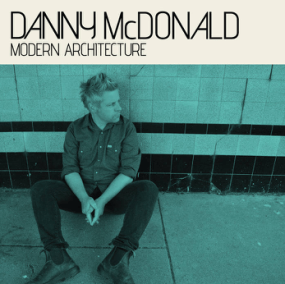 Melbourne’s Danny McDonald is a veteran of the Aussie indie music scene, playing on over 70 different projects since the early oughts. But one listen to his latest EP Modern Architecture and you’re going to be wondering where has he been? How has a guy this talented kept such a low international profile? Right out the gate, McDonald grabs the listener full force on the supercharged power pop should-be hit single, “Cordyline,” with its Big Star hooks and Brydsian background vocals. Then things rumble-guitar along nicely on the touching, rootsy duet with Anna Burley, “The Suburb I Grew Up In.” The 58 seconds of “Judge Me for my Art, Not Where I Live” sounds a lot like a punked up treatment of a great lost Plimsouls track. “Commuters Lament” vibes just a little Jayhawks while “Keeping the Dogs at Bay” is in the same vein as Richard Turgeon’s stolid stripped-down rocked-up pop. My only complaint about Modern Architecture is that is all ends too soon!
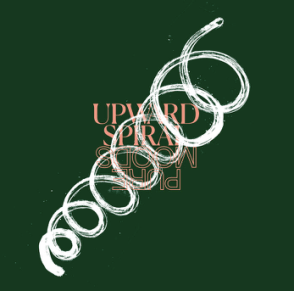 Another winning act from Melbourne is Adam Madric’s latest project, Pure Moods. On their debut album, Upward Spirals, there’s a fleeting Teenage Fanclub vibe at times, but on the whole this record is marked by a distinct sound – the rhythm guitar. More than is typical, it’s up front in the mix, anchoring the sonic portrait of the band. I love what sounds like an envelope of sound, the jangle drone, that opens the record on “Tide” and remains on “Backwards World.” Things shift gears with the title track which grooves along with a very 1970s soft rock rhythm guitar – that is until the Kraftwerk keyboards kick in and the whole thing slides in a different direction. There’s a tempo uptick on “Sideways Glance” and the jaunty “Sparkle” and both tunes shine melodically. Pure Moods’ Upward Spirals makes for intriguing, ultimately enjoyable listening with catchy songs that ride the tension between their lively musical performance and Madric’s somewhat low key, alienated vocals.
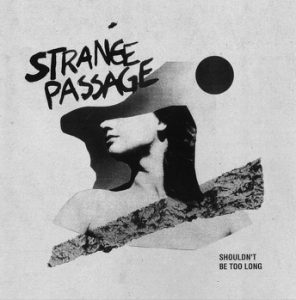 Taking a spin through Strange Passage’s Shouldn’t Be Too Long makes you realize just how good all those Morrissey solo albums could have been if they’d just sounded like this. And these guys are not even from some dreary northern British former industrial town but they’ve nailed the jangle alienation of the Mopster and his guitar pals. Seriously though, the songs here bubble with Smithian fun, like the energetic “Cloying Melody” with its rush of guitars and R.E.M.-meets-The The vocals. From the opening cut, “Idle Time,” it’s clear this is a really strong outing song-wise. Frankly, I can’t find a single track I wouldn’t hit replay on. Ok, maybe “Shouldn’t Be Too Long” seems special for cranking the sparkle on the guitars or “Ode” for being so Paul Simon doing Morrissey. Despite the comparisons, Strange Passage are not some wannabe something else band. They work this sound into something quite their own and it’s a pleasure to hear.
 So far, the end of world sounds more like “The Sounds of Silence” than the rumble and destruction of a Simpsons-esque apocalyptic crowd waving torches. But if this is the end of the world, what should our soundtrack sound like? Not the obvious choices, obviously (yes R.E.M., I mean you). At the very least the end of times should give struggling indie artists the spotlight for once.
 Shamelessly exploit an emerging health crisis for some weak blog tie-in? Not our style friends. Think of this as a public service, designed to distract you from the impending end of the world as we know it. As someone once said, if we’re going to have to go, we might as well go out singing!
 Poprock Record