
Tags
Absolute Loser, Fruit Bats, Necktie Second, Peter Droge, The Droge and Summer Blend, The Mayflies U.S.A., The Pity List, Under the Waves, Walking in a Straight Line
 An enormous amount of talent cruises through the internet everyday with yours truly discovering barely a smidgen of what’s out there. But there are times when I have to ask myself ‘how did I miss this’? Well, actually, it happens so much we have a whole department looking into it here at Poprock Record.
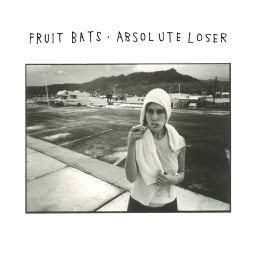 Fruit Bats is the least forgiveable because we previously featured the band’s delightful “Rainbow Sign” with its great acoustic feel and harmony vocals from 2003’s Mouthfuls. Somehow I missed their most recent album, released just last year. Absolute Loser is a more muscular effort, showcasing a full band sound. “From a Soon-to-Be Ghost Town” ripples along with just a hint of that countrypolitan sound indie bands like so much, with vocals that remind of James Mercer of the Shins. “Humbug Mountain Song” kicks off nicely enough but then suddenly introduces a hypnotic banjo riff that keeps coming back, with a smooth 1970s soft rock chorus. Title track “Absolute Loser” is a slow burn hook, with vocals that remind me of You Won’t’s unusual harmonic charms. All in all, this is one eminently listenable album.From a Soon-to-Be Ghost TownAbsolute Loser
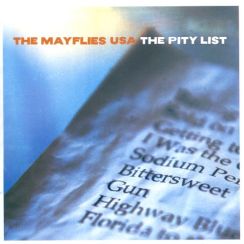 Ok, I can be forgiven for missing The Mayflies U.S.A. because they fall into the power pop ghetto that has long proved a hit with critics but a dud with mainstream audiences, at least in the period when most of their records came out. When guys like Matthew Sweet can barely register in the mainstream, there just isn’t much chance this sort of talent is going to register outside of niche circles. And that is shame because these guys (pop) rock! The songs are hooky and the vocals meld into a special kind of ear candy. Just check out the title track from 2002’s Walking in a Straight Line – churning guitar hooks and pleasantly sibilant vocals galore. Or tune into “The End of Line” from 2000’s The Pity List with its subtle but seductive hook buried at the end of the chorus. I couldn’t hit replay fast enough. “I Just Wanna Be Your Gun” is also pretty special.
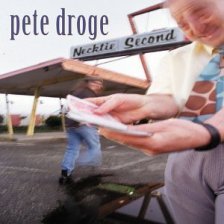 How I passed over Pete Droge is more mysterious because I actually have long owned a copy of The Thorns album he recorded with Matthew Sweet and Shawn Mullins. But I think I was going through a pretty heavy Sweet fix at the time and judged the album to be too low key. In any event, I recently stumbled across Droge in an iTunes ‘listeners also bought’ section and haven’t looked back. Droge has five solo albums and a soundtrack that are all pretty good but I find myself really digging 1994’s Necktie Second and 2008’s Under the Waves, the former channeling a mellow Tom Petty vibe while the latter has a strikingly spare acoustic demeanor.
 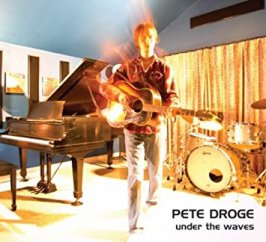 From Necktie Second “If You Don’t Love Me (I’ll Kill Myself)” reinvents the old “Mockingbird” song in an original way, all sparkling guitar lines and nicely reverby vocals. Meanwhile, I swear “So I Am Over You” comes on like a really great Tom Petty out-take. Fast forward to 2008 and the material from Under the Waves has Droge digging deep into more atmospheric territory on the title track or channeling Paul Simon circa Graceland on “Giving it All Away” with some very ABBA guitar. Even more recently his The Droge and Summer Blend project takes off in another direction, this time a folky/country harmony-rich concoction, with great tracks like “Sad Clown” and “Island.”So I Am Over YouUnder the WavesGive it All AwayIsland
Making up for lost time is a never too late proposition. Scurry on over to these web portals hosted by Fruit Bats, The Mayflies U.S.A., and Pete Droge to find out just how to catch up on their great recordings, live shows, and future plans.
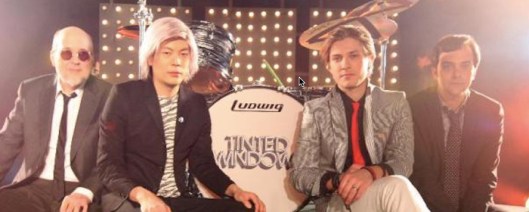 When rock critics got wind of a new supergroup forming in early 2009 that would combine talent from the Smashing Pumpkins, Fountains of Wayne, Cheap Trick and Hanson they were giddy with anticipation. But when Tinted Windows’ self-titled debut dropped in April, the gloves suddenly came off. Pitchfork called the record “hopelessly dated and irrelevant,” declaring “the whole of Tinted Windows is so much less than the sum of its considerable parts…” The review ended thus: “If there are dollar bins in the future, that’s where you’ll find this failed debut.” Ouch. Others were just as scathing. PopMatters complained that “Tinted Windows, tragically, is everything that a pop-rock disc shouldn’t be: bland, boring, and completely forgettable.” The reviewer thought the record was a “terrible, hookless affair,” perhaps “the worst album to be released in 2009 thus far.” There were more balanced reviews but they too were often hemmed in with backhanded compliments. The A.V. Club described the album as “wonderfully shallow,” Spin thought it “safe and bouncy enough for Jo Bros fans and Stacy’s mom alike,” while Rolling Stone preferred FOW more clever lyrics but allowed that “these likable tunes usually hit their modest marks.” Not exactly ringing endorsements.
 I heard about these reviews at the time but only landed a copy of the record a few months ago. Imagine my surprise to discover that Tinted Windows is an amazing debut album. Forget all the rock critic super-group nonsense. Tinted Windows are a straight-up, guitar-driven poprock group, delivering a new century take on that stripped down late 70s/early 1980s melodic rock and roll sound, with all the usual nods to the Cars, the Knack, Big Star and the Cheap Trick. Adam Schlesinger writes most the songs and you can definitely hear the Fountains of Wayne influence on tracks like “Dead Serious” with its super hooky chorus or “Can’t Get a Read on You.” But as he noted in interviews, he deliberately toned down the signature FOW wordplay for a more direct lyrical style. You can really hear this on the debut single, “Kind of Girl,” with its solid thumping poprock groove. Other members of the group contribute a few songs: James Iha gets a nice slow Cheap Trick grind going with “Back with You” while lead singer Taylor Hanson’s “Nothing to Me” has some nice Beatlesque guitar changes. But the album’s hit single should have been “Without Love,” which opens with a killer hook that just won’t let up – hands down, best song on record. The Hanson/Schlesinger composition “Take Me Back” is another strong contender for a single with some very catchy hooks in the chorus.Without LoveTake Me Back
 I don’t often get to use a word like ‘redux’ but when I do it’s definitely for collections like this. In Songs, Bond Songs: The Music of 007 twenty-five artists ‘restore, bring back’ and ‘present in a new way’ the entire canon of theme songs from the James Bond movies, with an accent on indie, poprock treatments. Why bother, you might ask? Well the Bond canon is unique in so many ways. The quality of the songs stretching over a half century is surprisingly strong and consistent. And, as is apparent from the performances on this record, they are open to broad and varied re-interpretations. Some performances here are fairly safe and unremarkable but most try to do something original with the basic raw material of their specific Bond song. I won’t comment on everything but rather just highlight what I think are the more unique, sometimes daring, and ultimately single-worthy remakes from the collection.
 This turn around the dial provides a blast of Americana in various forms, with just a dash of melodic British 1960s-influenced psych-rock.
 Matt Whipkey’s Best New Music may just be. His 2017 release is a solid album, sprinkled liberally with melodic rock influences that range from 1970s to the 1990s. The most likely single, “Aliens,” kicks off with a killer Byrds-influenced guitar introduction, but then shifts to a nice country-infused lilting number a la Wilco in hit mode. “Danielle” is another song with a great roll-out introduction, this time exuding a more Springsteen vibe. “Amy You Are Everything” has a familiar diminished chord progression that attentive listeners will recognize from so many songs (for example, Lennon’s “Happy Xmas”) but melodically pulls on the more pop elements of Springsteen’s 1980s work, with some nice jangly lead guitar. And there are many more highlights. Whipkey has an enormous back catalogue which you can purchase from
 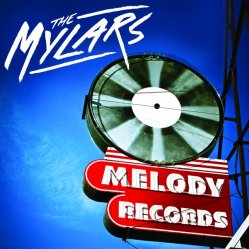 New Jersey’s The Mylars hail from that state’s Union City and named their debut album after the local record store, Melody Records. It makes sense because the record is an updated homage to that great period of American poprock, circa 1978-83. The band even offers up an inspired cover of the Cars’ “Let’s Go,” just in case you didn’t catch on. It all comes together on the debut single and video, “Forever Done,” with its wall of surging guitars and hooky, sibilant vocals. The single has a great AM radio-friendly rock and roll sound c. early 1980s, though without sounding derivative. In fact, the whole album is eminently listenable and would undoubtedly sound great live. There’s no protection from this kind of ear worm, thankfully.
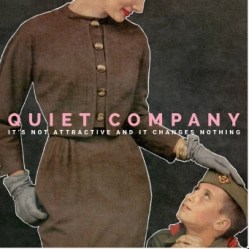 Austin’s Quiet Company have always provided more adult fare at the poprock table, adding just a bit more depth and complexity to the three minute problems that conventional singles typically handle. Though lately they’re becoming a bit darker and noticeably less quiet. 2017 witnessed the band release two EPs rather than a more conventional album, each offering up a harsher sound and seemingly harsher view of human relationships and the world they exist in. It’s Not Attractive and It Changes Nothing came out in April and its opening track “Celebrity Teeth Poacher” sounded deceptively typical of Quiet Company, at least at first.
 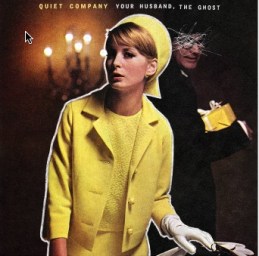 Nice acoustic guitar and melodic vocals open the song but things turn a bit more discordant in the chorus. “On Single Moms” is a nice pop single, with some great horns appearing here and there. By August Your Husband, the Ghost arrived, featuring more complex, harsh textures and messages. Melody is still there, particularly on the epic “We Should Go to Counseling,” but the listener has to work a little harder to feel the hooks. This is a band going somewhere, though they’re honest enough to admit they don’t really know where.
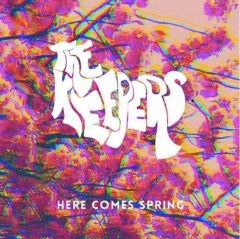 Crossing the pond with our final spin of the dial, The Keepers mine that particular vein of British poprock that stretches from late 1960s psychedelia through a variety of 1980s and 1990s indie sounds. Their new single “Here Comes Spring” is a delightful mélange of 1960s organ and fuzzed out guitars, a decidedly more slick and radio-friendly sound than their more garage rock sounding (though no less delightful) debut album, 2015’s No Exit. How this fits into a new album is not clear yet but the single is very promising. While waiting for more new releases, check out the band’s catchy remake of the Fine Young Cannibals’ “Good Thing” on
  Trying to separate out the various genres that have contributed to modern poprock is a bit hopeless. Take country, for instance. It’s right there in the rock and roll DNA of Elvis, Buddy Holly, Roy Orbison, and so many others. But country has a special relationship with poprock due to its buoyant approach to melody. Some of the greats of 1940s and 1950s country were hook masters who knew how to write a tune that would leave people singing in the shower. Merle Travis, the Louvin Brothers, Johnny Horton and, of course, the grandmaster tunesmith, Hank Williams Sr. The country rock of the late 1960s and early 1970s then was really just a return to rock and roll’s roots. And, of course, some country artists that rode the border of country pop and rock and roll never really went away in the 1960s – think the Everly Brothers or Buck Owens. Happily the tradition lives on with more recent acts mining the particular joy that is country poprock. It’s country time!
 Australia must be a magical place. So many super creative people live there and they all seem to start a new band every other week. Anthony Bautovitch is the driving force behind The Forresters, just one of many musical projects he’s had a hand in over the years (you might have heard of the Orange Humble Band). Read his blog entries about this project and it’s like all the musical royalty of Australia showed up to do something on these recordings. “Tremblin’’ is from the 2008 debut Skin Deep and strikes a more traditional country vibe but check out the cool horns that slide in half way through. “Are You Ready” is from 2016’s self-titled album The Forresters and it has a stronger poprock feel. The chorus unfolds like a 1960s dream sequence. Hooky goodness here.Are You Ready
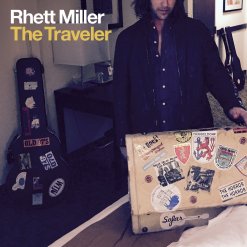 I was grooving on Rhett Miller for months before I discovered he was the lead singer for the Old 97s. “Our Love” from 2002’s The Instigator has a nice new wave aura to it, even as it takes the form of a classic country song construction. By contrast, “Lost Without You” from 2012’s The Dreamer has a more traditional country feel, if channeled a bit through Wilco. Improving with age (if that’s possible), Miller has some killer recent material, including the duet with Madison King, “Feel Like Fallin’ in Love,” and the recent collaboration with Black Prairie, 2015’s The Traveler. Love “Most in the Summertime” with its great lilting chorus line ‘Don’t give up … on me.’ The pause really makes the hook work.Our LoveLost Without You
 I was digging the Steve Deaton Three’s self-titled album from 2015 when I hit their cover of Buck Owen’s “Tall Dark Stranger.” How could I know I’d be in for the definitive treatment of the song? SDT ramp it up just enough to capture the melodic magic that was always there but latent in the rather languid original version. Really, I’m surprised Dwight Yoakam didn’t cog onto this great opportunity. But just to show that these guys are not just poprock rodeo kings, check out their fabulous, driving should-be hit single, “Open My Eyes.” Not country, but a poprock spectacular single. And these are not the only charms this album contains.
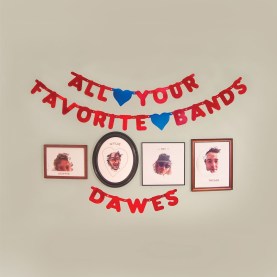 At a recent house concert in Toronto, the Sam Weber band performed “All Your Favourite Bands.” It being a house concert, the song ended and I asked them about it – and discovered the definitely alt-country/folk sound of Dawes. Early recordings like “When My Time Comes” from 2009 North Hills has the poetic charm of Bruce Springsteen’s first album while “If I Wanted Someone” from 2011’s Nothing is Wrong sounds more late period Eagles. But Dawes are hard to peg, with 2013’s Stories Don’t End serving up the very Steely Dan-ish “From a Window Seat” and their most recent, 2016’s We’re All Gonna Die, throwing in a bit more FM rock a la “Rocky Mountain Way” guitar and late Doobie Brothers vocals on “Roll With the Punches.”If I Wanted SomeoneRoll With the Punches
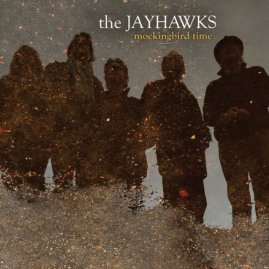 The Jayhawks were there when alt country hit the indie rock mainstream along with Wilco, Blue Rodeo and many others. We’re not going to play the obvious ones from the 1990s. These guys are masters for a reason – they’ve continued to put out solid recordings, as “She Walks in So Many Ways” from 2011’s Mockingbird Time showcases nicely. The song has a very Everly Brothers’ “Bowling Green” vibe to my ears. Oh, what the hell. “It’s Up to You” from 1997’s Sound of Lies is a pretty sweet album cut.She Walks in So Many WaysIt’s Up To You
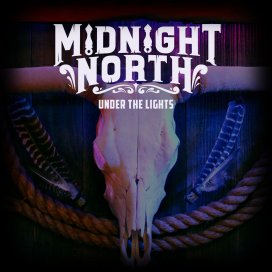 Last up is a band I just discovered this last week, San Francisco’s Midnight North. “The Highway Song” is a peppy poprock number sweet enough to appeal to any Dolly Parton fan, with a melody that is nicely echoed by some trebly lead guitar. Great lyrics here: “So meet me on a highway … where we can sing some tunes like Johnny and June ..” The whole of their most recent album, 2017’s Under the Lights, is pretty strong, with “Greene County” turning the classic leaving scenario on its head while “Little Black Dog” harkens back to a more traditional country sound.
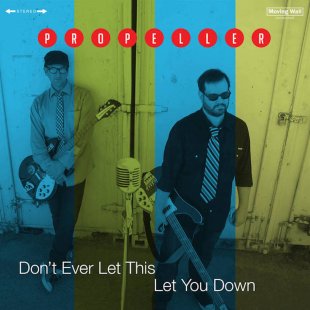 Propeller blasted into 2016 with their terrific Ramones-inflected romp, “Turn On the Radio.” Now they ‘re back with another slab of hooky 1960s and New Wave inspired tunes on their just released Don’t Ever Let This Let You Down. The record kicks off with album’s clear hit single, “Summer Arrives.” A great atmospheric opening (that reminds me of Porter Block) gives way to a yearning and sweet melodic ode to the beach season that wouldn’t be out of place on any mid-period Teenage Fanclub album. Another really catchy number is “We’re Better Than Nothing” with its alluring lead guitar work. “Little Unsteady” has the ‘ahhs’ and jangly lead guitar lines of a great Primitives or Sugar deep album cut. “Girl I Know” has a wonderful confessional Replacements quality. Meanwhile “Days Collide” is like someone took an Everly Brothers’ track and ran it through a garage rock filter, the basic magic is there but tweaked with some raw guitar amplifier voltage. The basic point I’m making here should be clear – this whole record is a solid poprock workout, one that bears repeated listening.
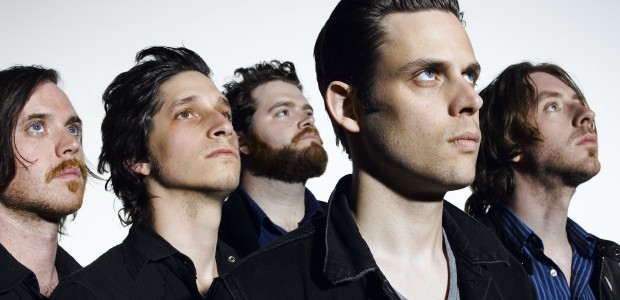 “I’m With You” should have been the song that shot Montreal band The Stills to international stardom. Instead, it was the last single they released before breaking up in 2011. And that was a shame because “I’m With You” has all the hallmarks of a classic hit single. It opens with a killer hook that sets the pace for the whole song. The vocals are shimmery and understated, seemingly just behind the beat, giving the song a sense of urgency. The single opens with a distinctive clanging keyboard sound and ends just as mysteriously. And then chorus tag line “I’m with you” just keeps echoing in your head long after the song is over. Oh well. Really, it’s such a Canadian story – good press for albums one and two with some commercial success and Canadian radio play, culminating in what appears to be a positive international reception from critics for the last album, 2008’s Oceans Will Rise, including two Juno awards (Canadian Grammys). And then break up. Well, at least we can enjoy the band’s back catalogue.

 Failing to sign with a major label in the new millenium, the band took up an interesting strategy with their next two records: both were self-released double albums. 2004’s Tangents rocks out and here the two Lund brothers’ early love of Led Zeppelin shows up, though some poprock does shine through on tracks like “Wrong.” 2008’s Songbook IV mines the power pop sound a bit more consistently, as evident on cuts like “Can’t Read You,” “Listen,” and many others. But, as an aside, check out guitarist Chris Lund’s amazing guitar chops on the solo for “Such a Ride.”ListenSuch a RideWrong
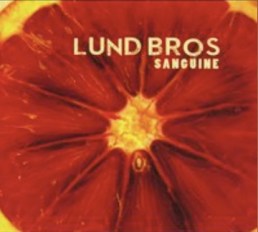 Seven years passed before the Lund Bros. returned with 2015’s Sanguine, a title meaning literally ‘cheerful amid difficult circumstances.’ Apt much? But if the band was discouraged, it doesn’t show on the recordings, which are stellar, particularly the nice cover of Badfinger’s “No Matter What.” The obvious single is the perfectly paced “Blue,” which opens with some nice acoustic guitar and then builds to a great, vocal harmony-drenched chorus. Another nice tune with a pretty amazing guitar solo is “Ballad of a Former Martyr.” The lead guitar line ripples out at the 1:15 mark with some pretty beautiful runs.BlueBallad of a Former Martyr
 New finds and fresh music from old favourites in this edition of breakings news, with an accent on unusual band names.
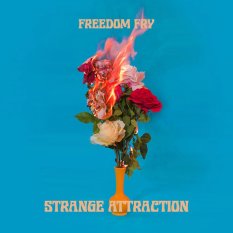 Freedom Fry keep turning out great singles. The combination of Parisian-born Marie Seyrat and American Bruce Driscoll produce a sophisticated brand of dreamy poprock, full of hooks. We previously highlighted “Stop, Stop, Stop” and their remake of Serge Gainsbourg and Brigitte Bardot’s “Bonnie and Clyde,” as well as their holiday single “Oh Santa (Bad World).” Now they’re back with a fresh, swinging slice of easy-going, car-driving, breeze-in-your-hair poprock called “Strange Attraction,” also the title track from their to-be-released EP. This song bodes well for what is to come.
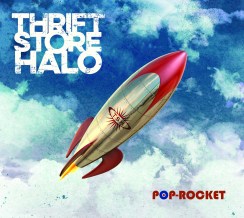 Thrift Store Halo have a great name, great artwork and a great story. And their music is pretty good too. Dial back the time machine to 1998 and TSH appear on the verge of breaking with an album in the can, major label interest, and a possible national tour with an up and coming band called Train. A few bad decisions later and the band split, members heading for law school, a lucrative art career, and home renos. And that was a shame because their only full length album, World Gone Mad, is a lost treasure. Personal fave tracks include “Crashing In” and “With You Here.” But the lure of rock and roll proved too strong and now the band is back after a near 20 year absence with a snappy new EP, Pop-Rocket. The new album sound is a bit leaner, reminding me a bit of Ike in their prime. Stand out tracks: “Get Over You” and “I’m Not Through.”Get Over YouI’m Not Through
 Sophie Allison is Soccer Mommy, a one-woman, bedroom-recording, Bandcamp phenomenon. Up to now her songs have been defined by their spare, stripped down intimacy, but on her new EP Collection Allison strikes up the band to give some old material more life and new material a decidedly more polished debut. “Out Worn” is new song that nonetheless adds to Allison’s litany of despairing lonely relationship songs but check out the languid guitar lines and sibilant hooky vocals, sometimes drifting to the dreamy side only to be righted with some great background vocals. Repeated plays definitely brings extra benefits.
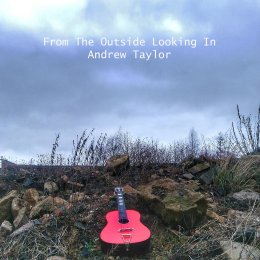 This blog loves Dropkick so there is no surprise we think the new Andrew Taylor solo release, From the Outside Looking In, is pretty special. All the Dropkick strengths are here: driving rhythmic guitars, layered lead and background vocals, and hooks a-plenty. “Someone” takes off and never quits, propelled by a strong rhythm section and some pretty sweet vocal harmonies. “Who We Really Are” channels just a hint of Teenage Fanclub with its loping pace and earnest, sweet sounding vocal delivery. “Standing Still” is a swinging dollop of country poprock. Another should-be hit album from a key member of Scotland’s most under-appreciated melody makers.
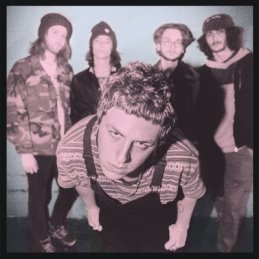 Rounding out this entry is a band I just saw open for Declan Mckenna at his great recent debut on Canadian soil: Dan Luke and the Raid. Who? Exactly. I’d never heard of them and I don’t think most of the audience had either. But from the moment they got started, they had the audience in the palm of their hand. Bowling Green, Kentucky’s latest find played a strong set of catchy tunes, most of which are still not available anywhere. So for the time being, check out “Black Cat Heavy Metal,” an ever so slightly psych-poprock number. I do look forward to the EP release, if only to hear the wonderful “Tragic Symphony” again.
 Summer’s here and the time is right for some treats. No, not the ice cream truck – musical treats. What follows are some bands I missed the first time around but have come to know through a host of fantastic Facebook music groups. Accent on melody, harmony and hooks!
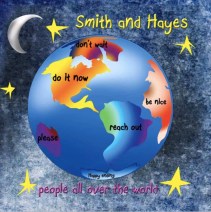 Coming back more to the present, check out Smith & Hayes lightly swinging poprock gem from their 2014 album People All Over the World, “Slow Down.” These guys emote some pretty impressive 1970s soft rock chops, a time when melody seemed inoffensive but was actually ear worm intensive. Previous albums by the band (e.g. 2007’s Changed By a Song) showcased their command of the late Beatles era sound and that work undergirds this single. From the harmonica opening, to the acoustic guitar lead lines, to the ever so subtle and building vocal hooks, you’ll be hitting repeat on this one.Smith & Hayes – Slow Down
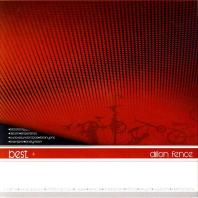 Our last treat is a bit of an outlier for North Carolina’s Dillon Fence, a group whose material usually had a bit more bite. But “Bite of an Apple” is a delightful vocally-focused lilting tune that really takes off with some nice interplay amongst vocal lines, all over top of a consistent ringing rhythm guitar. The song appears on the 2004 collection Best +. Though the band’s recording career only spanned 1991-94, this song was one of a number specially recorded in the early 2000s for this release.Dillon Fence – Bite of an Apple
