
Tags
Beat Crazy, Big World, Blaze of Glory, Body and Soul, Fast Forward, Fool, I'm the Man, Joe Jackson, Jumpin' Jive, Laughter and Lust, Look Sharp!, Night and Day, NIght and Day II, Rain, Volume 4

Before Elvis Costello, Graham Parker and The Jam, my fave angry young man of the new wave era was Joe Jackson. Look Sharp! and I’m the Man, his first two albums from 1978 and 1979, were flawless poprock. “Is She Really Going Out With Him” was a masterpiece of his spare approach to instrumentation and arrangement. Though Jackson was primarily a pianist, these records were guitar-strong, but not in an endless 1970s guitar solo sort of way. Instead Jackson put the rhythm guitar back in charge, just as the Beatles and other sixties melodic bands had done. I segued into Jackson’s more keyboard-based work in the 1980s without missing a beat, drawn in by the distinctive emotional depth of Jackson’s work compared to the other angry young men. While Costello and Parker told you about their pain, Jackson somehow let you feel it. As a young gay man in 1982, his “Real Men,” a song tackling the contradictions of gay identity, really hit home with me. And it was pretty brave to put out the song in such a homophobic time. As a result, Night and Day (1982) and Body and Soul (1984) dominated my turntable throughout the mid-1980s. I even got to see him on the Body and Soul and Big World tours when he came to Vancouver.
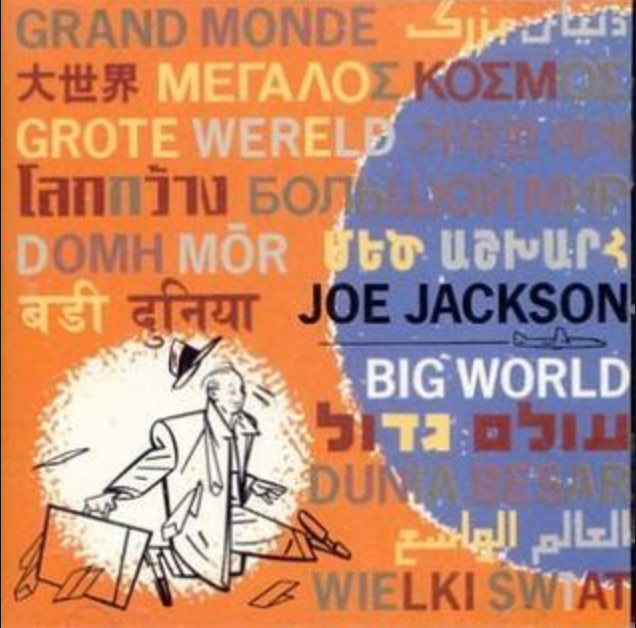
But with Big World (1986) I started to drift from Joe Jackson’s orbit. I just didn’t connect with his subsequent recordings in the same way. Years passed before I realized I’d completely lost of track of his career. Sure, I dipped in now and then to see what was out but didn’t really give his new recordings a proper listen. And in retrospect, that was a mistake because every Joe Jackson record has more than a few pretty good poprock tracks, barring the classical (1987’s Will Power) and jazz (2012’s The Duke) releases which clearly had a different purpose. As I think his early hits period is pretty well known, this post will focus mostly on the post-1985 releases. I say ‘mostly’ because I can’t help offering up a few deep cut choices from the earlier recordings. There’s “Pretty Girls” and “Pretty Boys” from Look Sharp! and Beat Crazy, respectively. I always thought “On Your Radio” from I’m the Man was an overlooked should-be hit single. All of Jumpin’ Jive is pretty special but Jackson’s killer cover of Louis Armstrong’s “Is You Is or Is You Ain’t My Baby” rocks! Night and Day put the piano up front in Jackson work, to stay, and his keyboard virtuosity shines on “Cancer.” Body and Soul is known for its unusual and delightful combination of salsa with jazz on most cuts but personally I love the cinematic feel of “The Verdict,” it’s ability to swoop down from big horns to more tender quiet moments. Speaking of movies, Jackson’s made some great contributions, particularly on Mike’s Murder and Pretty in Pink.
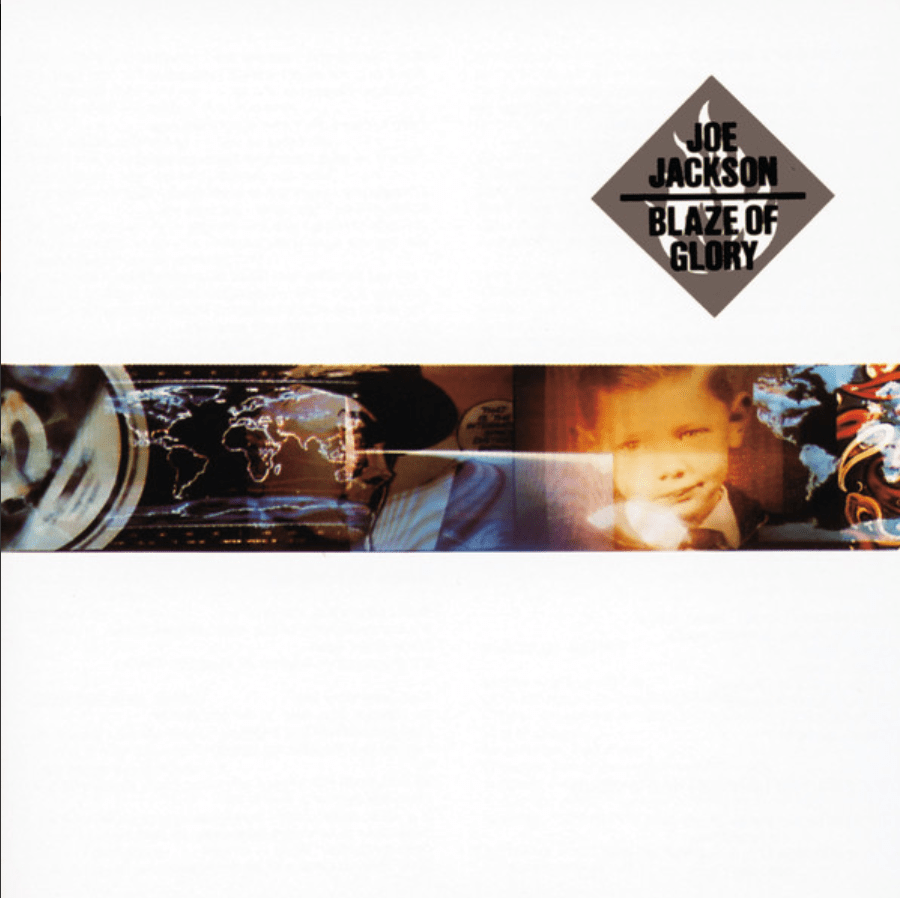
After all his previous experimentation and stylistic wandering, Big World was a return to poprock form for Jackson. Well, sort of. In another bid to do something different, he recorded the whole album live before a shushed audience! Here the standout track for me is undoubtedly “Forty Years,” a moving commentary on the uncertainty that preceded the end of the Cold War. The shifting geopolitical winds of the era animated 1989’s Blaze of Glory on tracks like “Evil Empire” but Jackson’s fascination with the emptiness of fame defined the title track and the peppy “Down to London.” 1991’s Laughter and Lust developed this further, taking aim at the shallowness of consumer-driven popular culture on “Hit Single” and “It’s All Too Much.”

Then, in a surprise move for an artist who’d always condemned nostalgia, Jackson decided to revisit his past glories with Night and Day II in 2000 and a reunion of his early band on Volume 4 in 2003. But true to form Jackson used both as platforms for more reinvention. N&DII was darker and more collaborative that the original (including duets with Susann Deyhim and Marianne Faithful, among others), with elements of techno added to the mix. Personally I like the light and airy “Stranger Than You.” Volume 4 is the band from Jackson’s first three albums but the sound is filtered a bit through all his subsequent influences. Love the dissonant jazzy feel of “Chrome” and jangle elements all over “Still Alive.”
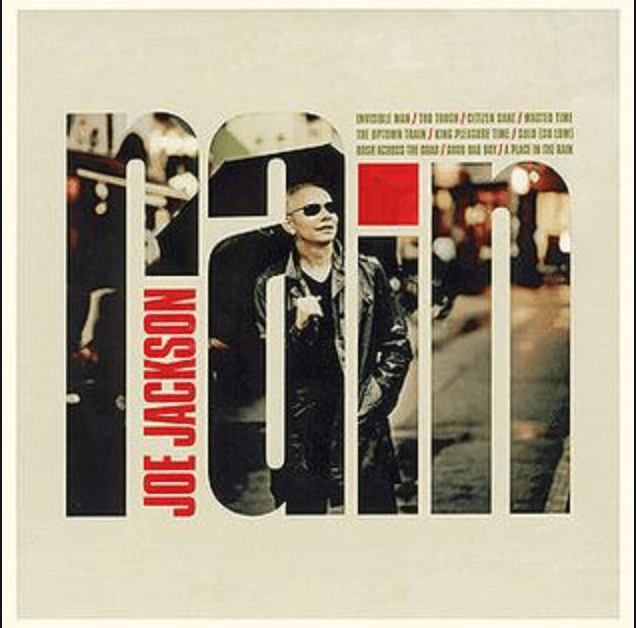
Five years later Jackson returned with the very Night and Day-ish Rain in 2008. Songs like “Invisible Man” and “Rush Across the Road” really sound like a continuation of that project while “Too Tough” pops a killer hook out of its chorus like proverbial beautiful girl out of a birthday cake. Fans then had to wait seven years for Jackson’s next poprock project, 2015’s Fast Forward, his ode to great cities like New York, Amsterdam, Berlin and New Orleans. Here I’m partial to the expansive, horn-filled “Ode to Joy.” 2019’s Fool seemed like even more familiar territory with lots of piano-led tunes and biting commentary. “32 Kisses” immediately grabbed me as classic Jackson.
I deeply admired the combo of hooky songwriting and sardonic commentary that typified Jackson’s early career. His inability to sit still creatively or tolerate fake sentiment and rampant commercialism was just icing on an already attractive cake. Now I can see he kept playing to those strength later on. Of particular interest to me (given my day job teaching politics) is how Jackson has consistently put his politics front and centre, unlike say Graham Parker and Elvis Costello where it tends to be a bit more oblique. And while I haven’t always agreed with Jackson’s positions (particularly defending smoking) his attention to matters of class and working class identity mark him out as a truly original and principled artist. I’m delighted to be reunited with his work.
Connect with Joe Jackson on his official website.



 Surely there must be a bit of friendly rivalry amongst all great songwriting teams? We know Lennon and McCartney kept each other sharp throughout the 1960s with their competitive, constantly outward-reaching creativity. But the dynamic within a host of other teams is much less clear. Chris Difford and Glenn Tilbrook are the much-lauded songwriters responsible for 15 albums of original material with Squeeze. Do they have a sense of competition in their writing? In our Finn versus Finn
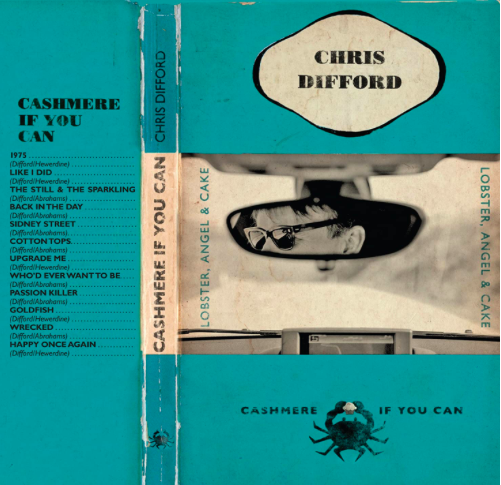 I must say at the outset that I was a bit worried about Chris Difford’s ability to compete here. Let’s face it, it’s the tunes people hum in the shower. The lyrics? Well I don’t think anyone just recites them as poetry. As the guy on the lyrical side of Squeeze’s songwriting, a lot would ride on whether he could drum up melodies as catchy and memorable as those we’ve become accustomed to from Glenn Tilbrook. Well, I’m happy to report that Difford rallied some clever tunesmiths to his cause. He even handles both music and lyrics on his 2003 debut I Didn’t Get Where I Am, which builds on the jazzy and country pop elements apparent on the 1984 Difford and Tilbrook non-Squeeze album with tracks like “Tightrope” and “Playing with Electric Trains.” By 2008 The Last Temptation of Chris put the sound back on more Squeeze-ish poprock footing. This time songwriting with former Bible frontman Boo Hewerdine, the familiar kitchen sink themes are here on “Broken Family,” “On My Own I’m Never Bored” and “Fat as a Fiddle.” By 2011 Difford is vibing glam pretty seriously on “1975” from the cleverly titled Cashmere If You Can. Personally, I love the rollicking feel of “Back in the Day” on this record and Penguin Books-inspired album artwork. 2018’s Pants goes all music hall, a bit reminiscent of the Cool for Cats sound on songs like “Round the Houses” and “Vauxhall Diva.”
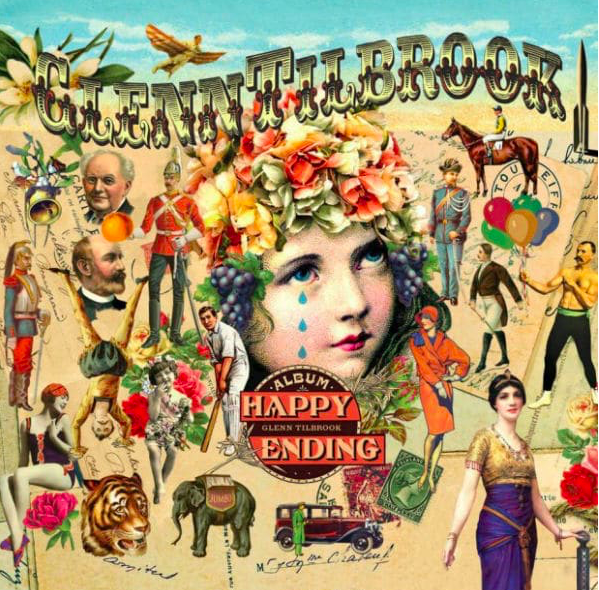 Tilbrook got the solo games going first with his 2001 album The Incomplete Glenn Tilbrook and it’s arguably the most Squeeze-like release from the duo working separately. With songwriting contributions from the likes of Aimee Mann and Ron Sexsmith perhaps that’s not surprising (though 9 of the 15 cuts are solo Tilbrook numbers). The Mann/Tilbrook cut “Observatory” is a killer, definitely hit single material. Though I’m also partial to “Parallel World,” “Morning,” and “I Won’t See You.” Three years later 2004’s Transatlantic Ping Pong kept the Squeeze vibe alive on hooky numbers like “Untouchable” and “Neptune,” adding some Nashville comedy on “Genitalia of the Fool” and a catchy instrumental with “One for the Road.” The 2008 Binga Bong EP and 2009 Pandemonium Ensued are credited to Glenn Tilbrook and the Fluffers but they don’t shift from the solo formula too much as evident on cuts like “Once Upon a Long Ago” and “Relentless Pursuit.” Tilbrook’s last solo album is 2014’s spectacular Happy Endings. The songwriting is strong and the delivery is charming, strongly acoustic with lovely vocal flourishes on the catchy should-be singles “Everybody Sometimes” and “Peter.” The artwork is pretty cool too.
 There are philosophers who will tell you that when it comes to living the good life, the journey is the real destination. But most professional musicians usually dream of actually arriving somewhere, like maybe the top of charts. Still, despite the fact that relatively few make the Top 40 (let alone number one), there are some acts that just keep soldiering on. Like today’s trio of journeymen poprockers – all continue to put out great music even though stratospheric fame has proven illusive. All the more reason to fly their flag right now!
 Imagine stumbling across someone with an album catalogue like all those great indie rock and rollers – Elvis Costello, John Hiatt, Nick Lowe, Don Dixon, etc. – delivered with a Nick Lowe or T-Bone Burnette production-style. Well, imagine no more! Michael Shelley is here and he’s got six albums or so, just brimming with melodies and sweet melancholia. I discovered Shelley as the producer of Juniper’s recent hip record and just a bit of digging revealed his own killer catalogue. If I had to boil down his sound it would be easy to slot him into the Rockpile diaspora, with its retro rock and roll, pub rock country and new wave elements. Sure, it would be obvious to compare him to Nick Lowe, Elvis Costello and Marshall Crenshaw, but think a bit further afield in this crowd, like the country pop sound of Carlene Carter’s Musical Shapes album or the poppy soul of Paul Carrack’s Suburban Voodoo (both produced by Nick Lowe). Nor can Shelley be limited to just this sub-genre, as his amazing collaboration with former Teenage Fanclub drummer Francis Macdonald in Cheeky Monkey makes clear. Contemporary comparisons of the Shelley sound might bring to mind Edward O’Connell and Richard X. Heyman.
 Shelley’s 1997 debut Half Empty nails down the formula with a moody indie vibe on “Don’t” (love the great rumbly guitar and organ – sounds so classic 1960s), strong melodic interventions with “Think With Your Heart,” “Rollercoaster” (particularly the chorus!), and “Mary,” while “Tonight Could be the Night” has a lovely Ben Vaughn simplicity. The follow-up, 1998’s Too Many Movies widens the stylistic scope, adding surfer fun (“Surfer Joan”), Beach Boy harmonies (“The Pill”), country rock (“Lisa Marie” and “She’s Not You”) and solid indie pop with “Jigsaw Girl” and “Summer, I Pissed You Away” (the latter echoing a real Marti Jones feel on the songwriting front). I love the hooks carrying “Too Many Movies” while “You Were Made to Break My Heart” sounds like the kind of obscure tunes that Nick Lowe finds to slip into his records and make sound like great lost classics. There’s even a cool song about brushing your teeth – “That’s Where the Plaque Is” – and that’s not easy to pull off! Keyboards come more to the fore on 2001’s I Blame You with the solid single “Mix Tape,” the McCartney-esque jauntiness of “Face in My Pocket,” and the Robbie Fulks playfulness of “Let’s Fall in Hate.”
 I think my favourite release from Michael Shelley is undoubtedly 2005’s Goodbye Cheater. The album veers between solid retro country and hook-laden poprock without losing its own sense of purpose. “Hurry Up and Fall in Love” and “A Little Bit Blue” mine the Buck Owens/Dwight Yoakum vein of electric guitar-picking country while the cover of the Roger Miller/George Jones song “That’s The Way I Feel” and the instrumental “Ha Ha Ha Ha Ha” actually have a more western feel. On the poprock side there’s the early Elvis Costello vibe to “We Invented Love,” “Move Along,” and “Goodbye Cheater.” Or there’s the Bacharach pop swing of “Suddenly Free” and the Monkees-meets-Simon and Garfunkel elan of “Out.” There’s even a winning instrumental in “Goofball.” 2012’s Leftovers offers up a winning collection of cover tunes and unreleased and live material – check out the great covers of Bobby Fuller, NRBQ, and Teenage Fanclub as well as quality demos of “Don’t” and “Goofball.” Shelly’s most recent release is the 2015 collection of instrumentals entitled Jimmy’s Corners (check out “Ahmed’s Best” and “Back of the Country Squire”). Surely fifteen years after his last album of conventional songs, we are due for some new Shelley material? The answer is yes.
 Astro Chicken is the moniker that Barney Miller (no, not that guy) has used for the past 25 years for both solo and group efforts, the latter with John Laprade and brother Mike Miller. His story is textbook late 1990s rock and roll: multiple labels, missing the curve of what’s (momentarily) hot, then solo releases, breaks, and now some new tunes. Gotta admire the stamina! 1997’s debut release was the Disposable EP and right away you can practically see the Elvis Costello fingerprints all over the should-be single, “So Can I.” 1998’s Sugarwater takes things in a new direction with “Waste” sounding very Odds, “Honeymoon” acing the Beatles background vocals with a killer, insistent “Getting Better” guitar chime, while “Nothing Around for Me” is faintly Crowded House. 2001’s Almost Anywhere takes yet another turn, this time leaning a bit country in a Blue Rodeo or Jayhawks sort of way, which you can really hear on “Blame Yourself” once it gets going.
 From there, the drive to chart success stalled for a bit, with Miller releasing just two essentially solo albums between 2005 and 2018, still under the Astro Chicken label. But the solo work really provides an insight into the breadth of Miller’s songwriting. 2005’s Sweet Truth is alternatively hilarious and introspective, all the while harbouring a lightly stoked sense of outrage. Anchored by acoustic guitar and a Graham Parker vocal delivery, the record offers acerbic commentary on death (“My Funeral is Gonna Be Packed”) and popular culture (“F You American Idol”), sometimes vibing Fountains of Wayne (“Soak Up the Night”) or E from the Eels (see ‘Funeral …’) or an Imperial Bedroom era EC (“I Am Not Blue About You”). 2018’s National Detective Agency Miller describes as album of leftover Astro Chicken demos, tarted up for release, along with a few new tunes. A lot here is stripped down Americana, like the Wilco-ish “Try” and the pretty acoustic guitar number, “Change Your Mind.” “Lock It Up” also has a nice hooky, easygoing swing. Which brings us the present: with Mike and John back with the group, the band’s brand new 2020 EP is Black Balloon. Check out the title track, a nice rocking tune with a solid Tom Petty feel to it.
 Tulsa native
 You can get a good sense of David Burdick from his 2016 release Under the Influence, which contains songs recorded throughout his decades-long career. As far as I can tell, “Letters” first came out in 1983 and it’s a masterpiece of a single, with fantastic lead line guitar hooks and poppy vocals. This should have been a monster hit! “I Can’t Sit Still” captures that late 1970s new wave reinvention of 1960s poprock, “Let’s Go for a Ride” has a great Lou Reed-tude, while “Independence Day” is a departure with its early 1980s The Fixx atmosphere. If you go digging, Burdick has a collection called Relapse with more great tunes, like the jangle-laden “Sister,” “Look at it Rain” with its hypnotic guitar riff, and the hilarious “Redneck Zombies.” A lot of Burdick’s various band recordings are pretty rough but the Sins Tailor songs were clearly professionally done. Personally, I love the ringing Brydsian jangle on “Morning Calling.” If you want to mainline rock and roll authenticity, hook yourself up with Burdick’s work.
 A skip through the six songs that comprise Alien Sunset, one might be tempted to cast it as a mini-Hollow Ground, minus a bit of the polish. There is some overlap, with reworked versions of “Don’t Want to Say Goodbye” and “Like Going Down Sideways.” But the EP has distinct charms of its own, like its lovably ragged indie quality and a kind of insurgent pop urgency to the tunes (particularly apparent on the title track). Or the way that the stripped down “Like Going Down Sideways” sounds like a melody-pumped take on Leonard Cohen. Some of Cut Worms’ country balladeering roots show up more here on cuts like “A Curious Man.” And I particularly like the original “Don’t Want to Say Goodbye” which sounds a bit folkier or roots-era Everly Brothers.
 Fast forward to 2020 and Cut Worms is extending his songwriting range, stretching out the development of the tunes into an early 1970s country rock mode. His new single, “Unnatural Disasters” takes it time delivering the hooks, first creating a solid backdrop of a laidback Bacharach-style country theme. But this subtle tune pays repeated listens. B-side “Baby Come On” is a winner too, though perhaps more direct in its melodic payoffs. There’s something so familiar about the song’s cadence, its arrangement, but the final product is still somehow fresh and timeless. Can’t wait to see how these new songs will factor into a new Cut Worms album.
 When last we left our hero he had just released a smash new album,
 Pepper has a McCartney-esque facility with different musical styles, ranging from music hall (“Smile”) to musicals (“Mayor’s Tomb”) to heel-clicking danceable poprock (“Do Sports”). “Whoa Dude, Whoa” has a deliciously ominous vibe, like the soundtrack to mid-1960s secret agent movie. Then he gets his wist on with lovely piano pieces like “(Isolation)” and “Finite Thing” (though the latter has a nice blow up half way through). “Recluse Abandon” really showcases Pepper as a master melodian, squeezing hooks into the tightest song spaces. The bonus tracks allow things to stretch out a bit. Particularly noteworthy is an extensively reworked version of “Funny, Eh” (originally from the Dad Year recordings), this time a little less manic and bit more ornate (in a good way).
 I can get wild. Sometimes. Ok, let’s face it, any genre boundary-crossing I’m doing still involves a lot hookyness, even if there’s some guitar distortion, yelly vocals, or an amp cranked past 11. Cases in point – today’s featured acts. They’ve got dialed up guitars and discordant singing or some cool stylistic weirdness going for them. And it works!
 The self-titled debut album from Juniper is a blast of girl power circa 1963, complete with roller coasters, badly behaving boys, and crushes galore. There’s a spooky kinship here with the distinctive girl singers sound of Linda Scott’s “(I Told) Every Little Star,” the Angels’ “My Boyfriend’s Back,” Skeeter Davis’ “Gonna Get Along Without You Now,” and just about any track from Lesley Gore’s Golden Hits. Tracks like “Boys! Boys! Boys! Boys! Boys!” “Girls Just Want a Boy To Rest Their Head Upon,” and “Gotta Draw the Line” could easily slip onto any 1960s Connie Francis or Brenda Lee LP. But the album also takes those influences in a more contemporary direction, sounding very early Go Go’s on “Kids on the Corner” or vibing a low key 1980s pop psychedelia with “I Don’t Want to Dream About You.” “Punk Rock Boy” and “Everybody has a Crush on Chad” even veer into well-behaved rock and roll (with a touch of glam on the latter). Single? I’d go with “Best Kept Secret,” a hooky poprock delight with just hint of off-kilter indie charm, evoking more recent artists like Jeanines or Lisa Mychols. But then again I’m pretty partial to “Sticking with Henry,” a retro workout that somehow sounds so fresh and now. Credit here has to go the album’s producer and musical director, Michael Shelley, who wrote or co-wrote eight of the record’s twelve songs, and assembled a dream team of players from bands like the Mekons, the Smithereens, Los Straightjackets, Look Park, and many others.

