
 Gregory Pepper is no stranger to Poprock Record. We’ve lauded his early work (“Gregory Pepper is not a problem”), tested the audience reaction to his many changing moods (“The Pepper challenge: Classic Greg versus New Greg”), and included his tunes on themed blog posts (“Celebrity poprock: What’s in a name?“). We’ve even shamelessly name-dropped him and his talents when we’re featuring other artists. But now we can offer you more, much more – a veritable ticket to Pepperland! Now you can see inside the creative process of this superlatively talented artist by joining his Song of the Week Club on Patreon or Bandcamp. Every Friday Pepper posts a new song and the website features Pepper sharing insights into his creative process, answering fan queries, and trading quips with the creative people who’ve signed up to support him.
 Now I know what you’re thinking. You’ve seen these sort of crazy K-tel-esque offers before and they just seem too good to be true. Oh, it all starts off nice but after a few weeks of genuinely new material the whole operation degenerates into live album outtakes and crude demo tapes. But hey, would I steer you wrong? As your poprock curator I’ve already sampled the goods and I can assure you everything has an address on quality street. The Song of the Week Club got its start July 4 with the anthemically timely “Going Back to the U.S.A.” Since then he’s produced 14 wholly new poprock gems. By special permission from the head Pepper himself, I can showcase some of this new material here to whet your appetite.
 Only 14 songs into his 52 song odyssey and already the wide range of material presents too much choice. But the four songs below I think give you a sense of what Gregory Pepper is doing. The songs capture his musical dexterity, sublime lyrical creativity, and sense of fun. “Sublime Sun Tattoo” has a late 1950s, early 1960s melodrama pop sound, with a lyric devoted to exploring Enya’s possibly castle-fed loneliness. “Worrier Spirit” has very Elvis Costello melodic subtones circa Punch the Clock to my ears. I love the way the guitars charge out of the gate, only to drop out with the vocals, the great pulsing organ, and the theramin/Quinn Martin Productions sound that appears at the three-quarter mark, capped by a cool James Bond chord ending. It’s the little details that make these such melodic masterpieces! “Give Yourself a Hand” has a great swinging feel with sweetened vocals that add just a touch of light to the desperate drabness so typical of a bachelor party trip to the strip joint. “Two Speeds” showcases Pepper’s mastery of different stylistic eras, with some nice Merseybeat touches, particularly the guitar riff and the overall song structure. I gotta stop here or I’ll give away the store.Sublime Sun TattooWorrier SpiritGive Yourself a HandTwo Speeds
And the price? Just $4 a month for a new tune every Friday. That is some crazy bargain. Of course, you can always offer to pay more. Hustle over to the Patreon or Bandcamp sites and sign up today – you won’t regret it.
 When rock critics got wind of a new supergroup forming in early 2009 that would combine talent from the Smashing Pumpkins, Fountains of Wayne, Cheap Trick and Hanson they were giddy with anticipation. But when Tinted Windows’ self-titled debut dropped in April, the gloves suddenly came off. Pitchfork called the record “hopelessly dated and irrelevant,” declaring “the whole of Tinted Windows is so much less than the sum of its considerable parts…” The review ended thus: “If there are dollar bins in the future, that’s where you’ll find this failed debut.” Ouch. Others were just as scathing. PopMatters complained that “Tinted Windows, tragically, is everything that a pop-rock disc shouldn’t be: bland, boring, and completely forgettable.” The reviewer thought the record was a “terrible, hookless affair,” perhaps “the worst album to be released in 2009 thus far.” There were more balanced reviews but they too were often hemmed in with backhanded compliments. The A.V. Club described the album as “wonderfully shallow,” Spin thought it “safe and bouncy enough for Jo Bros fans and Stacy’s mom alike,” while Rolling Stone preferred FOW more clever lyrics but allowed that “these likable tunes usually hit their modest marks.” Not exactly ringing endorsements.
 I heard about these reviews at the time but only landed a copy of the record a few months ago. Imagine my surprise to discover that Tinted Windows is an amazing debut album. Forget all the rock critic super-group nonsense. Tinted Windows are a straight-up, guitar-driven poprock group, delivering a new century take on that stripped down late 70s/early 1980s melodic rock and roll sound, with all the usual nods to the Cars, the Knack, Big Star and the Cheap Trick. Adam Schlesinger writes most the songs and you can definitely hear the Fountains of Wayne influence on tracks like “Dead Serious” with its super hooky chorus or “Can’t Get a Read on You.” But as he noted in interviews, he deliberately toned down the signature FOW wordplay for a more direct lyrical style. You can really hear this on the debut single, “Kind of Girl,” with its solid thumping poprock groove. Other members of the group contribute a few songs: James Iha gets a nice slow Cheap Trick grind going with “Back with You” while lead singer Taylor Hanson’s “Nothing to Me” has some nice Beatlesque guitar changes. But the album’s hit single should have been “Without Love,” which opens with a killer hook that just won’t let up – hands down, best song on record. The Hanson/Schlesinger composition “Take Me Back” is another strong contender for a single with some very catchy hooks in the chorus.Without LoveTake Me Back
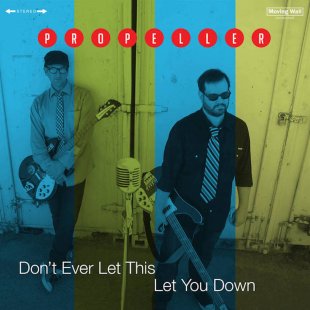 Propeller blasted into 2016 with their terrific Ramones-inflected romp, “Turn On the Radio.” Now they ‘re back with another slab of hooky 1960s and New Wave inspired tunes on their just released Don’t Ever Let This Let You Down. The record kicks off with album’s clear hit single, “Summer Arrives.” A great atmospheric opening (that reminds me of Porter Block) gives way to a yearning and sweet melodic ode to the beach season that wouldn’t be out of place on any mid-period Teenage Fanclub album. Another really catchy number is “We’re Better Than Nothing” with its alluring lead guitar work. “Little Unsteady” has the ‘ahhs’ and jangly lead guitar lines of a great Primitives or Sugar deep album cut. “Girl I Know” has a wonderful confessional Replacements quality. Meanwhile “Days Collide” is like someone took an Everly Brothers’ track and ran it through a garage rock filter, the basic magic is there but tweaked with some raw guitar amplifier voltage. The basic point I’m making here should be clear – this whole record is a solid poprock workout, one that bears repeated listening.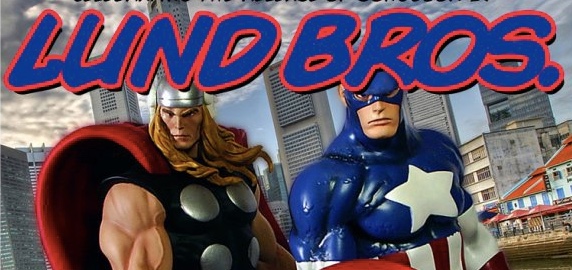

 Failing to sign with a major label in the new millenium, the band took up an interesting strategy with their next two records: both were self-released double albums. 2004’s Tangents rocks out and here the two Lund brothers’ early love of Led Zeppelin shows up, though some poprock does shine through on tracks like “Wrong.” 2008’s Songbook IV mines the power pop sound a bit more consistently, as evident on cuts like “Can’t Read You,” “Listen,” and many others. But, as an aside, check out guitarist Chris Lund’s amazing guitar chops on the solo for “Such a Ride.”ListenSuch a RideWrong
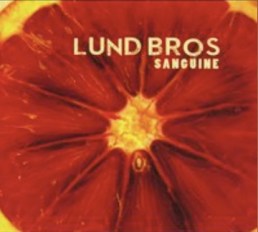 Seven years passed before the Lund Bros. returned with 2015’s Sanguine, a title meaning literally ‘cheerful amid difficult circumstances.’ Apt much? But if the band was discouraged, it doesn’t show on the recordings, which are stellar, particularly the nice cover of Badfinger’s “No Matter What.” The obvious single is the perfectly paced “Blue,” which opens with some nice acoustic guitar and then builds to a great, vocal harmony-drenched chorus. Another nice tune with a pretty amazing guitar solo is “Ballad of a Former Martyr.” The lead guitar line ripples out at the 1:15 mark with some pretty beautiful runs.BlueBallad of a Former Martyr
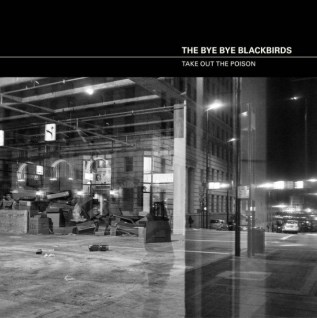 Bradley Skaught’s Bye Bye Blackbirds combine the west coast, late-1960s sound (e.g. Byrds, Buffalo Springfield, etc.) with some of Tom Petty’s southern rock and roll heft to produce a solid album of killer tunes on their new Take Out the Poison. The latest record departs from the more slick, high production sound of previous releases like 2013’s We Need the Rain and 2011’s Fixed Hearts (both great albums, BTW) for a more laid back, rootsy feel. “Earl Grey Kisses” sets the tone, opening things in a spare fashion with some great bass and a bit of guitar lead line, building to some nice harmony-drenched hooks in the chorus. Vocals are really to the fore on a lot of the songs on this release. Check out “Duet,” a lovely single with Lindsay Paige Garfield sharing vocals (and adding a nice country element) on some clever musical wordplay or the super harmony vocals on the Tom Petty-ish “Baby We’re Fine.” Speaking of Tom Petty, the previously released “Let Your Hair Fall Down” appears here and it oozes a great Petty vibe. Other influences could be noted – the Elvis Costello-y “Wasted” or hauntingly Big Star/Elliott Smith-like acoustic guitar and vocals on “I Meant to Write” – but the songs really stand on their own as compositions. A surprising highlight of the record is the band’s cover of Bill Monroe’s country and western classic, “Poison Love,” delivered here with a rootsy rock and roll verve worthy of Nick Lowe, Dave Edmunds or Elvis Costello in a more Memphis mood.
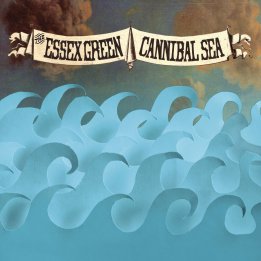 Essex Green is band that seemed to come to the brink of stardom only to disappear. Their third album, 2006’s Cannibal Sea, was widely praised by critics and built on their growing fan base. They seemed well placed to take off. Then nothing. In a recent interview with
  The songcrafter is an artist within the art form, a creator with a particular aptitude for inhabiting any style. They can and do write across genres. And they typically produce a lot of stuff. Here we focus on just two brilliant songcrafters.
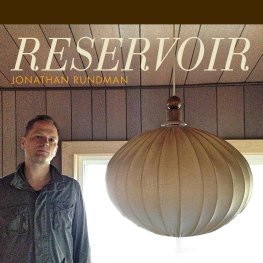 Jonathan Rundman is a totally original artist. He comes from a place few of us can readily identify with – growing up in a remote rural Finish-American religious community – and it gives him a unique way of seeing rest of us. His music is infused with a kind of topical spirituality, an assumption of our ultimate interconnectedness, but it is so subtly in the mix that it doesn’t grate the way so much Christian popular music does. This is evident in songs like “Daniel and Peter and Thomas” which is just a great poprock song or even in the more obviously churchy “This is my Commandment,” which pulls off the Christian insight but not at the expense of the song.
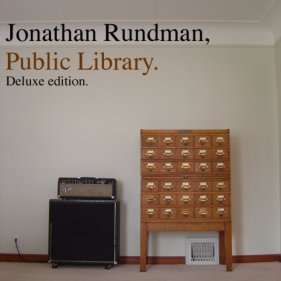 Over a 25 year recording career Rundman has crafted an enormous body of work. His
 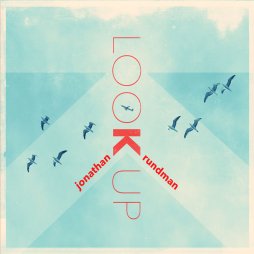 Or there is Lost Songs, yet another compilation, this time bringing together a host of songs from various out-of-print Rundman albums. “I’ve Got a Problem” breaks open with a more conventional rock and roll sound but quickly resolves into something more poppy with some nice fattened up vocals. Meanwhile “Johnny Horton” pays tribute to the great country artist in a style reminiscent of Peter Case. Another Rundman compilation brings together songs he’s recorded over the years with his cousin Bruce Rundman. Here songs range from the lovely folkie “Omaha” to the more poprock “Nancy Drew.” I have two more songs I’m totally loving from JR: “Second Shelf Down” from his 2015 release Look Up, a wonderfully crafted single, and the tantalizingly brief and Fountains of Wayne-ish “Minneapolis” from 2000’s Sound Theology. It should be obvious by now, you can start just about anywhere with Rundman and come up with some pretty great tunes.
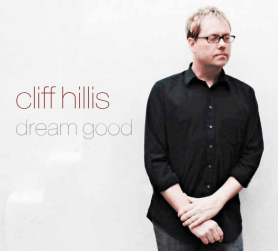 When I first discovered power pop blogs on the internet one artist seemed to be featured everywhere: Cliff Hillis. They just couldn’t get enough of him. There didn’t seem to be enough superlatives to capture what he was doing. I had to check this guy out. And then I heard “Keep the Blue Skies” from 2012’s Dream Good. Now I was choked up with superlatives! The song is a calculated pop masterpiece: the roll out is perfection, the guitars and piano come in as if under some conductor’s direction, but then the vocal kicks in and the hooks multiply – poprock bliss. The lead guitar work is pure Marshall Crenshaw in his prime. The whole record is great, particularly “Sing it Once Again” and “Start Again.”
 In catching up with his catalogue there are just so many highlights. 2001’s Be Seeing You kicked off his solo career, featuring a slew of great songs, particularly the hooky “Me and You.” Sadly, the record is not widely available. 2004’s Better Living Through Compression mixed up the sound, with poppy tracks like “Home,” the more surging rocking of “Go Go Go,” and the languid pop of “All These Memories.” The Long Now from 2008 sounds a bit more power pop, very Matthew Sweet at times, on songs like “She Sees” and “Like an Island” but at other points the record exudes a 1970s soft rock vibe, as on “Follow You Anywhere.”
 Since 2014 Hillis has focused on releasing EPs rather than albums and in more rapid succession than his previous releases. 2014’s Song Machine opens with the lovely strummy ”Dashboard,” a subtle bit of dark pop that builds ever so slowly. The EP also contains the alt-country tinged “Tonight,” a song I could easily hear the Jayhawks covering. 2016’s Love Not War opens with its title track and it is a brilliantly arranged pop confection, with wonderfully distinctive choices on the instrumentation. I also love the piano and country-folk pacing on “Don’t Drown the Wind” and the late 1970s polished pop sound of “A Boy Downtown.”
 All of which brings us to Hillis’ latest EP, the just released Many Happy Returns. In many ways, it marks a distillation of all his many interests and influences: 1980s poprock (“Many Happy Returns”), 1970s soft rock (“Superfluous”), a bit of 1990s indie rock (“Time an Evangelist”), and 1960s Beatles (“Hey Pretty Face”). Again there is just so much that is good here, it’s hard to single something out. But pressed, I would choose the amazing “Never in a Million Years,”: a solid poprock gem with a great hooky guitar opening and some nice organ. And all this just scratches the surface of Hillis’ output – check out his
  Just stepped out the Tardis, back from a quick trip to San Francisco circa 1967 and I could swear I heard Daisy House blasting out of some greasy spoon on the Castro. They’re that authentic. Welcome to Daisy House. If you love Joni Mitchell, the Mamas and Papas, the Byrds, Buffalo Springfield, or Crosby, Stills, Nash and Young, then you are going to want to stay awhile. I went to their bandcamp site to download just a few choice cuts but ended up buying it all – they’re that good. It’s not just that they emote a particularly addictive blend of 1960s folk rock + killer harmony vocals, the songwriting is also first class. Daisy House are a father and daughter duo, Doug and Tatiana Hammond, with dad writing and playing on nearly all the songs while both provide vocals. Over four albums, they have developed their clear influences into an impressive body of work.
 The debut is simply 2013’s Daisy House. The basic formula is here: twelve string acoustic and electric guitars, a celtic twist in the songwriting, with vocals reminiscent of Joni Mitchell (on “Ready to Go” and “Cold Ships”), the Mamas and Papas (on “Two Sisters”), and Richard and Linda Thompson (on “The Bottle’s Red”). The Byrdsian influence is particularly strong with dad’s vocal on “Statue Maker.” 2014’s Beaus and Arrows reproduces the ambience of the debut, with a few new surprises, like a very early solo Paul Simon atmosphere on the Salinger-inspired “Raise the Roof Beam Carpenter.” I agree with Don over at
 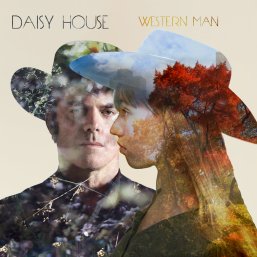 Things break out in new directions with 2016’s Western Man. There is an eerie mystery to the musical ambiance of the opening track, “Lilac Man,” that signals a significant stylistic shift. “Yellow Moon Road” expands the duo’s palette to include more 1960s garage rock sounds, particularly some cool organ. And the songs are amazing. “Like a Superman” has a clear Mamas and Papas stamp, “She Comes Running to Me” is lathered with great harmonies, while “Twenty One” opens with a deliberate homage to “When You Walk in the Room” before branching into its own original sound. But the album’s highlight is undoubtedly the hit single-worthy “The Boulevard.” You can just hear Mama Cass belting it out while the Wrecking Crew provides the crisp, swinging backdrop – except that it is not those amazing performers, it is these amazing performers: Daisy House.
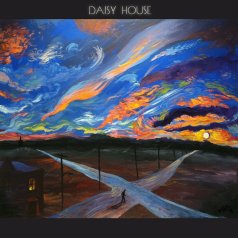 This year’s Crossroads is another breakthrough for the duo, putting their sound more solidly on the rock side of folk rock. On “Languages” Tatiana sounds like a young Chrissie Hynde. This is the hit single, but there are many more highlights. The title track, “Crossroads,” has some Tom Petty Wildflowers-era bite while “Leaving the Star Girl” ramps up the Byrds influences. Dad is featured vocally on the evocative Paul Simon-esque, acoustic-based “Pristy Lee” and the more Byrdsian “The Girl Who Holds My Hand,” both strong songs and performances. But the highlights for me, beyond the obvious single (“Languages”), are two Tatiana vocals, the Kate Bush-like atmosphere on the beautiful and haunting vocal of “Albion” as well as the more Chrissie Hynde delivery of “Night of the Hunter.”
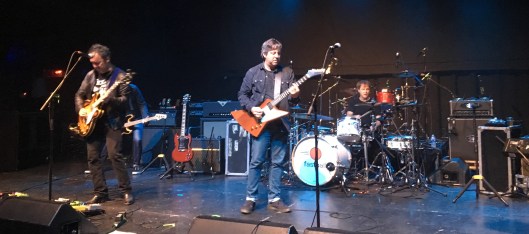 Are you a fan of Fastball? If you love straight up rock and roll with a keen sense of melody, you should be. Fastball is another band that I somehow missed when they broke out in the 1990s and have only just discovered recently. Now when you mention Fastball to people they nearly always know “The Way” and that’s about it. Sure, it’s a great song but I’m not even sure it’s the best song on that album, let alone the defining moment of their career. This is band that just keeps getting better and better with each album release.
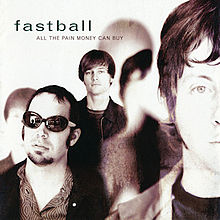 Their debut album from 1996, Make Your Mama Proud, lays out the basic genius at work here. This is a band that gels solidly around the rock and roll combo fundamentals – solid beat, hooky lead guitar lines, and a generous helping of harmony vocals – captured nicely in the featured tune here, “Seattle.” Then came their breakout album, 1998’s All the Pain that Money Can Buy with its monster single “The Way.” Personally I prefer “Fire Escape,” “Slow Drag,” and the brilliant “Out of My Head.” The band followed up that hit album with The Harsh Light of Day, a record that really pushed the development of their sound melodically and sonically (let those guitars ring!), apparent on tracks like “Don’t Give Up On Me.” But audiences didn’t take to the new sound and sales fell off precipitously.
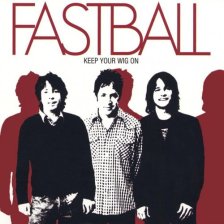 The band pressed on in 2004 with what might be their greatest achievement, Keep Your Wig On. The songwriting on this record is amazing, with Petty-esque brilliance on tracks like “Perfect World,” and “Our Misunderstanding,” or the easygoing, almost Eagles-like confidence of “Someday” or “Mercenary,” or the Mexicali fun of “Red Light.” Five years later, Little White Lies took the band into a more melody-drenched direction and the should-be hits are many: check out the James Bond undercurrent to “Little White Lies,” the great swing of “Mono to Stereo,” or the nice Beatles’ touches and bouncy piano on “She’s Got the Rain.”
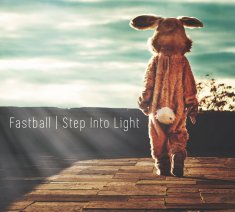 Fast forward to 2017 and Fastball are back after an absence of eight years with what I am prepared to boldly declare may be their best record yet: Step Into Light. The record blasts off with “We’re On Our Way,” a rocking number with a few ELO flourishes on the keyboards. Vocals give way from the more rough-hewn Mike Zuniga to the oh-so-smooth Tony Scalzo on the next track, “Best Friend,” a song that screams hit single with its propulsive, driving hookiness. Other candidates for hit single include the Beatlesque “I Will Never Let You Down” (with its great video!) and the very catchy “Just Another Dream.” The care in choosing the instrumental mix on this record is impressive. Check out the nice guitar bits on “I Will Never Let You Down” that echo George Harrison’s simple and straightforward guitar lines on a host of mid-career Beatles records. Or the jaunty acoustic guitar that anchors “Behind the Sun,” clearly an homage to McCartney’s felicitous picking on tunes like “Mother Nature’s Son.” I could go on. Suffice to say, there isn’t a bum track here – if you like one song, you’re going to want the whole album.
 They’re Feltworth, actually, a puppet band with a plausible backstory and a couple (literally) of killer tunes. The whole concept is brilliant and funny but what aces the deal is that the music is no joke. If they sound a lot like Canadian indie poprockers Sloan, well that’s just the rumour mill for you. Here’s the pitch: Feltworth, a quartet of cat felt puppets (another fab four, though here ‘fab’ is short for fabric) allegedly have been working the kids music scene for years but now have turned their back on the tots for more adult fare. You can get the whole elaborate and amusing story in a recent interview with
  Poprock Record