
 People write me about their music and most are spot on in terms of getting what we’re doing at Poprock Record. As long as what you got is melody-heavy, we can find some room for it here!
 Case in point – Blake Jones and the Trike Shop. As you can hear from their recent Make album, these guys are wonderfully weird. Bit of Talking Heads and Devo in their quirky inventiveness. Then again, some They Might be Giants is there too in terms of humour, wonderfully captured on “My Soft Rock Girlfriend.” I’m not into art for art rock’s sake so thankfully the band takes a lot hooks with them as they walk on the wild side, evident on “At Every Train Stop” and “Take a Look at the Stars.” But my personal fave on the record is the boppy “Alchemy C’mere.”
Soft Rock GirlfriendAlchemy C’mere
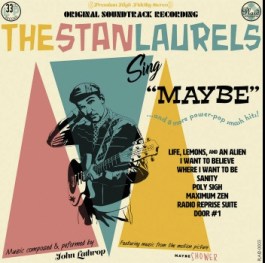 John Lathrop is The Stan Laurels, a one man, cinematic distillation of Beatles influences c. 1966-67, with a Jeff Lynne-esque sense of ambition. His back catalogue contains an album, EP and a movie soundtrack, the latter featuring both incidental music cuts and actual songs. Early tracks from 2009’s Death of the Sun like “Lovebirds” and “If I Walked with the Dead” have a great psychedelic pop vibe. But with 2013’s Bill and Theodore soundtrack there’s new depth to the recordings, particularly with the very-present banjo on “Blue Song” or the lovely acoustic guitar on “A Million Miles High.” Then Lathrop takes satirical aim at early 1960s stalker pop with the alternatively hilarious/horrifying “DAMN, I Shot My Baby (Again).” “Jack the Car Back” is one of the particularly engaging instrumental/incidental music numbers. The Stan Laurels’ new album Maybe, another soundtrack (this time for the film Maybe Shower), is perhaps the best yet. Lead off single “Maybe” is a slow groove, hooky number with Harrisonian undertones here and there – a great poprock single! I also like “Life, Lemons and an Alien.”
 Variously described as psych Scouse-pop and Scousedelia, the connection to the Liverpool music scene appears to be strong with Annexe the Moon. Though to my ears, these guys have a got a softer, more dreamy pop sound than I typically identify with rough and tumble Scousers like The La’s, Cast, and The Real People. It’s always good to challenge my assumptions about such things! Early releases like “Ever Meaning Less” and “Bring You Down” almost sound Moody Blues-ish to me, particularly on the vocals. The sound gets more complex on the bouncy “1000 Miles from Hollywood” and the most recent single, “Full Stop.” The latter is really a tour de force of sonic layering, echoing some of the best 1980s keyboard-based poprock bands.
If you have some great poprock to share, drop me a line. I’m listening! In the meantime give Blake Jones and the Trike Shop, The Stan Laurels, and Annexe the Moon a bit more of your precious time.
 Excuse me, I’m having a D.A. Stern moment here. Sometimes when you’re clicking through hundreds of new tunes by all manner of artists something just jumps out as strikingly original and different, just a bit off the poprock beaten track. That would be the new album from D.A. Stern, Aloha Hola. Oh, all the usual influences appear –the Beatles, Beach Boys, 1970s mannered radio pop, 1990s indie, etc. But you get a sense from the execution here that Stern’s endearingly oddball personality makes all those influences different, without necessarily becoming eccentric. The album opens with some nice trippy pop numbers – “Am I Ever On Your Mind?” and “Bluegenes” – with ever so shoegazey vocals. But then Stern shakes things up with tracks like “In Pain” and “When I Said That You Were Right” that draw on different song forms and add more weight to the vocals. For instance, “When I Said There You Were Right” has a great Rubber Soul-era Beatles acoustic shuffle, artfully laying a load of bitter lyrics over a bed of musical pleasantness. “Spirit of New York” changes things up again with sunshiny pop quality that says single to me. There are other moments where Stern really does channel a lovely Teenage Fanclub vibe, like on “Miami” and “Isn’t It Obvious?” the latter from a maxi-single released a month after (and not included on) the album.
 We do occasionally rock here at Poprock Record. But we seldom rawk. The long hair, the spandex, it’s just not our thing. But there are a few border cases, bands on the edge of rawk yet anchored by strong melodies. Today’s crew all have their amps cranked up to eleven but the hooks are still there.
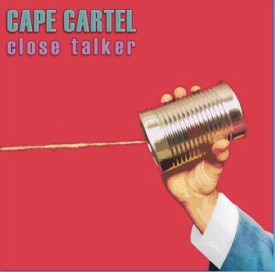 Now that it looks like spring has finally sprung it’s time to fill the playlist with some swinging, vocal swirling, feel good music. Cape Cartel deserve a strong ‘add’ to your rotation with their delightfully sunny “More.” Just hit play below and tell me, honestly, isn’t everything just a little bit brighter? With guitar lead lines dripping like a sonic waterfall, and intricately layered vocals that rival the best of the Moody Blues, this little gem is the stand out track on the band’s recently released debut album. Oh, there are other highlights on Close Talker. The record effortlessly ranges across multiple styles: a bit of jazz and folk, a dose of blistering rock, even some Jack Jones Hawaiian vibes, and throughout there are wonderful vocal arrangements. For instance, I’m also keen on “No One to Bear,” “The Great Indoors,” and “Feeling Cursed.” But get started with “More” – it’s the solid single.
 Ever since Bonnie Jo Mason first warbled “Ringo, I Love You” back in 1964 there’s been a regular outpouring of musical love for the famous. Some serious, most not, with a great deal of it amounting to little more than hopeful AM radio opportunism. Some are so clever, you can’t tell if the songs are sincere or mockery. Nick Lowe produced a lovely tongue-in-cheek tribute to one uber-famous teen sensation in the 1970s with his “Bay City Rollers, We Love You,” though, tellingly, he kept his name off the 45 (it was credited to the Tartan Horde). But another approach combines genuine admiration with a proper sense of fun. After all, loving the famous shouldn’t be taken too seriously!
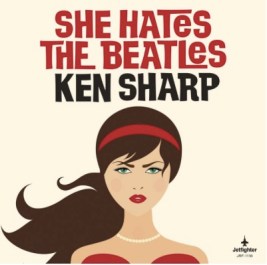 I got started on this theme after hearing Ken Sharp’s fab new single, “She Hates the Beatles,” thinking I could whip up a post focusing on songs about the Beatles. But that went bust quickly. There weren’t that many songs, surprisingly, with most of the good ones written by ex-Beatles themselves! Heading back to the thematic drawing board, I decided to broaden the focus to include songs about the musically famous more generally, stopping short of Beethoven. Now I could gather a solid handful of tunes. Sharp led the pack with his aforementioned new single.
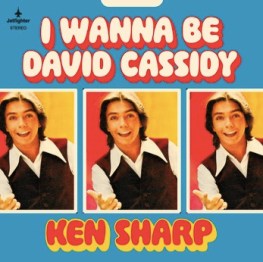 This guy is one impressive dude: longtime music journalist, author of numerous books on great musical acts, and a not too shabby songwriter and performer. “She Hates the Beatles” is the product of challenge from producer Fernando Perdomo, who provided the title and push to turn it into a song. The result is a wonderful, definitely Beatlesque, pop song. The only real concern here is how the protagonist got into this clearly doomed relationship at all! Sharp also secured our number two position with his hooky homage to David Cassidy on “I Wanna Be David Cassidy.” This single hits all the Partridge Family marks, maybe better than the original. The amazing of-the-period-style artwork on these two singles is also worth mentioning.
 Ah, the telephone. That iconic 20th century technology is all over the rock and roll canon, mostly in its original analog form but with a few recent smartphone additions. Plenty of obvious telephone songs to choose from in terms of hits: The Marvelettes’ “Beechwood-45789,” ELO’s “Telephone Line,” Blondie’s “Call Me,” Tommy Tutone’s “867-5309,” and many, many more. There’s also a slew of less obvious yet popular niche tunes like the Nerves’ “Hanging on the Telephone,” Nick Lowe’s “Switchboard Susan,” and R.E.M.’s “Star 69.” But in this post I wanted to feature some less obvious material, either with songs that focus on key aspects of the phone experience or by lesser known but certainly deserving artists.
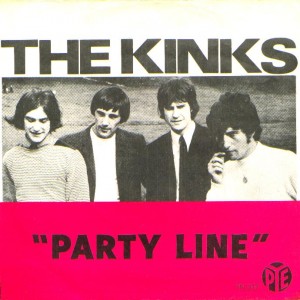 “Party Line” appeared on the Kinks’ 1966 album Face to Face and even saw release as a single in Norway (it was the B-side of “Dandy” everywhere else). Leave it to the Kinks to go right for the classed aspect of the modern phone experience, no surprise really given Ray Davies’ lyrical attention to social issues. Nearly everybody from a working class background in the 1950s and 1960s had a party line, a cheaper phone service that you had to share with other households. Like “Dead End Street” and “Picture Book” the song catalogued the not-so-hidden injuries of class in 1960s England, in this case the indignity of the singer’s failed efforts to make a private call. At one point he even mock threatens, “I’m not voting in the next election if they don’t do something about finding out who is on my party line.” One can definitely hear the cross-pollination of Kinks/Beatles reciprocal musical influences on this tune, particularly on the guitar work.
 The Records debuted with a pretty great album, 1979’s Shades in Bed, featuring should-be hits like “Starry Eyes” and “Teenarama.” The record also featured “The Phone,” which opened with a classic operator voice-over announcing “I’m sorry, but that number doesn’t answer. Would you please try your number again.” The singer bemoans the phone’s ability to bring food, love and possibly danger but not necessarily connection. In contrast to such serious themes, Rupert Holmes showcases the lighter side of 1970s telephonic tunes on “Answering Machine” from his 1979 album Partners in Crime. In the late 1970s answering machines were just taking off as mass market items and Holmes’ protagonists play an early game of telephone tag with a marriage proposal and response, including the distinctive (and jarring) message-ending beep.
 But enough of the past – there are some great recent telephone songs too. Twin Peaks kick up their heels on the rollicking “Telephone” from their 2014 album Wild Onion, a song that sounds so light but recounts love lost via the phone line. Mo Kenney also finds the phone a barrier to communication with her significant other. From Kenny’s 2014 release In My Dreams, the song has some great lines, both lyrical and melodic, and a great
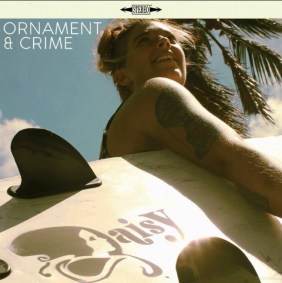
 Daisy House are an American treasure. They know the past, they breathe the 1960s, but they somehow make it all sound new and relevant for now. Their latest album is Bon Voyage, the last installment of what the band’s musical visionary Doug Hammond calls their “modern Amerikan trilogy” (which includes Western Man and Crossroads). The record is another tour de force of sophisticated songwriting, inventive instrumentation, and breathtaking vocals, creatively stamped by the 1960s but not stuck there. Remember when you could listen to a whole album by your favourite artist without wanting to needle drop your way to the hits? Daisy House is that kind of band. Get comfy because Bon Voyage is a pleasure cruise from beginning to end.
 Got the heads up on Daisy from Don over at
 Sometimes you run across a band’s new song and then discover a whole fabulous back catalogue of musical adventures. Just seems greedy to keep that hook-filled past under wraps. So today we celebrate the present and the past musical accomplishments of this crew of poprockers.
 Ok, truth be told I didn’t actually run across any brand new material for Ed Ryan. It’s just that I realized he had been in the ‘should write about’ pile for too long. Ryan goes way back – to the 1970s and 1980s with various power pop bands. That must be why his two recent solo records sound so accomplished. From the blistering guitar opening of “Everything is Going to be Alright” to the achingly sweet vocal on “Heartbreak in Disguise” you know you’re in good hands on 2016’s Roadmap. This is an eminently playable record, and you don’t even have to turn it over! I’m particularly fond of the mid-1960s British beat group vibe all over “Bridges are Burning” and the way a basic rock and roll sensibility is art-rocked up on “Elvis’s World,” with its wonderfully kooky instrumental break. Then 2017’s Furious Mind is even more blistering out of the gate with “You’re My Kind of Fun,” and even more achingly sweet on “Lullaby.” If there’s a difference, I get the sense that Ryan really pushed up the Beatles’ crossfader on these recordings. “Here I Am” has some lovely late-period Beatles’ touches on the instrumentation, while “Drifting” has such an early period Beatles song structure, particularly in the verses. Other highlights for me would include “Rocket Ship,” which sounds very Ramones-fun to me, while “So Hard to Know” offers a nice acoustic country-ish turn. But my fave is the melodic rocker “Can’t Drag Me Down.” Can’t wait to see what Ryan comes up with for 2018!
 Brad Peterson has described his style as ‘garden shed rock and roll.’ Well he has some pretty complex and impressive results coming out his backwoods Chicago DIY garden recording studio. I mean, I love DIY but it usually sounds a bit more rudimentary than the polished stuff Peterson is offering up. Case in point: his new record Ellipsis sounds like any number of major label indie offerings with songs like “What the Heart Will Allow” and “Unbroken.” But it’s the more poprock hooks that really get me. I’m currently addicted to the ear worm stamped “Clap Your Hands.” This one is so simple but still simply irresistible. “Far Off Places” and “Just In Time” also showcase Peterson’s melodic chops while “See You on the Other Side” exudes a Springsteen-esque weariness, complete with aching harmonica solo. It always feels good to feel this bad. And if you like this, there’s more in the back catalogue. 2009’s The Ductape Album has a song that is so Steve Miller I could have easily mistaken “More” for the master, though the Beatlesque bridge might have given the game away. And then there’s “Beat Myself Up” from 2006’s The Red Album, a pretty special single featuring some subtle Everly Brothers’ hooks and harmonies.
 Joe Adragna’s work with The Junior League is an exquisite composite of 1960s to 1980s poprock motifs. His recordings are full of hidden treasures, subtle homages to all sorts of great artists and recordings. His new album Eventually is Now showcases this nicely with its opening track, “Teenage Bigstar,” which delivers just what the name implies. Or dig the very subtle Mamas and Papas background vocals on the album’s single, the infectious “I Only Want to Begin Again.” Another radio-friendly, hook-filled single would be the country-rock-ish “Someday.” But the whole record is a pleaser. Digging into the band’s catalogue there are just so many great songs to highlight. The debut, Catchy, from 2006, is loaded with should be hits: “The Beautiful Room is Empty,” “Hear My Voice,” and the hooky tour de force “I Don’t Believe in Love.” Or the melodic rootsy feel of “Keep it Home” from 2013’s You Should Be Happy, which also features the heartbreaking duet, “I Don’t Think I’m Kidding This Time.” “Also Rans” from 2015’s Also Rans has a sweet country rocking feel. And this just scratches the surface of this band’s great back catalogue.
 I get mail! Jeff Litman wrote last week to let me know about his new record Crowded Hour so I gave it a listen. “Only You” grabbed me as the obvious single, with its 1980s melodic torch rocker vocals and sweet lead guitar lines. I also really liked “Disappear,” a nice spare acoustic ballad. Wasn’t long before I was digging through Litman’s past recordings – holy cow! Some great stuff on all his previous releases. “Primetime” from 2015’s Primetime has a very early Elvis Costello sheen. 2012’s Outside has a host of poprock shades, bit of John Hiatt on “Don’t Do That,” Tom Petty on “Don’t Want to Talk About It,” and more touching acoustic balladry with “What Hasn’t Happened Yet.” Litman’s 2009 debut Postscript sounds very Michael Penn to me, particularly on tracks like “Anna” and “Everything You’re Not.” But then things break out in a cool late 1970s rock mode with “Detroit Lawyer” and “Knock Me Down.”
 This edition of Breaking News is all about new albums by artists with a strong track record. Hopes are high and possible disappointment is being held at bay. From Minnesota to Scotland to California to Italy, the poprock news is good. No, cancel that – great!
 I can’t get enough of Jeremy Messersmith. I only just discovered last year’s ukulele masterpiece and then his back catalogue and now he has a new record out and it’s fantastic too. Late Stage Capitalism is the latest installment in Messersmith’s enigmatic, intellectual poprock quest. Any casual listen reveals this man has a way with a tune. What seem like deceptively simple songs at first reveal melodic depth on repeated plays. Listen to how “Purple Hearts” ebbs and flows, softly sneaking up on our melodic sensibilities and then letting the hooks spill out everywhere. This is sing-along, fist-pumping, feel-good masterpiece. But Messersmith’s lyrics are something else too: tender, bittersweet, droll, sometimes biting. This guy is a less acerbic Morrissey or Stephen Merritt, an intelligent guy’s intelligent guy but with plenty of heart. Check out the sad yet sympathetic portrait exhibited in “Fast Times in Minnesota” or the sweet, Cyrcle-esque bounce of “Monday, You’re Not So Bad” with its Fountains of Wayne wordplay. I don’t know whether capitalism really is in its late stage or not but I do know one thing – this record is a winner.
 The new Dropkick album is out and the Teenage Fanclub and Jayhawk vibes are striking, particularly on radio-friendly “It’s Still Raining.” Longwave is the band’s fourteenth album since 2001 and it continues in the vein of low key acoustic guitar-based tunes that mark the group’s style. BBC Radio Scotland called them “Scotland’s finest alt-country power-pop band” but I think of them more as strummy, melodic poprock, in a low gear. Exhibit A: “All I Understand” is a sweetly swinging song, with subtle hooks. Oh there is country, sure. “Blue Skies” is a lovely slow country crawl. But there is so much more: the uptempo feel of “Fed Up Thinking of You,” the Byrdsian jangle of “Even When You’re Gone,” and the lovely spare acoustic treatment on “Turning of the Tide.” Altogether, this may be my favourite Dropkick album.
 A new Linus of Hollywood album is something to savor. The songs are always tightly packed musical gems with strong hooks, sparkling instrumental performances, and surprising arrangements. Cabin Life is no exception, a lush-sounding assortment of hooky AM radio-friendly should-be hits. Title-track and opening cut “Cabin Life” makes my point. LOH lulls us with a spare opener and then adds successive melodic and musical elements to build up the song, constantly shifting the listener’s attention – in a good way! Other songs put their poprock blast up front, like “At All.” This is a tune whose lyrical bitterness acts as counterpoint to its buoyant pop melody. “Wasted and in Love” sounds like the hit single to me with distinctive guitars that sound like they’re popping out of the speakers and strong melodic hooks. And this album’s ‘sounds most like Glen Tillbrook’ award goes to very Squeeze-like “Won’t Let it Get Me Down.” Excuse me while I hit repeat on this super new album.
 The new record completes the shift to a more poprock sound under the expert production of The Posies’ Ken Stringfellow. “How to be Your Friend” kicks things off with an edgy guitar teaser before settling into more melodic vein with some nice vocal arrangements. The killer riff that opens “Frustrated” harkens back to their mid-period rock sound but the chorus is pure poprock. “Milk and Honey” is the pick for single for me, with a very smooth AM radio-friendly set of hooks. The band digs out the organ for the swinging “Sweet as Punch” and caps off the record with the title track “Someplace Better,” a jaunty instrumental. The Sick Rose were always great but, given my tastes, I think they’re getting better with age.

