
Tags
Edward O'Connell, Elvis Costello, Every Precious Day, I'm the Man, Nick Lowe, Our Little Secret, Pretty Wasted, Tom Petty, Vanishing Act
 Sure, when you first hear Edward O’Connell you get the Costello vibe, you get it bad (by which I mean you get something good). You might even think “Hey, this guy is putting out the albums I wish Elvis Costello would …” But the seemingly familiar Costello ring to the songs, to the vocals, to the turns of phrase is so much more than simply reminiscent. O’Connell has taken the inspiration and made it his own. And there is so much more influence afoot in his two albums of material: a bit of Matthew Sweet, a dash of Peter Case, even some Marshall Crenshaw and, of course, Nick Lowe and Tom Petty.
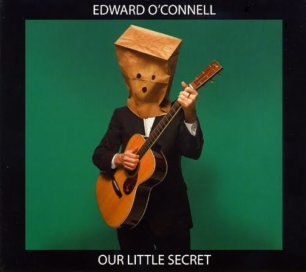 His debut record from 2010, Our Little Secret, is a solid start: a host of great tunes and a cover riffing off of Nick Lowe’s Jesus of Cool album and the unknown comic. “I Heard It Go” has a great turnaround in the chorus, “Cold Dark World” has wonderfully shimmery vocals, “We Will Bury You” is trademark Costello country, while “All My Dreams” sounds like a lost track from Imperial Bedroom. But the standout song on this album for me is the majestic “Pretty Wasted.” A real gem that exudes equal parts Elvis Costello and Graham Parker, with a lovely Nick Lowe lyrical sleight of hand with the line ‘She’s pretty wasted … pretty wasted on you.’ Pretty Wasted
 Four long years passed before O’Connell’s sophomore effort, Vanishing Act, emerged in 2014, but it was worth the wait. The album kicks off with strong material in “My Dumb Luck” and “Lonely Crowd” but the third tune, “Every Precious Day,” is a master class in poprock songwriting: killer guitar riff opener, great Tom Pettyish vocals, with just a hint of Crowded House in the swirling organ and guitar work at the 2/3 mark. Other highlights include “Severance Kiss” (with another great guitar opener), “Odds Against Tomorrow,” “Yesterday’s World,” and “Last to Leave” with its exquisite low tempo atmosphere. “The End of the Line” deserves to be featured if only for its surprisingly aggressive guitar opener that then melds seamlessly into a super midtempo poprock number. But my favourite song on the record is the witty Nick Lowe-ish “I’m the Man,” a sad tale of a man who ‘should have seen it coming’ with his death-obsessed partner.
Besides the music, the best thing about O’Connell is the back story: intrepid university lawyer by day, poprock genius by night. Here’s a guy who trolled in the Washington D.C. rock and roll scene for decades, playing back up for various people, while holding down a legal day job, but finally decided to put his own creative efforts at the forefront rather late in life (at least according to the standard rock and roll biography). Better late than never, indeed.
Looks to be a strong live performer as well: here you can see him doing “Lonely Crowd” solo in Bethesda, Maryland.
Find out more about Edward O’Connell on his website and Facebook page.
 I was minding my own business enjoying John D. Macdonald’s The Quick Red Fox when the protagonist Travis McGee pulled into Sausalito as part of his latest adventure and suddenly I was thinking of a song I hadn’t thought of for decades: Diesel’s “Sausalito Summernight.” I distinctly remember hearing this song on the radio in 1981 and playing it at some of the first high school dances I deejayed for a mobile sound company. Diesel joined the lonely ranks of Dutch hitmakers in the United States, groups like the Shocking Blue (“Venus”) and Golden Earring (“Radar Love,” “Twilight Zone”). Looking back now, the song sounds incredibly tightly focused and executed – the addictive lead line that propels the song never lets up, the multilayered vocals are drenched in reverb, and so on. It’s like a soft drink that is just too sweet. But I still love it.
 In the late 1980s and early 1990s I had the pleasure of acting as a roadie of sorts for a guitar-god friend of mine whose band had a brief blast of Canadian music fame. Bruno Gerussi’s Medallion was the brainchild of Vancouver Province rock writer Tom Harrison, an outlet for his love of 1960s garage rock and various forms of 1970s alternative rock and roll. In 1989 they were signed to WEA Canada and released one album, In Search of the Fourth Chord.
 They took their name from Canadian actor Bruno Gerussi, who starred for 18 years as Nick Adonidas, a beachcomber on British Columbia’s coastline in one of the Canadian Broadcasting Corporation’s most successful shows, The Beachcombers. At the same time he hosted a cooking show where he would wear a very large medallion around his neck, thus the name of the band. I was at the show at the Town Pump in Vancouver where Nick actually met the band and heard some of their music. I’m not sure it was really his style. As a band, BGM showcased all the classic 1960s and 1970s underground sounds but, frankly, sounded too good to be garage rock and too polished to be punk, while Tom’s singing was more like talking. Reading the liner notes for BGM’s sole album, the record sounds surprisingly coherent given the changing line-up of players. In terms of songs, both “Ginger’s Alright” and “Tell Me What You Found” stand out for me, the former for the tune and the latter for the musical arrangement. Ginger’s Alright Tell Me What You Found
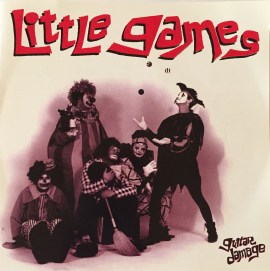 BGM eventually morphed into Little Games, a moniker taken from the Yardbirds’ record of the same name. However, their recording contract with WEA lapsed and Little Games’ only record, Guitar Damage, would be released on the band’s own BGM Record label. And that was a shame, because in so many ways Guitar Damage was a more solid record. For instance, unlike BGM, Little Games had a stable line-up of players, Tom was actually singing more than just talking his way through the songs, and the song selection itself was strong in terms of covers and original material. I particularly liked the band’s composition “Muswell Hill Ray,” a name-dropping tribute to songs by the Kinks’ Ray Davies, as well as their cover of the Standells’ garage rock classic, “Sometimes Good Guys Don’t Wear White.” Muswell Hill RaySometimes Good Guys Don’t Wear White
 My new favourite music blog,
 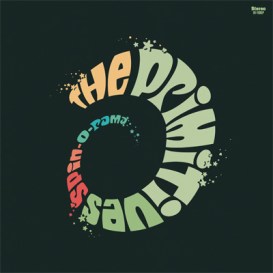 But Spin-O-Rama, released in 2014, marked the return of the Primitives in all their glory. Roughly 30 minutes of all-new, original material in their signature chimey-guitar and reverby vocal style – it was like they never left. The opening track is the album’s title track: “Spin-O-Rama” is a classic Primitives’ arrangement featuring trebly solo guitar and a feel that is reminiscent of the 1960s without being reduced to it. A great single! Other strong, single-like songs include “Lose the Reason” (with vocals from both Tracy and Paul), “Petals” (which sounds like it fell off the running order of either of the first two albums), and “Dandelion Seed.” Other highlights include “Follow the Sun Down,” with its great chunky 60s vibe, and “Working Isn’t Working,” a droll response to the drudgery of conventional work, sung by Paul. Primitives’ albums always featured a song or two sung by Paul but Spin-O-Rama increases the ratio: of the 11 songs here, Paul sings solo on three and with Tracy on two. Additionally, Paul also sings on the extra track paired with the single “Spin-O-Rama,” “Up So High,” which is driven by a fantastic buzzy guitar sound. The album wraps up with an altered reprise of the title track in “Let’s Go Round Again.” It is refreshing to have such a great band return to active duty in top form. The Primitives’ Spin-O-Rama does not disappoint. Keep up with the Primitives on their
 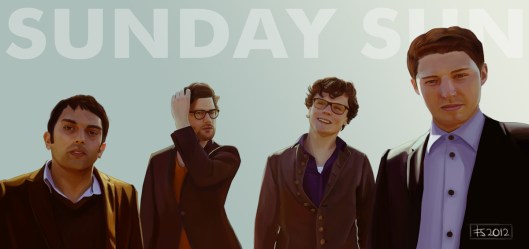 Sunday Sun capture the pure joy that can be the best of poprock. Their songs often have an uplifting quality that encourages repeat listening. I have had this reaction before, like the first time I heard “One Step Ahead” by Split Enz or “Another Nail in My Heart” by Squeeze or “Teacher Teacher” by Rockpile. I just couldn’t wait to hear them again.


 I discovered Ike Reilly just this last year, a week after he had appeared at the Drake Hotel in Toronto in support of his latest album Born on Fire. What an opportunity missed! But Reilly is not new on the scene, with recordings as far back as 2001, and performing career stretching back to the late 1980s. Imagine Bruce Springsteen meets hip hop, but by someone who could really pull it off. That guy is Ike Reilly. His material has all the great rock and roll vibes accompanied by an effortless alternating talk/singing style. Like Springsteen, Reilly gives voice to the sense of hopelessness and desolation facing working class communities in the face of catastrophic job losses and a general lack of political leadership. And like Bruce, he manages to capture the vignettes that make a life: the broken promises, the failed adventures, the unfulfilled potential.
 From the three albums attributed to just Ike Reilly (there are three more with his backing band The Ike Reilly Assassination) I count at least nine must-listen tracks, though I feature a few less here. From his most recent Born on Fire “Am I Still the One For You” and “Underneath the Moon” are both great songs, but “Two Weeks-a-Work – One Night-a-Love” has a great groove and carries on Reilly’s strong career focus on work and the lack thereof.
 2009’s Hard Luck Stories showcases the struggle for meaningful work on a host of songs but “Good Work” nicely captures the dilemma facing today’s youth who, despite partying together, will see some move effortlessly from privilege to opportunity while others struggle for whatever they can get. From the same record, “Girls in the Backroom” has a raucus sing-a-long quality masking some pretty desperate behaviour.
 Winding back to 2001 and what can only be considered a minor masterpiece, Reilly’s Salesmen and Racists is a no-holds-barred critique of America’s class society but remains a remarkably tuneful indictment. “My Wasted Friends,” “Duty Free” and “Hip Hop Thighs” have hooks galore and a lot for the thoughtful listener to consider after the melodies fade.

