
 Just stepped out the Tardis, back from a quick trip to San Francisco circa 1967 and I could swear I heard Daisy House blasting out of some greasy spoon on the Castro. They’re that authentic. Welcome to Daisy House. If you love Joni Mitchell, the Mamas and Papas, the Byrds, Buffalo Springfield, or Crosby, Stills, Nash and Young, then you are going to want to stay awhile. I went to their bandcamp site to download just a few choice cuts but ended up buying it all – they’re that good. It’s not just that they emote a particularly addictive blend of 1960s folk rock + killer harmony vocals, the songwriting is also first class. Daisy House are a father and daughter duo, Doug and Tatiana Hammond, with dad writing and playing on nearly all the songs while both provide vocals. Over four albums, they have developed their clear influences into an impressive body of work.
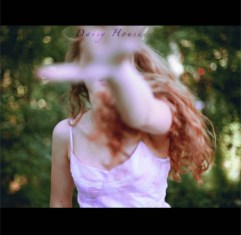 The debut is simply 2013’s Daisy House. The basic formula is here: twelve string acoustic and electric guitars, a celtic twist in the songwriting, with vocals reminiscent of Joni Mitchell (on “Ready to Go” and “Cold Ships”), the Mamas and Papas (on “Two Sisters”), and Richard and Linda Thompson (on “The Bottle’s Red”). The Byrdsian influence is particularly strong with dad’s vocal on “Statue Maker.” 2014’s Beaus and Arrows reproduces the ambience of the debut, with a few new surprises, like a very early solo Paul Simon atmosphere on the Salinger-inspired “Raise the Roof Beam Carpenter.” I agree with Don over at I Don’t Hear a Single, the first two albums draw heavily on 1960s British and American folk idioms.
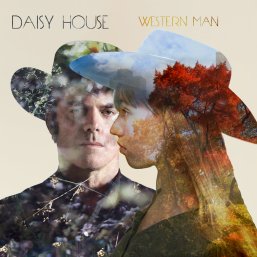 Things break out in new directions with 2016’s Western Man. There is an eerie mystery to the musical ambiance of the opening track, “Lilac Man,” that signals a significant stylistic shift. “Yellow Moon Road” expands the duo’s palette to include more 1960s garage rock sounds, particularly some cool organ. And the songs are amazing. “Like a Superman” has a clear Mamas and Papas stamp, “She Comes Running to Me” is lathered with great harmonies, while “Twenty One” opens with a deliberate homage to “When You Walk in the Room” before branching into its own original sound. But the album’s highlight is undoubtedly the hit single-worthy “The Boulevard.” You can just hear Mama Cass belting it out while the Wrecking Crew provides the crisp, swinging backdrop – except that it is not those amazing performers, it is these amazing performers: Daisy House.
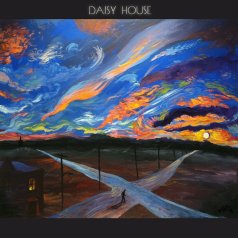 This year’s Crossroads is another breakthrough for the duo, putting their sound more solidly on the rock side of folk rock. On “Languages” Tatiana sounds like a young Chrissie Hynde. This is the hit single, but there are many more highlights. The title track, “Crossroads,” has some Tom Petty Wildflowers-era bite while “Leaving the Star Girl” ramps up the Byrds influences. Dad is featured vocally on the evocative Paul Simon-esque, acoustic-based “Pristy Lee” and the more Byrdsian “The Girl Who Holds My Hand,” both strong songs and performances. But the highlights for me, beyond the obvious single (“Languages”), are two Tatiana vocals, the Kate Bush-like atmosphere on the beautiful and haunting vocal of “Albion” as well as the more Chrissie Hynde delivery of “Night of the Hunter.”
Daisy House are a fully formed artistic wonder, inspired by the electric folk music and harmonies of the 1960s but entirely their own thing in terms of original material and performance. Visit them online, buy their music, see them live, now.
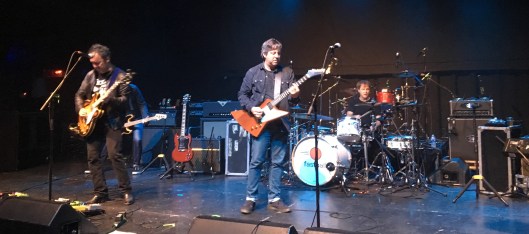 Are you a fan of Fastball? If you love straight up rock and roll with a keen sense of melody, you should be. Fastball is another band that I somehow missed when they broke out in the 1990s and have only just discovered recently. Now when you mention Fastball to people they nearly always know “The Way” and that’s about it. Sure, it’s a great song but I’m not even sure it’s the best song on that album, let alone the defining moment of their career. This is band that just keeps getting better and better with each album release.
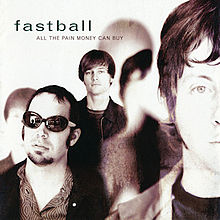 Their debut album from 1996, Make Your Mama Proud, lays out the basic genius at work here. This is a band that gels solidly around the rock and roll combo fundamentals – solid beat, hooky lead guitar lines, and a generous helping of harmony vocals – captured nicely in the featured tune here, “Seattle.” Then came their breakout album, 1998’s All the Pain that Money Can Buy with its monster single “The Way.” Personally I prefer “Fire Escape,” “Slow Drag,” and the brilliant “Out of My Head.” The band followed up that hit album with The Harsh Light of Day, a record that really pushed the development of their sound melodically and sonically (let those guitars ring!), apparent on tracks like “Don’t Give Up On Me.” But audiences didn’t take to the new sound and sales fell off precipitously.
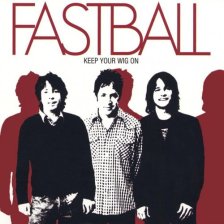 The band pressed on in 2004 with what might be their greatest achievement, Keep Your Wig On. The songwriting on this record is amazing, with Petty-esque brilliance on tracks like “Perfect World,” and “Our Misunderstanding,” or the easygoing, almost Eagles-like confidence of “Someday” or “Mercenary,” or the Mexicali fun of “Red Light.” Five years later, Little White Lies took the band into a more melody-drenched direction and the should-be hits are many: check out the James Bond undercurrent to “Little White Lies,” the great swing of “Mono to Stereo,” or the nice Beatles’ touches and bouncy piano on “She’s Got the Rain.”
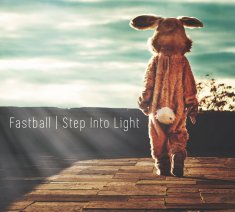 Fast forward to 2017 and Fastball are back after an absence of eight years with what I am prepared to boldly declare may be their best record yet: Step Into Light. The record blasts off with “We’re On Our Way,” a rocking number with a few ELO flourishes on the keyboards. Vocals give way from the more rough-hewn Mike Zuniga to the oh-so-smooth Tony Scalzo on the next track, “Best Friend,” a song that screams hit single with its propulsive, driving hookiness. Other candidates for hit single include the Beatlesque “I Will Never Let You Down” (with its great video!) and the very catchy “Just Another Dream.” The care in choosing the instrumental mix on this record is impressive. Check out the nice guitar bits on “I Will Never Let You Down” that echo George Harrison’s simple and straightforward guitar lines on a host of mid-career Beatles records. Or the jaunty acoustic guitar that anchors “Behind the Sun,” clearly an homage to McCartney’s felicitous picking on tunes like “Mother Nature’s Son.” I could go on. Suffice to say, there isn’t a bum track here – if you like one song, you’re going to want the whole album.
 They’re Feltworth, actually, a puppet band with a plausible backstory and a couple (literally) of killer tunes. The whole concept is brilliant and funny but what aces the deal is that the music is no joke. If they sound a lot like Canadian indie poprockers Sloan, well that’s just the rumour mill for you. Here’s the pitch: Feltworth, a quartet of cat felt puppets (another fab four, though here ‘fab’ is short for fabric) allegedly have been working the kids music scene for years but now have turned their back on the tots for more adult fare. You can get the whole elaborate and amusing story in a recent interview with
 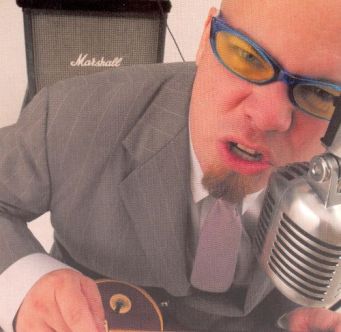 I love unusual life stories. Like Charlotte, North Carolina’s Leisure McCorkle. William ‘Lee’ McCorkle is Leisure McCorkle, the band and its larger than life leader, songwriter, guitar player and vocalist, with help from some occasional band members. In 1997 he launched his recording career with the largely homemade EP Nappy Superstar. Since then he’s released another EP and three albums, only two of which are available digitally. The wrinkle in McCorkle’s story is that he took a break in his rock and roll career to get a PhD in evolutionary and cognitive psychology and do the professor thing. But that didn’t stop him from roaring back in 2016 with another killer album after a break of thirteen years! Most attention on the internet focuses on his 2003 release Jet Set Baby and the more recent 5000 Light Years Beyond the Speed of Sound, the only recordings readily available to music consumers. Hopefully the rest of his back catalogue will cross the digital divide soon, but in the interim our focus will be on these two releases as well.
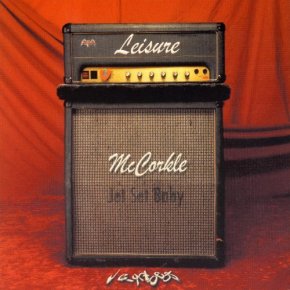 Jet Set Baby is 44 minutes of blistering rock and roll fun. Internet reviewers have rightly highlighted the nods to the early new wave sound of Joe Jackson, Elvis Costello and Graham Parker, with a healthy dollop of early Cars guitar crunch and some very creative keyboards. But the influences are always reminiscent, never derivative, in part because the songwriting and execution are so strong. Check out the languid, chorus pedal-drenched guitar opener of “Does She Really Know?” before it segues into some great hooks. Or the transition from spare electric guitar to anthem-like chorus on “Like That.” McCorkle does slow things down occasionally on nice tracks like “100%” and “Dissin’ You” but mostly the record rocks out with hook-filled masterpieces like “This Girl,” the swinging “Alcohol,” and achingly sweet “Blum’s Lullaby.” These are should-be hits by any measure.Does She Really Know?AlcoholBlum’s Lullaby
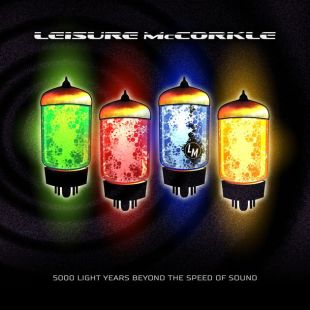 Now fast forward past a decade of building an academic career to when McCorkle decided to return to his first love in 2016 with the release of 5000 Light Years Beyond the Speed of Sound. The first thing you notice on “Warehouse,” the opening track, is a little less vocal edge, a little less urgency in hitting the rock and roll marks. Here McCorkle is willing to let the sonic effect wash over the listener a bit more, at least until the lead guitar comes in near the end with a slightly edgy but still melodic flourish. “Transmission” sounds a bit late 1970s pop to me a la the California sound. “Acting Like a Friend of Mine” reminds me a bit of some of Springsteen’s more recent melody-heavy poprock releases while “Turn It Up” harkens a bit more back to his earlier material. One of the standout tracks is “Ghost Angeles” with its lovely vocal arrangement and strongly acoustic backdrop, very Teenage Fanclub-esque, as is the album’s closer “The Loneliest I’ve Ever Been.”WarehouseActing Like a FriendGhost Angeles
 In the early 1980s I went to see Gerry and the Pacemakers play at the International Plaza Hotel in North Vancouver. It was a small room but Gerry was larger than life and clearly a few decades older than his replacement Pacemakers. He belted out his early 1960s hits and closed the show with a version of then chart-topping Lionel Ritchie’s “Hello.” Gerry was a great showman but I left feeling a bit sad. Was this the unavoidable fate of every one-time hit maker? Recycling their past night after night? The good news is, no. Some artists manage to find new inspiration and keep on producing exciting new music.
 A while back we featured the criminally overlooked
 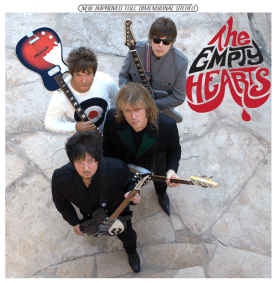 The Empty Hearts draw more broadly for their resurrected super-group, including former members of Blondie, the Cars, the Romantics and the Chesterfield Kings. Former Romantics lead singer Wally Palmar gives the group a distinctive vocal stamp, aided by new wave producer Ed Stasium’s crisp production. “I Don’t Want Your Love” is a fun sing-a-long shouter, one of a number of rock and roll workouts on the record, while “(I See) No Way Out” sounds like a great lost Romantics single. But the musical highlight for me is the stunning “Fill an Empty Heart,” a killer tune arranged to hit all the poprock marks – love the organ (courtesy the Faces’ Ian MacLagan) and oh-so-new wave guitars. The album has many highlights but check out “Perfect World” and the country-ish “I Found You Again.”Fill an Empty HeartI Found You Again
 Rock and roll has always been a young man’s game but just how young? When the Beatles hit it big in 1963 John, Paul, George and Ringo were 23, 21, 20 and 23 respectively. This week’s duo first made the live music scene when they were barely in their teens. Ok, novelty aside, the real test is the music and these two prove you don’t need quite so many trips around the sun to produce some killer poprock.
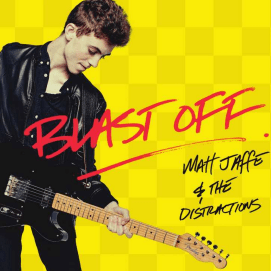 Matt Jaffe picked up the guitar at ten and hit his first open mike at 11. At 14 the Talking Heads’ Jerry Harrison offered to record some demos with him. His first publicly available material starts to emerge when he is 16, with his first EP out while he is still 19. His band are the Distractions, a play on one of his favourite influences, Elvis Costello and his Attractions. I’m pretty sure Jaffe’s electric guitar is the same as EC’s: a Fender Jazz Master. The not-so-raw talent is obvious from the earliest recordings like “No Place to Go” and “Armistice Day” and on unreleased recordings like “Plastic Tears.” But his first official EP, Blast Off, seals the deal with its effortless mix of rootsy rock and roll like “Write a Song About Me” and “Blast Off” as well as more poprock numbers like “Holding On” and “Stoned on Easter.” “Holding On” particularly has all the right hooky moves, sounding like a slightly off-kilter Marshall Crenshaw single. In 2016 he released another strong single with “Overboard” and followed that this year with his first long player, California’s Burning, which tipped things back toward his more rootsy roots. Check out the swinging “Love is Just a Drug.”
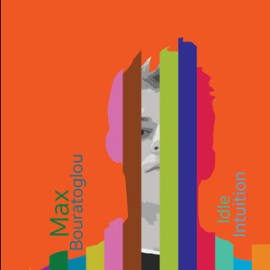 Wunderkind number two seems even more ambitious. 16 year old Max Bouratoglou has just released a new album, the very polished sounding Idle Intuition, produced by Ken Stringfellow of the Posies. But hey, it’s his third album. Max recorded his first record, Mid-Teen Crisis, when he was just 14 in the summer between the 8th and 9th grade. The songs on this first record all start sounding a bit raw but when they kick into the chorus – bang – it’s there, something smooth and hooky. “How to Say” does this with great vocal harmonies in the chorus and some really cool 1960s organ and electric guitar. Clearly, somebody has been raiding the grandparents’ record collection! A year later he released Average Euphonies which upped the production values and the songwriting sophistication on tracks like “Things Have Changed” and “Diamond Pearl,” the latter channeling the 1960s poprock sound of the Monkees and a surprising (and very cool) trumpet solo. On the new album, I’m partial to “Time Flies” and the hypnotic “Drum,” with its super rumbly electric guitar.
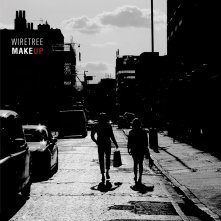 You’re watching some show on Netflix or Crave and you think ‘hey, what is that music in the background, setting the scene, plucking at my emotional heartstrings’? It could easily be the sound of Wiretree. This is a band that has mastered the strummy melodic atmospheric background sound so omnipresent in our binge-watched entertainment. Albums from 2007, 2009, 2011 and 2013 mined this field with utter confidence.
  Yet there is something qualitatively different about Wiretree’s latest release, Towards the Sky. The album opens innocuously enough with “Let Me In,” a great song in keeping with band’s traditional sound. But then things get crazy, in a good way. “J.F. Sebastian” is a total departure for the band but it works, sounding a bit like The Zolas, particularly on the vocals. Then “Between the Lines” has a nice folk country vibe with a great harmonica solo. “Dive” and “Didn’t Know Your Name” work the indie poprock sound to good effect. “Don’t Let it Go” has a nice retro early 1960s disaster pop sound. This is the sound of a band arriving, in command of its artistic destiny.
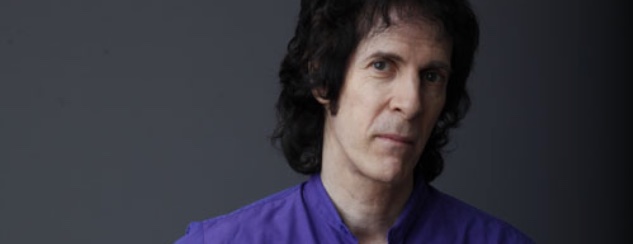 I just discovered Richard X. Heyman and initial my reaction was – how have I not managed to hear about this guy before now? His formula is simple: take strong songwriting, apply jangle-filled poprock production, and slather everything with killer Byrdsian harmony vocals. What’s not to love? The readily available albums – Cornerstone, Basic Glee, X – all are worthy additions to your collection. But we are here today to pass some judgment. Heyman asked for it, really. By releasing two versions of his song “Hoosier” how could fans not be expected to take a side on which version they prefer? But the choice is anything but easy.
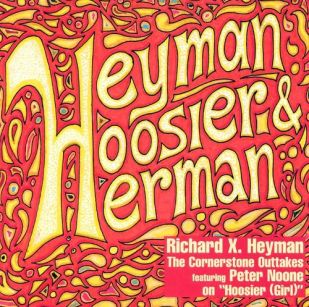 “Hoosier” is a song of longing for a girl from the hoosier state, Indiana. Written in 1999, it appeared on Heyman’s 2000 album, Heyman, Hoosier and Herman under the title “Hoosier (Girl),” with guest vocals provided by Peter Noone of Herman’s Hermits fame. Then Heyman released a version with his own vocal on his 2007 release, Actual Sighs. Have a listen to them below to see just where they differ. It’s Heyman’s song so, not surprisingly, he does a great version. The song kicks off with a nice sparkly guitar and organ interplay, with Heyman’s trademark layered background vocals lifting the song to new heights in various places. But, for me, as good as the 2007 version is, it just can’t compete with Noone’s transcendent vocal on the original 2001 release. Though 53 at the time of this recording, Noone had lost none of the magic that made Herman’s Hermits such stars with fans, if not music critics. The music bed is more subdued with Noone – here I prefer the other take – but still, on the whole, the Noone iteration of “Hoosier” just clicks more as a potential hit single.Hoosier (Girl)
 Aimee Mann snuck up on me. I had one record and then another and before I knew it I had them all on some kind of regular rotation. My Columbia House subscription at the time probably bears some responsibility. Why do I like Aimee Mann so much? I don’t know. There’s something comfortable and sutured about the space she creates, like a self-contained sonic mini-universe. And despite the often sad stories and the sad sacks responsible for them, Mann’s work is never obviously melancholic. Instead, she gives musical voice to the emotional ambivalence of our times. Shit’s happening and people are trying to find love and there seem to be no obvious heroic scripts to draw from. When you can’t work that kind of stuff out sometimes you just want to wallow with someone who isn’t forcing you to smile or cry. Mann gets it. Easy answers are not that satisfying. Her albums are filled with characters struggling to cope with not knowing which way to turn. They’re idealistic enough to want to do something, but wise enough to know each choice has a cost.
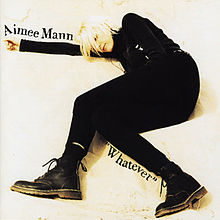 It has been fascinating to watch the trajectory of Mann’s career. Three albums with her band ‘Til Tuesday channeled a lot of 1980s bombast, with a few gems along the way like “Will She Just Fall Down” (which sounds the most like the post-‘Til Tuesday Mann sound). But with 1993’s Whatever Mann declared her creative independence, establishing the rudiments of the style she would continue to develop the rest of her career. You can tell a little about her from the people she has chosen to work with, co-writing songs with Elvis Costello, Jules Shear, and Jon Brion, and inviting the likes of Squeeze’s Glen Tilbrook and the Shin’s James Mercer to add vocals to various tracks. But ultimately comparisons fail because Mann is a category of her own. In terms of stylistic confidence and delivery, she reminds me most of Joni Mitchell. She is post-genre.
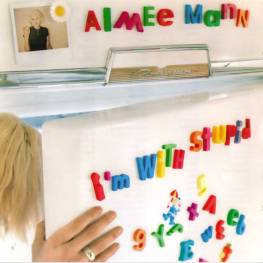 Trying to single out a few songs to feature from Mann’s many albums is painful, there are just so many good tracks. Whatever kicks off with everything Mann has become celebrated for in “I Should Have Known”: a wall of guitar, a solid melodic hook that comes out of left field, great background vocals. But “I Know There’s a Word” showcases the more tender, acoustic side that is never absent from any Mann release. Two years later I’m with Stupid appears to repeat the formula but with a few twists. Opening track “Long Shot” is a bit punchier while the obvious single “That’s Just What You Are” is pulled in a different direction by the distinctive vocal contributions of Squeeze’s lead singer. Though again, the quiet acoustic “You’re with Stupid Now” is a slow burner of a killer tune. Mann came out with Bachelor No. 2 in 2000, which featured songs that had appeared in the film Magnolia. Rightly praised for its strong material, I’m particularly partial to “Red Vines,” “Driving Sideways,” and “Susan.”
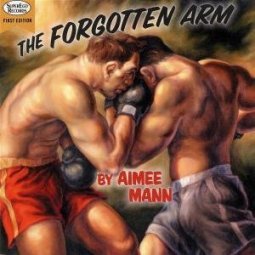 I lost track of Aimee Mann for a few years. You know, I got busy, she got busy. 2002’s Lost in Space passed me by, though now I love “This is How it Goes” and “Invisible Ink.” I did catch the brilliant Forgotten Arm when it came out in 2005. It makes sense that a story-telling songwriter like Mann would want a bigger canvas, a whole album that develops an over-arching story. You can’t pick and choose your 99 cent choices here, you have to buy the whole thing to really get it, but I do tend to hit repeat on “Video,” “Little Bombs,” and the achingly beautiful “That’s How I Knew This Story Would Break My Heart.” I missed both 2008’s @#%&*! Smilers and 2012’s Charmer when they came out. Ok, there are more attentive Aimee Mann fans than me. But I’ve made up for lost time – both these records are fabulous. @#%&*! Smilers adds a wonderful array of keyboard sounds on the uptempo “Freeway,” and the more swinging “Borrowing Time,” while “Little Tornado” is breathtaking with its starkly simple arrangement of guitar, echo-y piano, and whistling. Charmer takes the keyboard exploration to new heights on so many strong tracks, but I really like the title track, “Crazytown,” and “Red Flag Diver.”
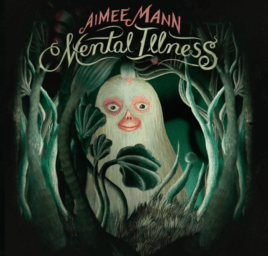 Which brings us to the present and Mann’s stunning new album, Mental Illness. With Whatever I thought Mann had put the bar pretty high but looking back over her career I think she has gotten better and better with every release. Mental Illness has the hooks, the careful attention to arrangement that characterizes all of Mann’s output, and an impressive range of instrumental quirks. The two singles, “Goose Snow Cone” and “Patient Zero” showcase this beautifully, particularly the spooky ‘oohs’ that introduce us to the latter song. Is the record a departure from Mann’s past work? In one sense, not really. Acoustic guitar anchors most of her work and every album usually features more than a few solely acoustic numbers. What is different here is the balance, with “Simple Fix” the only track that employs a more full band sound. Aside from the singles, right now I’m also really enjoying “Rollercoasters” and the more piano-based ballad “Poor Judge.”
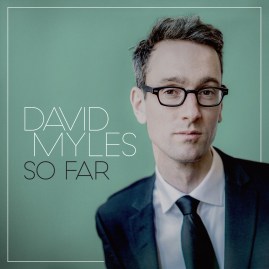 Nova Scotia’s David Myles is so nice it hurts. The sweetness of his songs will melt the heart of the toughest cynic. He has an amazing knack for composing songs that sound like standards, even when he casts them in a variety of contemporary styles. But boiled down, his songs are great singer/songwriter material. Yet Myles is nothing if not contemporary, taking advantage of multiple possible audiences by combining great songcraft with acoustica, dance beats, and even rap. For singer/songwriter, check out his early material, like “Turn Time Off” or the achingly beautiful “I Will Love You.” For a more contemporary sound, listen to “One in a Million” or “So Blind” featuring rapper Classified. More recently, Myles has added dance beats to “It Don’t Matter” but really his songs can all be reduced to more rudimentary arrangements, like 2017’s “I Wouldn’t Dance.”
