
Tags
Balance the Light, Bird Dog, Dropkick, Hollywood, Honduras, Out od Love Again, Quiet Corners and Empty Spaces, Squirrel vs. Snake, The Jayhawks, The Ocean and the Sea, The Posies
 We interrupt our regularly scheduled blog postings to bring you these breaking recent releases that run the gamut of indie/alt rock, alt country, powerpop and nouveau folk.
Honduras easily get marked off as garage rock punky. Could be the guitars on a few tracks exude that but to my ears there is lot more range to this band than such a label might suggest. Early single “Ace” has a killer clean, hypnotic intro riff that is too smooth to be punk while more recent album tracks like “Off White” show off a band with great instrumental chops. “Hollywood,” their latest single, builds nicely from interesting interplay amongst the guitars into a great tuneful alt-rock sound and song.
Bird Dog take us into a mournful, slightly-discordant harmony vocals direction with “The Ocean and the Sea.” It begins all folky but rocks out just past the middle into the end. The song is catchy but it is the vocal harmonies, reminiscent of Jack and Eliza or the Fleet Foxes, that burn it into your brain.
The Jayhawks are back with a new album and tour. From the band that has produced such standout tracks as “Save It For a Rainy Day,” “Over My Shoulder,” and “Real Light” there appears to be more gas left in the tank. The new single, “Quiet Corners and Empty Spaces,” has all the magic qualities the Jayhawks are known for: sparkling acoustic guitars, smooth harmony vocals, and a devastatingly hooky chorus.
Scotland’s Dropkick have released a lot of material over the past decade, mining an acoustically grounded poprock sound akin to Teenage Fanclub. Six years back they released a fantastic holiday EP of original tunes. Now they’re back with a new album, Balance the Light, which features some of their strongest material. “Out of Love Again” feints with an acoustic opening, only to lurch quickly into poprock mode with great swirling guitars, ‘ooh’ and ‘ah’ background vocals, and plenty of hooks.
Rounding things out is the fantastic new single from The Posies, “Squirrel vs. Snake.” A lush opening gives way to acoustic guitars and vocal phrasing that reminds me of Squeeze in their heyday, only to shift again in the chorus to a more shimmery powerpop sound. And the song even has something to say.
Honduras will be bringing their guitar sound to Toronto’s Adelaide Hall May 4th, while the Jayhawks appear at the Horseshoe Tavern June 11. More information about the touring and recording exploits of Honduras, Bird Dog, The Jayhawks, Dropkick and The Posies can be found on their webpages and Facebook accounts.
 “David Newberry sings folk music with rock sensibilities. Or is it the other way around?”
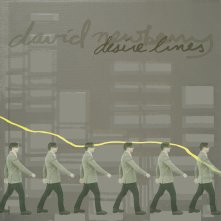 Casting back through Newberry’s catalogue there are so many great songs, ones that touch on both the personal and political. I am partial to “4th Fret” and “The End” from When We Learn the Things We Need to Learn and “Easter” and “English Bay” from No One Will Remember You. But his 2014 EP Desire Lines definitely represents a shift in approach – now the record seems more than just a collection of songs and Newberry is clearly experimenting with his sound and image. Listen to these two starkly different treatments of his song “Slow”: one draws from his folkie electric esthetic while the other is a full blown poprock song. Personally, I think the latter has got hit single written all over it.
 If Desire Lines and the radio edit of “Slow” represented a boundary-testing bit of experimentation, then 2015’s Replacement Things comes on like a new, more comfortable synthesis of his many influences. This is a solid record with great songs and a coherent, unique sound. Littered with references to his sometime Vancouver home, I’d have to call out “Coyote,” “Shiny Pretty Things,” and the haunting “Freddy Mercury” as my stand-out tracks.
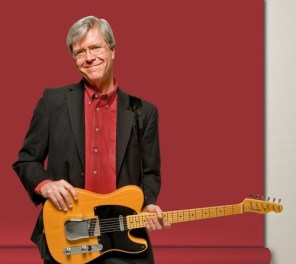 Sure, when you first hear Edward O’Connell you get the Costello vibe, you get it bad (by which I mean you get something good). You might even think “Hey, this guy is putting out the albums I wish Elvis Costello would …” But the seemingly familiar Costello ring to the songs, to the vocals, to the turns of phrase is so much more than simply reminiscent. O’Connell has taken the inspiration and made it his own. And there is so much more influence afoot in his two albums of material: a bit of Matthew Sweet, a dash of Peter Case, even some Marshall Crenshaw and, of course, Nick Lowe and Tom Petty.
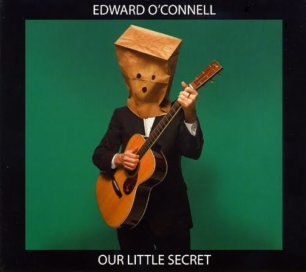 His debut record from 2010, Our Little Secret, is a solid start: a host of great tunes and a cover riffing off of Nick Lowe’s Jesus of Cool album and the unknown comic. “I Heard It Go” has a great turnaround in the chorus, “Cold Dark World” has wonderfully shimmery vocals, “We Will Bury You” is trademark Costello country, while “All My Dreams” sounds like a lost track from Imperial Bedroom. But the standout song on this album for me is the majestic “Pretty Wasted.” A real gem that exudes equal parts Elvis Costello and Graham Parker, with a lovely Nick Lowe lyrical sleight of hand with the line ‘She’s pretty wasted … pretty wasted on you.’ Pretty Wasted
 Four long years passed before O’Connell’s sophomore effort, Vanishing Act, emerged in 2014, but it was worth the wait. The album kicks off with strong material in “My Dumb Luck” and “Lonely Crowd” but the third tune, “Every Precious Day,” is a master class in poprock songwriting: killer guitar riff opener, great Tom Pettyish vocals, with just a hint of Crowded House in the swirling organ and guitar work at the 2/3 mark. Other highlights include “Severance Kiss” (with another great guitar opener), “Odds Against Tomorrow,” “Yesterday’s World,” and “Last to Leave” with its exquisite low tempo atmosphere. “The End of the Line” deserves to be featured if only for its surprisingly aggressive guitar opener that then melds seamlessly into a super midtempo poprock number. But my favourite song on the record is the witty Nick Lowe-ish “I’m the Man,” a sad tale of a man who ‘should have seen it coming’ with his death-obsessed partner.
 Let’s take a mellow moment and turn our ears to the acoustic side of poprock. Our four featured songs have a stripped down feel, unhurried, and certainly not cranked to eleven. The Amazing are an example of the neo-folk roots revival apparently going on Sweden over the past decade (I’m thinking here of other Swedish acts like The Tallest Man on Earth), though their most recent Picture You album expands their sound in a more poppy direction, both melodically and instrumentally. But “The Headless Boy” is more a throwback to their earlier material, a delightful, almost Donovanesque tune with some lovely harmonies in the chorus.
 Radical Face have put out a number interesting records, including their just-released The Leaves. But the song here, “Welcome Home,” comes from their 2007 album Ghost. There is something otherworldly about this tune, the way the march-like drumming and swirling vocals combine, which is probably why they used it in French TV’s The Departed, a creepy enigmatic (but riveting) show about people who died but somehow inexplicably returned years later. And I love the cover of this album.Welcome Home
 Last up is Colorodoan Shane Burke, a man with an amazing voice. Generally, a lot of his material would not really fall under the poprock mantle, but “I Go Crazy” has a great rollicking feel and a trebly guitar intro and leadline that threads it way through the song. A worthwhile boundary stretch to finish things off. I Go Crazy
 I was minding my own business enjoying John D. Macdonald’s The Quick Red Fox when the protagonist Travis McGee pulled into Sausalito as part of his latest adventure and suddenly I was thinking of a song I hadn’t thought of for decades: Diesel’s “Sausalito Summernight.” I distinctly remember hearing this song on the radio in 1981 and playing it at some of the first high school dances I deejayed for a mobile sound company. Diesel joined the lonely ranks of Dutch hitmakers in the United States, groups like the Shocking Blue (“Venus”) and Golden Earring (“Radar Love,” “Twilight Zone”). Looking back now, the song sounds incredibly tightly focused and executed – the addictive lead line that propels the song never lets up, the multilayered vocals are drenched in reverb, and so on. It’s like a soft drink that is just too sweet. But I still love it.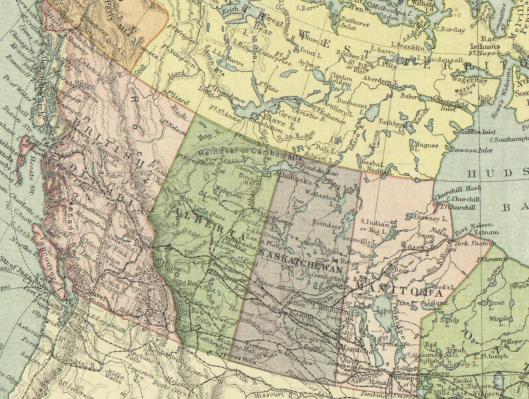
 Portage and Main is a downtown Winnipeg intersection, which turned 150 years old just last month. Portage and Main, the band, reside in Vancouver and sport a laid-back country feel on a lot of their material but “Better Man” breaks out from the pack with a Blue Rodeo-like punch: great organ, super electric guitar lines, catchy tune.
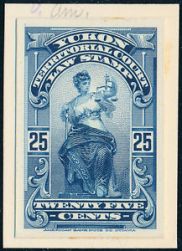 Whitehorse is the capital of the Yukon territory and the largest town in Canada’s north. It boasts 20 hours of sunlight on summer days. Whitehorse, the band, can be found in Hamilton, Ontario, offering up a sound that borrows from roots and vintage 1950s twang electric guitar but with songs that defy categorization. “Sweet Disaster” is from their 2015 Leave No Bridge Unburned album: a cool mood piece that builds from some sparse drums, piano and rumbly electric guitar into a breakout chorus.
 Django Django caught my ear for their totally unique songs and sound – one part New Order bass synth, another part oddly retuned Brothers Four vocals, strung together with some killer Ventures-like guitar lines. It all sounds vaguely familiar while being completely original. It is hard to single out just a few songs to feature from their records, despite the fact that it is still a rather sparse catalogue (just two albums, an EP, and some remixes).
 Everything Everything are another band with a unique sound that attend closely to songwriting, taking songs places you don’t expect. Their best material builds out a song from some interesting ideas, putting them together and taking them apart repeatedly. Key examples would include “Kemosabe” and “Duet” from 2013’s Arc. The transitions between the verses and pre-chorus and chorus of the former are exquisite, pivoting on careful vocal arrangements and the word ‘hey’. The latter kicks off with a string section that reminds me of Kate Bush’s “Cloudbusting” in general ambience, transitioning on the phrase “but I don’t know what’s real or what’s going on” into a very different sounding song, then shifting again into the chorus. 2015’s Get to Heaven continues to develop their sound with great singles like “Distant Past” and “Regret” but the song that really stuck in my head was the more unusual “Spring / Summer / Winter / Dread” with its intimations of both joy and dread. There is something 1980s going on with it, though I can’t quite put my finger on what it is.
 Though it was released in May of 2015, is it really too late for Cheers Elephant’s “Airliner” to race up the charts? There have been slow building hits in the past. Crowded House’s “Don’t Dream It’s Over” did not take off on its initial release, only catching on with radio months later. “Airliner” is certainly deserving of such late recognition. The opening verse is delivered with a compressed vocal sound that channels 1970s AM radio and holds the listener in check until the chorus drops with a killer hook. As the band drops out momentarily, a rainbow-like harmony vocal sustains a chorus of longing for escape from the mundane ground in favour of the ease of flight on an airliner. As the chorus laments, “I walk around kicking trash up off the ground and I say I want my seat on an airliner …” The graphic for the single riffs off the 1960s ‘flight as party’ motif recently re-popularized in TV shows like Mad Men.
 In the late 1980s and early 1990s I had the pleasure of acting as a roadie of sorts for a guitar-god friend of mine whose band had a brief blast of Canadian music fame. Bruno Gerussi’s Medallion was the brainchild of Vancouver Province rock writer Tom Harrison, an outlet for his love of 1960s garage rock and various forms of 1970s alternative rock and roll. In 1989 they were signed to WEA Canada and released one album, In Search of the Fourth Chord.
 They took their name from Canadian actor Bruno Gerussi, who starred for 18 years as Nick Adonidas, a beachcomber on British Columbia’s coastline in one of the Canadian Broadcasting Corporation’s most successful shows, The Beachcombers. At the same time he hosted a cooking show where he would wear a very large medallion around his neck, thus the name of the band. I was at the show at the Town Pump in Vancouver where Nick actually met the band and heard some of their music. I’m not sure it was really his style. As a band, BGM showcased all the classic 1960s and 1970s underground sounds but, frankly, sounded too good to be garage rock and too polished to be punk, while Tom’s singing was more like talking. Reading the liner notes for BGM’s sole album, the record sounds surprisingly coherent given the changing line-up of players. In terms of songs, both “Ginger’s Alright” and “Tell Me What You Found” stand out for me, the former for the tune and the latter for the musical arrangement. Ginger’s Alright Tell Me What You Found
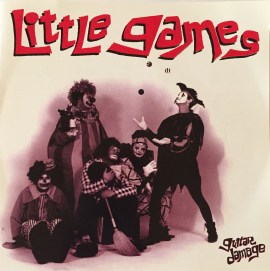 BGM eventually morphed into Little Games, a moniker taken from the Yardbirds’ record of the same name. However, their recording contract with WEA lapsed and Little Games’ only record, Guitar Damage, would be released on the band’s own BGM Record label. And that was a shame, because in so many ways Guitar Damage was a more solid record. For instance, unlike BGM, Little Games had a stable line-up of players, Tom was actually singing more than just talking his way through the songs, and the song selection itself was strong in terms of covers and original material. I particularly liked the band’s composition “Muswell Hill Ray,” a name-dropping tribute to songs by the Kinks’ Ray Davies, as well as their cover of the Standells’ garage rock classic, “Sometimes Good Guys Don’t Wear White.” Muswell Hill RaySometimes Good Guys Don’t Wear White
 Poprock Record