All popular music is synthesis, really. Everyone is influenced and the best somehow take their influences and combust them into something that sounds very different from where they started – so different that people mistake it for something totally new. Bosco Rogers is that perfect distillation of influences that breaks out into a new sound. It would be easy to pick out the various familiar musical motifs from the 1950s through to the 1980s on their debut album Post Exotic – the fifties Chuck Berry swinging guitar lines, the psychedelic meets glam meets garage rhythm section, the great textured vocal effects – but that wouldn’t do it justice. These guys are masters of the produced sound: each element of any song is placed into the mix ‘just so’ for maximum impact and effect. Is it surprising that the band’s two members run their own separate recording studios in the south of England and France? Not really.
Yet this would be of fleeting effect if the material itself was not strong. And it is. It is hard to pick out just a few highlights from this album as each song contains its own special bit of ear candy, some great original sound, a distinctive instrumental choice, a hook that won’t let go. If pressed, I’d have to steer listeners to the super folk blues sound of “Anvers” with its catchy psych pop middle section, or the hypnotic whistle motif of “The Middle.” Then again title track “Post Exotic” has a seductive guitar swing, “Beach! Beach! Beach!” is an alternative universe beach party staple, “Drinking for Two” recreates the sunshine pop sound using classic 1960s vocal arrangements, “Roses” oozes 1980s synth pop, and so on. In a world of individual song downloads, Post Exotic rewards the listener with the complete album experience: all player, no filler.
One can only hope that Bosco Rogers will be touring in support of this amazing first album soon. Keep up with their tour and music news on the their Facebook page.
Drop everything and focus your attention on these breaking tunes, hot off the musical presses! Get Inuit hail from the southeastern county of Kent, England where nary a real Inuit can be found. Undeterred, they have crafted a distinct, noisy kind of poprock. Give their latest single a chance to get through to the chorus and you will be rewarded with some solid hooks. “Teriyaki” kicks off with some cramped sounding vocals, which fatten up and take off into a soaring melody-drenched chorus.
Moving north, Birmingham, England’s Steve Ison defies easy labelling, melding folk, poprock, and indie sensibilities. Both “Boy” and “I’m Leaving” sound infused with a bit of Donovan 2.0, while “From the Morning” and “I Woke Up from the Dead This Morning” both are faintly reminiscent of the Lilac Time, vocally at least. Ison is a musical iconoclast whose songs never quite go where you expect them to, which is wonderfully liberating.
Mr. Sanka brings Los Angeles (Young & Sick) and London (Mustafa and James) producers together in a dance-pop supergroup that is definitely more pop-than-rock than is typical for this blog, but I just couldn’t resist the addictive bass-line, swooping background vocals, and killer unusual chorus of their first single, “Flight Mode.” I love the precision production – every sound is just so crisp. There’s no reason why we can’t squeeze a bit of dancing in here.
Over to New York City for the almost released debut album from the shamelessly rock and roll indie band Public Access T.V. who lament their musical genre’s end on their new single “End of an Era.” In fact, guitar rock and roll is clearly back with the success of bands like Vant, Catfish and the Bottlemen, and the Vaccines. So though the boys sing on this single that “the kids don’t like rock and roll anymore” don’t believe it. Never Enough is chock full of great new guitar poprock and drops in just three more days.
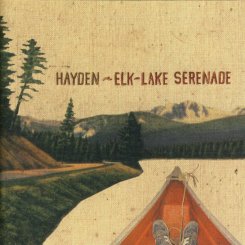
How do they do it? These sad sack, broody troubadours somehow manage to plant a subtle hook into their otherwise melancholic melodies that keeps you coming back for more. Toronto’s Hayden and San Diego’s Greg Laswell have gravelly delivery and a general air of somber introspection surrounding their particular brand of broody poprock.
Having said that, Hayden would be hilarious if he wasn’t so morose. With song titles like “Lonely Security Guard,” Weight of the World,” and “Blurry Nights” he manages to make Morrissey seem cheerful. Some songs are mini-sketches – both “Hollywood Ending” and “Lonely Security Guard” are vignettes performed with cinematic feeling, while others – “No Happy Birthday,” “Home by Saturday,” “Weight of the World” – just channel a sordid sounding sadness. This is not a criticism. I’m totally for sordid sounding sadness sometimes. Others step out of type with a more upbeat sound, if not sentiment. I love the simple piano riff that propels “Damn This Feeling” or distinctive guitar lines that undergird “The Place Where We Lived” and the majestic “Blurry Nights,” a track with ‘hit single’ written all over it. Hayden is currently touring behind a 20th anniversary edition of his first indie cassette tape release Everything I Long For. Hollywood EndingWeight of the WorldDamn This Feeling
Greg Laswell’s early material hardly qualifies as broody at all, just a touch here and there. “That it Moves” and “The One I Love” from 2008’s Three Flights from Alto Nido are hooky with just a hint of darkness. “That it Moves” has a great build up, plateauing into a solid poprock gem. “The One I Love” kicks off cheerily enough then gets its brood on in the chorus. But this year’s Everyone Thinks I Dodged a Bullet is full-on Hayden, including extra gravel in the vocals and some moody electric guitar lines on the catchy title track.
That it MovesThe One I Love
Moody people need money to drown their sorrows. Visit Hayden and Greg Laswell online and give some thought to the kind of scotch your music-appreciating cash would buy.
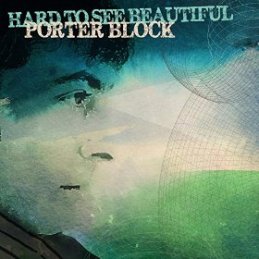
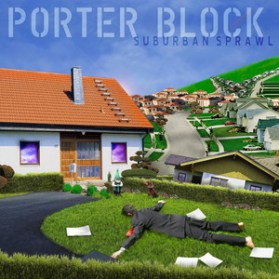
Powerpopaholic turned me on to Porter Block’s latest album Hard to See Beautiful, and particularly the wonderfully lush single, “Long Gone.” So I decided to take a stroll down Porter Block lane. Wow, what a catalogue! Over six albums and one EP Porter Block have produced a polished, subtlely hooky, sometimes amusing body of work. Mostly the work of duo, Peter Block and Caleb Sherman, the band defies easy categorization or comparison. Early 1980s melodic poprock like Marshall Crenshaw maybe, or amongst contemporaries perhaps Pete Yorn. One thing I really like about the band is their unabashedly commercial bent, commercial in the sense of polished and pristine in performance and musical adornments. Again, in the early 1980s this was not exceptional as a host of great songwriters and poprock bands were keen to seduce audiences with every slick sound they could (think Split Enz, the J. Geils Band, the Cars, etc.). What set them apart from more vacuous and contrived commercial output were the songs and the heart. Porter Block are a lovely return to these values.Wonder About MeSolitary HotelDie a Little Every DayLong Gone
I’ll admit, my first pass through the catalogue was selective, just four songs: “Wonder About Me” from their 2007 debut Suburban Sprawl, “Solitary Hotel” from the 2007 EP of the same name, “Die a Little Every Day” from 2010’s Peter Block, and “Long Gone” from this year’s Hard to See Beautiful. At first listen, I thought they were nice, bordering on pretty good. But after a week on replay their subtle hooks had gotten under my skin – pretty good became pretty great. So I went back for more. There’s too much to share here but there are a few songs you’ve just got to hear, like the hilarious “Lars,” the folk/country “Blackberry Girl,” two stellar vocal performances from Gowanis Yatch Club, and the John Waite “Missing You” period sound of “True Enough” and “Second Wind.”LarsBlackberry GirlMorning Finds YouMoving Around the SunTrue EnoughSecond Wind
Porter Block leave a light footprint on the internet, though they do have a Facebook page. Such melodic talent really deserves closer scrutiny. You can watch a short video about the making of their latest record here, featuring producer and poprock wunderkind Mike Viola.
Not the paper-through-the-letterbox kind of course – more like email, messenger, Facebook, etc. Still, the point is: people write and let me know about new releases they think would work for the blog. It tells you something about the state of the music biz that sometimes it is the artist themselves pitching their wares. Oh well. Not all the suggestions work for this site, but I’m pleased to report that most do. So today’s post focuses on what has come to the Poprock Record mailbag recently.
The good people at Soundscapes in Toronto alerted me to hometown pop melodians, The Pinecones, who describe themselves on their Bandcamp page as “makers of jingle jangle and sha la la harmony rock.” Ya, that pretty much captures it. “Gloomy Monday” reminded me of some super mid-1980s poprock indie bands: a catchy tune performed in a raspy, loose, completely at ease sort of way – too clear to be garage rock but with a great laid back feel. Check out the hilarious video featuring school kids grappling with their own gloomy classroom rituals. Other highlights for me from their 2015 outing, Ooh!, include sha la la ememplar “That’s the Way I Want to Do It” and the XTC-ish “Kimberly Keeps.”
Butch Young joins a long list of performers transformed by the Beatles and their influence. There is hardly a note of his recent Mercury Man that does not bear the mark of the Fabs. But where he takes that influence is not merely homage – there are some great songs here. The title track has a very 1970s Beatle-influenced sound, a time when so many bands like Badfinger and ELO continued updating the style of the masters. “One Foot In” expands the musical footprint, adding a bit of Beach Boys and a host of other vocally-oriented 1960s bands. “Dime Store Jesus” sounds a bit 10cc to me, in a good way. But my favourite track is, hands down, “Asteroid,” with its whimsical loping pace and great organ, piano and vocal parts.
I love performers with a great range of performance styles. The ‘all caps’ band, the CLIFFS, come from a number of prior musical commitments – The Blurries, Apples in Stereo, Deathray Davies, and more – but none sound like this new venture. The CLIFFS’ new album, Bill, You’re Only Human, is a stripped down punky poprock effort. “Volcano” goes along in an understated way until you get to the chorus, which winds up a great hook through the repetition of the title. Both “Jimmy Monet” and “Future Tense” seem to channel a low key Fountains of Wayne influence to my ears. “Crash” has that distinctive 1970s punky take on early 1960s disaster poprock. Probably my favourite track on the album is “I’m in Love with Tonight.” The title of the song is all the lyrics you get, but it still draws you in with its wonderful arrangement, adding a subtracting layers to good effect.
Rounding things out is Cupid’s Carnival from their recent Everything is Love release. This is a band that wears their Beatles’ influences on both sleeves. A lot of the material here has been released by the same musicians under other names (Cherrystone, Roland Skilton) but not in these versions. This recording really ups the complexity of their Beatles vibe. “Girl” is a perfect example. The opening guitar slide sounds like it was lifted right off George Harrison’s early solo records but the vocal arrangement is more Meet the Beatles or Something New. Wow. These guys know their Beatle motifs and combine and rearrange them in original ways.Girl
… I started this blog, with some trepidation, excitement, and a strong sense of purpose – to let anyone who might stumble across it know about all the great music I’d been finding, particularly those who might think that all the best music was in the past. My point, repeatedly stated over the past year, is that if you love music from 1950s through to the 1990s, people are taking up those influences today in wonderful, creative, and surprising ways. I have always loved all kinds of music, across a host of genres (e.g. rock and roll, country, jazz, etc.), but if I had to boil it all down, my favourite music is built out of a great song, something catchy you can sing on your own without accompaniment and still get a sense of the tune. For me, that has always been best represented in the broad category I call poprock.
In the pantheon of emblematic poprock I would start with Buddy Holly and the Everly Brothers, segue to the Beatles and the Byrds, and carry on into the 1970s from there. I got started with my parents’ record collection, which covered most of the classics from the 1950s and 1960s. I was a child of the 1970s and the swan song of top 40 radio. I came of age with New Wave and all the early 1980s alternative scene. My first big discoveries on my own were performers like Elvis Costello, Marshall Crenshaw and Joe Jackson, and bands like XTC, Squeeze and Split Enz. Music has always been a huge part of my life. I started collecting records as teenager and by my late 30s had amassed nearly 6000 pieces of vinyl: 5000 long players and a 1000 45s (I’ve since ‘focused’ the collection down to about 1700 units). There were a few years where I lost touch with a lot of the new music that coming out as I bore down on completing graduate school and getting a permanent job, but I still caught the occasional show or discovered some new band. Over the past few years, I’ve ramped up that process of music discovery with great results.
Since I started this blog a year ago I have managed to stay on target with roughly one blog post per week. I’ve also been in touch with a number of poprock bloggers, who’ve given great advice and suggestions for content. I’ve seen a bevy of live shows over the last twelve months featuring many of the bands I’ve been writing about, one advantage of living in Canada’s biggest city. But my biggest take-away from this experience has been grappling with the enormous surplus of talent out there. The world is full of talented people putting out great stuff, if you can just find it. Our humble efforts here at Poprock Record have been about supporting that process.
To mark one year as a blog I wanted some tunes that exuded fun, joy, and reverence for the music. Animal House are an Australian band (now based in the UK) that ooze a good time party vibe. Of their four pretty strong singles presently available for download or streaming “English Girls” is a blast, a fun, infectious table-thumper – just try to not tap something. The song screams ‘dance to me’ and do it now.
By contrast, youthful Luke Potter is a different kind of fun, distinctly more sweet and hooky. Potter is really more of a ballad guy of the swooning teenage girl variety but his 2014 album, So Sugar, was bit more indie rock band, with a number of catchy tracks. “There it Goes Again” has a nice vocal arrangement and solid acoustic guitar and band backing that allows the hooks to stand out.There it Goes Again
Last up is the superlatively talented Adam Levy. Levy built his career in the trenches with a vast number of studio sessions and tour hours logged backing up major acts. He is master of many guitar styles with recordings that run the gamut of blues, jazz, Americana and more. But in 2013 he decided to put out a poprock album, Portuguese Subtitles, a real departure from his larger body of work, and it is an amazing effort. “Flooded with Light” is a moving, carefully crafted poprock gem, with great vocals and lovely guitar flourishes. It leaves you feeling good, and that is what we’re all about at Poprock Record.
Young people with obvious and amazing talent. You just hate them, don’t you? As a former alienated youth I spent countless hours wishing I could be this together artistically at such a young age. To pull it off as well as this crew is to inspire awe in the original meaning of the term (as in ‘wonder mixed with fear’). These three examples of musical youth all offer different takes on contemporary music, underlining that ‘young people’ are no more stable as a category than any other cohort of people.
In 2015 Declan McKenna broke out of nowhere as a 16-year-old with his homemade single, “Brazil,” a catchy song that is a scathing indictment of the corruption at the core of FIFA and international soccer. Comparisons to Jake Bugg are common, but only for me because they both attempt to give voice to voiceless and take up political themes in an effortless way. His second single and video, “Paracetamol,” took up transgender issues. Part of McKenna’s appeal is the obvious authenticity of his lyrics and performance: imagine a more political Jonathan Richman. His EP Liar contains his first three singles and one more song, “Howl.”
Dylan Gardner loves the Beatles and 1960s garage rock but only the former appears as influence on this first record. Recorded mostly in his bedroom, 2014’s Adventures in Real Time is chock full of poprock hits, if this blog were any arbiter of public consumption. “Let’s Get Started” and “Too Afraid to Love You” were the official videos and singles, and they are great, but my vote for AM radio top 40 perfection goes to “I Think I’m Falling for Something,” a track that kicks off with great keyboards and a nice horn section before settling into a super lurching poprock sound with interesting vocal arrangements. So too does “With a Kiss” bolt out of the gate on its acoustic strumming rhythm and a melodic hook that won’t let you go. “I’m Nothing Without You” has that Beatles majesty, nicely executed on the record but also charmingly performed in his bedroom in a video that has unfortunately disappeared from the internet. Gardner’s Facebook says he working on his second album.
Over to the UK where the Fronteers have been going from strength to strength. When I heard their first single in the summer of 2015, “Youth,” I was impressed with their harmony vocals and folksy rock sound. But that didn’t prepare for what came less than a year later. “Idol” was like a totally different band, though not in a bad way. Great acoustic opener, hypnotic electric lead riff, and more great harmonies, but watch for the surprise bridge which seems to be channeling some spooky Everly Brothers vibe. Then just last month they released an EP, Streets We Were Born In, which ups the rock quotient again with tracks like “Full Moon.”
Talent like this suggests these artists might be around for awhile but why not get to know them now? Declan McKenna, Dylan Gardner and the Fronteers all host very active Facebook pages.
Named for the Technical University of Nova Scotia, east coast supergroup TUNS have released a flawless poprock single with “Mixed Messages.” The band is clearly more than the sum of its parts, managing to produce a sound distinct from those from whence they came e.g. Sloan, Super Friends/Flashing Lights, and the Inbreds. A new wave guitar sound carries the opener, then some harmony vocals come in, only to kick things into higher gear with a chimey guitar and greater urgency to the vocals, then things fall away to just bass/drums and some great solo guitar work, before repeating the whole cycle again (while still clocking in at an efficient 3 minutes and 24 seconds). The track appears on the band’s just released self-titled debut record, TUNS, an album aptly described by The Record.com as “all killer, no filler.” If one poprock album should make your lather-rinse-repeat playlist come autumn, this is it.
Mixed Messages
TUNS are touring across Canada this fall and playing a host of out-of-the-way places. Check out the dates and their killer new record on their website and keep up with their news on Facebook.
Summer is slipping away before our very eyes. Time to reach for the beach one more time with tunes that celebrate the sand, sunscreen, and a summer love that probably won’t last much past Labour Day.
Hailing from landlocked Fayetteville, Arkansas, the Airplanes nevertheless have the summer beach vibe going on their “A Summer Daydream, Part I,” a fun mediation on summer obsession with lots of cool, odd sounding instrumental highlights.
On “A Summer Thing,” Cayucas channel an indie Beach Boys sound with a spot on early-1960s piano hook and delightfully spacey vocals that weave in and out of a musical accompaniment that varies its attack to good effect.
Ever since Mungo Jerry’s “In the Summertime” it’s a no brainer to associate summer songs with small-stringed instruments and a bit of swing but The Mowgli’s take the inspiration to new levels on their catchy single, “Summertime.” Summertime
Finally, no one captures the melancholy of summer love quite like Family of the Year on their piano-based, harmony-drenched “Summer Girl.”
When I first heard “Baby Ran” from their 1986 album 5440 (aka the green album) I was hooked. There was something so simple and catchy about the chorus, I couldn’t get it out of my head. Over the years, I kept buying their albums and CDs but reviewing them now I’m surprised how much of their material has always been folky and acoustic as well as jangly alt rock. The contrast is brought together on their latest release, La Difference, subtitled A History Unplugged. Some might complain that an ‘unplugged’ album is the last refuge of the musical scoundrel, where artists go when they have run out of ideas. But this effort really is a creative reinvention of the band’s singles catalogue. The most stark example is probably “Baby Ran,” which shifts from rock to country in this iteration without losing any of its hooky charm. Both new and old version appear below for easy comparison. The whole record is strong but for me the highlights include “One Day in your Life,” “I Go Blind,” and “Casual Viewin’.”
5440 are on tour across Canada this summer. Check out the dates and their catalogue on their website.

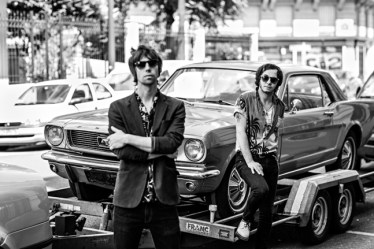 All popular music is synthesis, really. Everyone is influenced and the best somehow take their influences and combust them into something that sounds very different from where they started – so different that people mistake it for something totally new. Bosco Rogers is that perfect distillation of influences that breaks out into a new sound. It would be easy to pick out the various familiar musical motifs from the 1950s through to the 1980s on their debut album Post Exotic – the fifties Chuck Berry swinging guitar lines, the psychedelic meets glam meets garage rhythm section, the great textured vocal effects – but that wouldn’t do it justice. These guys are masters of the produced sound: each element of any song is placed into the mix ‘just so’ for maximum impact and effect. Is it surprising that the band’s two members run their own separate recording studios in the south of England and France? Not really.
 Yet this would be of fleeting effect if the material itself was not strong. And it is. It is hard to pick out just a few highlights from this album as each song contains its own special bit of ear candy, some great original sound, a distinctive instrumental choice, a hook that won’t let go. If pressed, I’d have to steer listeners to the super folk blues sound of “Anvers” with its catchy psych pop middle section, or the hypnotic whistle motif of “The Middle.” Then again title track “Post Exotic” has a seductive guitar swing, “Beach! Beach! Beach!” is an alternative universe beach party staple, “Drinking for Two” recreates the sunshine pop sound using classic 1960s vocal arrangements, “Roses” oozes 1980s synth pop, and so on. In a world of individual song downloads, Post Exotic rewards the listener with the complete album experience: all player, no filler.
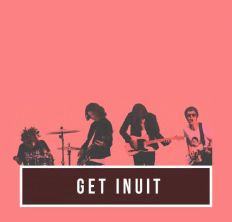 Drop everything and focus your attention on these breaking tunes, hot off the musical presses! Get Inuit hail from the southeastern county of Kent, England where nary a real Inuit can be found. Undeterred, they have crafted a distinct, noisy kind of poprock. Give their latest single a chance to get through to the chorus and you will be rewarded with some solid hooks. “Teriyaki” kicks off with some cramped sounding vocals, which fatten up and take off into a soaring melody-drenched chorus.
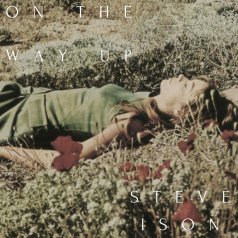 Moving north, Birmingham, England’s Steve Ison defies easy labelling, melding folk, poprock, and indie sensibilities. Both “Boy” and “I’m Leaving” sound infused with a bit of Donovan 2.0, while “From the Morning” and “I Woke Up from the Dead This Morning” both are faintly reminiscent of the Lilac Time, vocally at least. Ison is a musical iconoclast whose songs never quite go where you expect them to, which is wonderfully liberating.
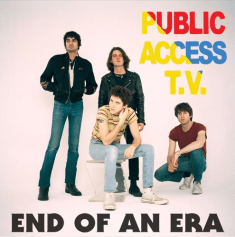 Over to New York City for the almost released debut album from the shamelessly rock and roll indie band Public Access T.V. who lament their musical genre’s end on their new single “End of an Era.” In fact, guitar rock and roll is clearly back with the success of bands like Vant, Catfish and the Bottlemen, and the Vaccines. So though the boys sing on this single that “the kids don’t like rock and roll anymore” don’t believe it. Never Enough is chock full of great new guitar poprock and drops in just three more days.
 Having said that, Hayden would be hilarious if he wasn’t so morose. With song titles like “Lonely Security Guard,” Weight of the World,” and “Blurry Nights” he manages to make Morrissey seem cheerful. Some songs are mini-sketches – both “Hollywood Ending” and “Lonely Security Guard” are vignettes performed with cinematic feeling, while others – “No Happy Birthday,” “Home by Saturday,” “Weight of the World” – just channel a sordid sounding sadness. This is not a criticism. I’m totally for sordid sounding sadness sometimes. Others step out of type with a more upbeat sound, if not sentiment. I love the simple piano riff that propels “Damn This Feeling” or distinctive guitar lines that undergird “The Place Where We Lived” and the majestic “Blurry Nights,” a track with ‘hit single’ written all over it. Hayden is currently touring behind a 20th anniversary edition of his first indie cassette tape release Everything I Long For. Hollywood EndingWeight of the WorldDamn This Feeling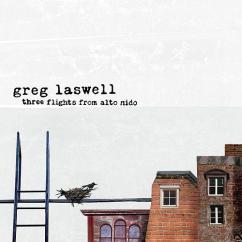
 I’ll admit, my first pass through the catalogue was selective, just four songs: “Wonder About Me” from their 2007 debut Suburban Sprawl, “Solitary Hotel” from the 2007 EP of the same name, “Die a Little Every Day” from 2010’s Peter Block, and “Long Gone” from this year’s Hard to See Beautiful. At first listen, I thought they were nice, bordering on pretty good. But after a week on replay their subtle hooks had gotten under my skin – pretty good became pretty great. So I went back for more. There’s too much to share here but there are a few songs you’ve just got to hear, like the hilarious “Lars,” the folk/country “Blackberry Girl,” two stellar vocal performances from Gowanis Yatch Club, and the John Waite “Missing You” period sound of “True Enough” and “Second Wind.”LarsBlackberry GirlMorning Finds YouMoving Around the SunTrue EnoughSecond Wind
 The good people at
  Butch Young joins a long list of performers transformed by the Beatles and their influence. There is hardly a note of his recent Mercury Man that does not bear the mark of the Fabs. But where he takes that influence is not merely homage – there are some great songs here. The title track has a very 1970s Beatle-influenced sound, a time when so many bands like Badfinger and ELO continued updating the style of the masters. “One Foot In” expands the musical footprint, adding a bit of Beach Boys and a host of other vocally-oriented 1960s bands. “Dime Store Jesus” sounds a bit 10cc to me, in a good way. But my favourite track is, hands down, “Asteroid,” with its whimsical loping pace and great organ, piano and vocal parts.
 I love performers with a great range of performance styles. The ‘all caps’ band, the CLIFFS, come from a number of prior musical commitments – The Blurries, Apples in Stereo, Deathray Davies, and more – but none sound like this new venture. The CLIFFS’ new album, Bill, You’re Only Human, is a stripped down punky poprock effort. “Volcano” goes along in an understated way until you get to the chorus, which winds up a great hook through the repetition of the title. Both “Jimmy Monet” and “Future Tense” seem to channel a low key Fountains of Wayne influence to my ears. “Crash” has that distinctive 1970s punky take on early 1960s disaster poprock. Probably my favourite track on the album is “I’m in Love with Tonight.” The title of the song is all the lyrics you get, but it still draws you in with its wonderful arrangement, adding a subtracting layers to good effect.
 Rounding things out is Cupid’s Carnival from their recent Everything is Love release. This is a band that wears their Beatles’ influences on both sleeves. A lot of the material here has been released by the same musicians under other names (Cherrystone, Roland Skilton) but not in these versions. This recording really ups the complexity of their Beatles vibe. “Girl” is a perfect example. The opening guitar slide sounds like it was lifted right off George Harrison’s early solo records but the vocal arrangement is more Meet the Beatles or Something New. Wow. These guys know their Beatle motifs and combine and rearrange them in original ways.Girl
 … I started this blog, with some trepidation, excitement, and a strong sense of purpose – to let anyone who might stumble across it know about all the great music I’d been finding, particularly those who might think that all the best music was in the past. My point, repeatedly stated over the past year, is that if you love music from 1950s through to the 1990s, people are taking up those influences today in wonderful, creative, and surprising ways. I have always loved all kinds of music, across a host of genres (e.g. rock and roll, country, jazz, etc.), but if I had to boil it all down, my favourite music is built out of a great song, something catchy you can sing on your own without accompaniment and still get a sense of the tune. For me, that has always been best represented in the broad category I call poprock.
 In the pantheon of emblematic poprock I would start with Buddy Holly and the Everly Brothers, segue to the Beatles and the Byrds, and carry on into the 1970s from there. I got started with my parents’ record collection, which covered most of the classics from the 1950s and 1960s. I was a child of the 1970s and the swan song of top 40 radio. I came of age with New Wave and all the early 1980s alternative scene. My first big discoveries on my own were performers like Elvis Costello, Marshall Crenshaw and Joe Jackson, and bands like XTC, Squeeze and Split Enz. Music has always been a huge part of my life. I started collecting records as teenager and by my late 30s had amassed nearly 6000 pieces of vinyl: 5000 long players and a 1000 45s (I’ve since ‘focused’ the collection down to about 1700 units). There were a few years where I lost touch with a lot of the new music that coming out as I bore down on completing graduate school and getting a permanent job, but I still caught the occasional show or discovered some new band. Over the past few years, I’ve ramped up that process of music discovery with great results.
 Since I started this blog a year ago I have managed to stay on target with roughly one blog post per week. I’ve also been in touch with a number of poprock bloggers, who’ve given great advice and suggestions for content. I’ve seen a bevy of live shows over the last twelve months featuring many of the bands I’ve been writing about, one advantage of living in Canada’s biggest city. But my biggest take-away from this experience has been grappling with the enormous surplus of talent out there. The world is full of talented people putting out great stuff, if you can just find it. Our humble efforts here at Poprock Record have been about supporting that process.
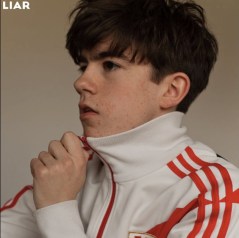 In 2015 Declan McKenna broke out of nowhere as a 16-year-old with his homemade single, “Brazil,” a catchy song that is a scathing indictment of the corruption at the core of FIFA and international soccer. Comparisons to Jake Bugg are common, but only for me because they both attempt to give voice to voiceless and take up political themes in an effortless way. His second single and video, “Paracetamol,” took up transgender issues. Part of McKenna’s appeal is the obvious authenticity of his lyrics and performance: imagine a more political Jonathan Richman. His EP Liar contains his first three singles and one more song, “Howl.”
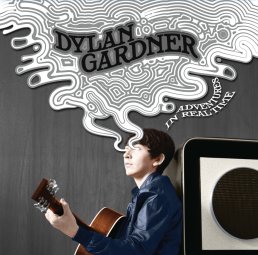 Dylan Gardner loves the Beatles and 1960s garage rock but only the former appears as influence on this first record. Recorded mostly in his bedroom, 2014’s Adventures in Real Time is chock full of poprock hits, if this blog were any arbiter of public consumption. “Let’s Get Started” and “Too Afraid to Love You” were the official videos and singles, and they are great, but my vote for AM radio top 40 perfection goes to “I Think I’m Falling for Something,” a track that kicks off with great keyboards and a nice horn section before settling into a super lurching poprock sound with interesting vocal arrangements. So too does “With a Kiss” bolt out of the gate on its acoustic strumming rhythm and a melodic hook that won’t let you go. “I’m Nothing Without You” has that Beatles majesty, nicely executed on the record but also charmingly performed in his bedroom in a video that has unfortunately disappeared from the internet. Gardner’s Facebook says he working on his second album.
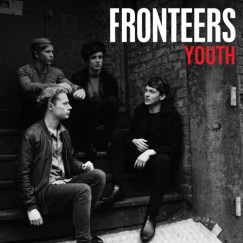 Over to the UK where the Fronteers have been going from strength to strength. When I heard their first single in the summer of 2015, “Youth,” I was impressed with their harmony vocals and folksy rock sound. But that didn’t prepare for what came less than a year later. “Idol” was like a totally different band, though not in a bad way. Great acoustic opener, hypnotic electric lead riff, and more great harmonies, but watch for the surprise bridge which seems to be channeling some spooky Everly Brothers vibe. Then just last month they released an EP, Streets We Were Born In, which ups the rock quotient again with tracks like “Full Moon.”

 Summer is slipping away before our very eyes. Time to reach for the beach one more time with tunes that celebrate the sand, sunscreen, and a summer love that probably won’t last much past Labour Day.
 When I first heard “Baby Ran” from their 1986 album 5440 (aka the green album) I was hooked. There was something so simple and catchy about the chorus, I couldn’t get it out of my head. Over the years, I kept buying their albums and CDs but reviewing them now I’m surprised how much of their material has always been folky and acoustic as well as jangly alt rock. The contrast is brought together on their latest release, La Difference, subtitled A History Unplugged. Some might complain that an ‘unplugged’ album is the last refuge of the musical scoundrel, where artists go when they have run out of ideas. But this effort really is a creative reinvention of the band’s singles catalogue. The most stark example is probably “Baby Ran,” which shifts from rock to country in this iteration without losing any of its hooky charm. Both new and old version appear below for easy comparison. The whole record is strong but for me the highlights include “One Day in your Life,” “I Go Blind,” and “Casual Viewin’.”
