
Tags
Family Values, Good Love, Mind Over Matter, My Father, Paris Syndrome, Peter Yorn, Sam Weber, Time Stands Still, TUNS, Valentine Nevada
Sometimes you hear things you are know are ‘top of the charts’ freaking fantastic. Some songs are more of a slow burn. Others just conjure up something familiar and fun. Today’s collection runs this gamut of urgency, subtlety, and familiarity.
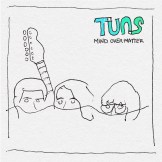 TUNS are a do-not-delay, go straight-to-download recommendation. From its opening chugging riff, “Mind Over Matter” grips you in an expectation of the power pop glory to come with some surprising departures from the genre, like the delicious drawn-out ‘ooh’ vocals and the measured but still raunchy solo guitar motif that appears briefly after the first chorus. This tiny nugget of poprock gold will have to do for the time being as a full album from this Canadian supergroup (which includes members of Sloan, Super Friendz, and Inbreds) won’t drop until the end of the summer. If their June show at the Garrison in Toronto was anything to go by, the album will be stunner.Mind Over Matter
Sam Weber’s new album, Valentina Nevada, is finally out and it rivals his debut in its range and melodic charms. “Good Love” draws on the piano side of Weber’s songwriting talents, a rollicking tune with a bit of slow swing. Weber manages to combine a country-rock vibe with a solid poprock chorus, with some nice guitar and vocal flourishes.
Good Love
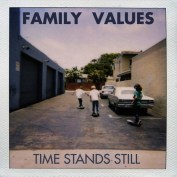 Norway’s Family Values have some serious 1986 time-warp issues going on with their recently released single, “Paris Syndrome.” A bit of Athens, Georgia poprock, perhaps a splash of Kelowna’s Grapes of Wrath: I mean, what’s not to love? There’s not much else to find from this band, with this single featured on their four song EP Time Stands Still and a previous EP from 2015 (jokingly titled Greatest Hits) that has a charmingly less-polished, 1980s-Aztec-Camera sort-of sound.
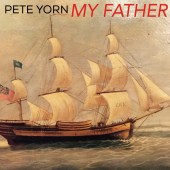 Just in time for Father’s Day, the enormously talented Pete Yorn released this homage to fathering, perhaps his own, maybe anyone’s. This free-flowing poprock tune has shades of Teenage Fanclub or Sloan, in Yorn’s typically subtle style: tuneful, without hitting you over the head with it. This song does not appear on Yorn’s just released (and amazing) Arranging Time album.My Father
In the old days, we had to write fan letters on actual paper using actual pens. Now you can easily visit TUNS, Sam Weber, Family Values and Pete Yorn on the internet to find out what they’re doing and where to get their music.
 Free Energy have a number irresistible singles across their two albums and EP. Things started off well with their debut song “Free Energy.” There is something audacious and mildly amusing about forcing deejays to say ‘here’s “Free Energy” by Free Energy!’ Say what? Even before they got their own material out, they had a killer cover of Springsteen’s “I’m Going Down.” Their 2010 debut album Stuck on Nothing channels a mixture of Bachman Turner Overdrive riffing with 1980s pop song sensibilities. “Light Love” has it all – swirling, candy-coated guitar sounds, fattened up vocals, and some great slow burn hooks. 2013’s Love Sign offers up more of the same, along with a few more languid pop gems, like “Dance All Night.” Free Energy are like a retro-1980s dance party band, but with fresh material. Since 2013, things have slowed considerably for the band, with some solo material from various band members emerging. However, their Facebook page did recently indicate that more would be coming from this band.
 September 2012 I casually checked out something called iTunes Festival on the Apple TV home screen and accidentally discovered Jake Bugg. The feeling was electric. Kinda like when I saw Tracy Chapman open for John Martyn in Manchester in 1988 three months before her breakthrough appearance at the Nelson Mandela concert at Wembley Stadium in London – everyone in that northern club knew we had just seen a major talent. Bugg’s debut album came out in October and it did not disappoint. Everything that made his iTunes performance amazing was there. Shockingly, the album opened at number one on the British charts.
 Many have written about Jake Bugg’s youth, his songs, guitar playing, and singing style, but what struck me as special about Bugg was his authenticity. His songs were all about working class life in middling England in the new millennium, something overlooked in most of popular culture. Indeed, the absence of any cultural mirror for the experiences of working class youth in most western countries makes the occasional mention stand out in stark relief. Bugg’s debut album gave voice to a generation left behind by the economy and the political class in songs like “Two Fingers,” “Seen It All,” and “Trouble Town.” Sure, some fans and music writers just listened esthetically, hearing the folk, folk blues, and rudimentary rock and roll sound, but the ability to speak authentically about his community’s class experience touched a nerve for those who were listening. However, after touring with the album for over a year, Bugg told journalists he doubted he could write about such experiences anymore because his life had changed so much.
 Bugg’s new album, On My One, is almost out and it appears to be similar to and different from his earlier material. The social themes remain but he pushes himself artistically into new genres. Growing up in the new century nobody consumes just one style of music so it was hardly surprising that Bugg’s talent could not be contained in just a few styles. “On My One” evokes the lonely solo acoustic guitar sound of Don McLean’s American Pie album, specifically “Vincent” and “Till Tomorrow,” while drawing from Bugg’s experience as a performer on tour. “Love, Hope and Misery” confirms Bugg’s talent for remaking the American blues ballad in his own style. But my favourite amongst the currently available selections from the record is “Bitter Salt,” a song unlike anything Bugg has done to date, a catchy poprock effort with a punchy arrangement and solid hooks.
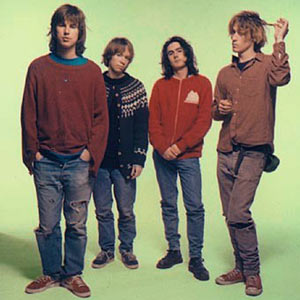 Back in 1996 I got my copy of One Chord to Another and thought it was pretty cool, but frankly I was a bit distracted. I didn’t give it the worship it deserved. Reviewing it now I can better appreciate how this band had it all going on – great sound, solid hooks, and a palpable authenticity. How did Nova Scotia produce such a monster act? Their first EP Peppermint and full length album Smeared had a great indie sound, with both versions of “Underwhelmed” worth hitting repeat on. But their first major label effort, 1994’s Twice Removed, announced the arrival of a polished and original musical force, with “Penpals” a great weird single. Then they turned around and dumped their major label (Geffen) and turned out another great record, 1996’s One Chord to Another, spending one-tenth the budget of the previous one. While the album is bursting with great tracks, I’m partial to the very Beatle-esque “The Lines You Amend.” Talk was, Sloan would be the next big thing worldwide. But things didn’t really pan out that way.
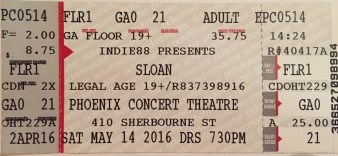 Earlier this month I saw Sloan play One Chord to Another in its entirety at the Phoenix in Toronto as part of 20th anniversary tour commemorating the album. The show was broken into two sets, with the first blasting through OCTA and the second drawing from their other ten albums. Despite owning three of their records, I couldn’t name a single tune, though their audience was pretty well informed, drowning out the band on a few sing-a-longs. After such an amazing show, I decided to school myself on all things Sloan. Was this a band just reliving the glory of a few early records? After reviewing their catalogue, I can honestly say ‘no’. If anything, Sloan’s records only improve over time as the band expands its sonic range and songwriting scope. And that is saying something because those early records – Smeared, Twice Removed, One Chord to Another, Navy Blues – showcase the signature early sound of Sloan where the vocals and guitars slide together into a great sonic mash of hook-laden tunes. But, I will have you believe, their later material is even better.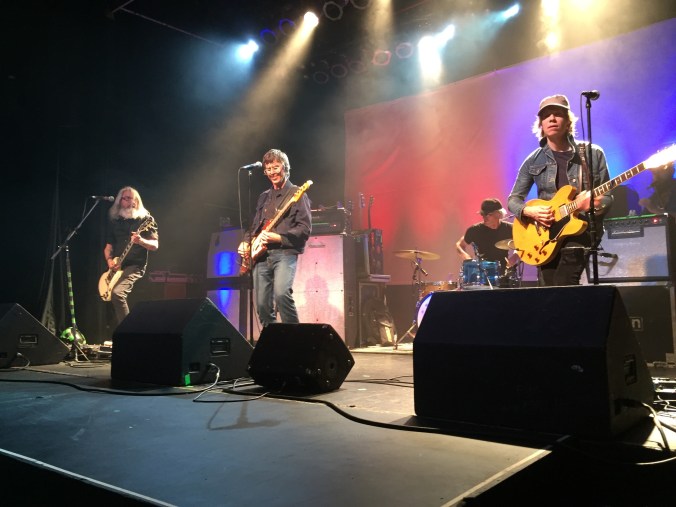
 Patrick Boutwell’s first solo outing came highly recommended from
  I saw John Mark Nelson open for Little Green Cars in Toronto last month and I was struck by his boyish earnestness, a quality that permeates a great deal of his recorded material. His first three albums are alternatively folky, whimsical, sometimes even vaudevillian, occasionally poprock, while his most recent, I’m Not Afraid, marks a departure into more serious territory. Check out his video for “
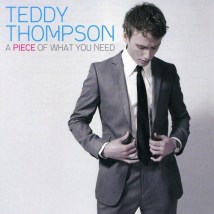 At the risk of turning this blog into a Teddy Thompson fan site, I had to feature “In My Arms” from his 2008 album A Piece of What You Need. On his fourth album, Thompson exudes a new confidence, bringing all his disparate influences together into a bold new style, with “In My Arms” as a dynamic single. The opening drums signal some classic poprock is being served up and Thompson does not disappoint. The hooks are so subtle you don’t realize you’re being seduced until you find yourself singing along. The accompaniment is both traditional and unusual: solid acoustic guitar anchoring the song, nice electric guitar flourishes, great background vocals, but then inserted here and there are what sound like video game sound effects and a killer, full-on, in-your-face organ solo. In your own personal imaginary video, the top is down on the convertible, the wind is blowing through your hair (in the most photogenic way), and the radio playing this song is cranked. Of course, this video captures the sentiment nicely too.
  There is something very Dandy Warhols about the recent Turbo Fruits single, “Show Me Something Real.” On their most recent recordings, both bands appear to combine a late 1990s rock sound with some classic late 1960s ambience, to great effect. While a number of
  Victoria’s Sam Weber has material that sounds deceptively simple but there is significant depth to his songs: subtle hooks, sophisticated production, and great arrangements. His 2014’s debut album, Shadows in the Road, has so many great songs it is hard to showcase just a few. Certainly “Right Hearted” has to be singled out as the obvious radio single. While the intro might be a little long, when the acoustic guitar kicks in the song takes off, stratospherically so when the keyboard appears at the 1:17 point. There is a very Sam Roberts feel to the hooks and chorus.Right Hearted
 Sam Weber and band appearing live in a Toronto living room, May 2016.
 Two Vancouver bands with striking similarities take us in a motherly direction in this post. They were both formed in the mid-2000s and branched out musically from more stripped down roots and acoustic leanings in their early recordings to embrace indie rock, new wave, and even dance influences later on. “Mother” is from Said the Whale’s 2013 album hawaii. While overshadowed somewhat by the 1981-ish, new wave sounding hit single “I Love You,” “Mother” is a solid release in its own right. Kicking off with a rather spare bass and drum sound, the vocals stand out for their effervescent quality, only to break out into a surging chorus laden with great keyboards and guitar lines, while the lyrics perfectly capture the transitional anxiety of young adults as the singer urges “don’t tell my mother till I pull myself together.”
 There is something quite wonderful about this impressive mash-up of late 1950s Felice and Boudleux Bryant-era songcraft with the fresh and contemporary sound of Thompson and Jones on this recording. The Everly Brothers, Buddy Holly, Roy Orbison – we could imagine any of them recording this song, but that does not in any way take away from what is accomplished here. Great plinky piano, ghostly background organ, dead on handclaps, subtle guitar lines, and two vocalists who really know how to entwine a harmony. “Never Knew You’d Love Me Too” is featured on the duo’s new album Little Windows, which mines a seam of old-time American cross-over country and western that can only be described as ‘delightful.’ This is all the more impressive when one considers that neither performer is a dedicated country artist (though Thompson’s catalogue does include various country songs and one previous dedicated country album), and yet somehow they have the authentic feel for the genre that, frankly, a great deal of new country lacks. If we still had variety shows, these two would be your featured Saturday night special guests.
 Linus of Hollywood, stage name for Los Angeles musical polymath Kevin Dotson, has distilled a unique blend of 1960s/1970s influenced poprock on his four albums and various singles since 1999. And he has a voice that is often a dead ringer for Squeeze frontman Glen Tilbrook. The album catalogue might look a bit thin, but that’s just because he’s in such constant demand to do music for television and movies and produce and write songs for other people’s records to pay the bills. But what he has managed to put out is quality stuff, fully deserving of stratospheric success.
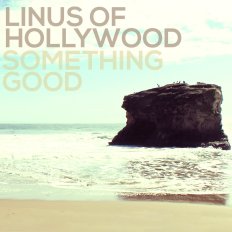 All that went before was enjoyable but 2014’s Something Good takes Linus of Hollywood’s performance to a new level. As
  You’ll never see the rock critics expounding on the seminal influence of Simon and Garfunkel to contemporary music – but it is there. Not because S&G broke new ground like the Beatles or the Kinks or the Who. Nor did they exude a counter culture rock persona like the Rolling Stones or Jimi Hendrix. But they did contribute to the unique 1960s synthesis of musical styles, songwriting, and performance that would define the popular song in the decades to come. Paul Simon’s genius was in melding the authenticity of folk music with the more relentless hooks from pop music, cast against a dazzling array of musical backdrops (something more fully exploited in his solo career). But in S&G, his talents produced a unmistakable sound, regardless of the style of the material. That sound can be found all over the contemporary music-sphere.
 Poprock Record