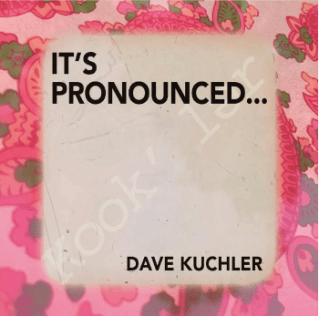
 Once upon a time jangle guitar player/singer/songwriter Dave Kuchler joined an already established New Jersey band to help deliver one of the most criminally overlooked poprock masterpieces of the early 1990s, the Soul Engines’ Closer Still. It’s Kuchler singing lead on that janglicious, hook-infested “It’s Just Another Day.” And then … nothing. A follow up got underway but sputtered out amid record company chaos and line up changes. Well, I’m excited to report that Dave Kuchler is back with a new solo album, It’s Pronounced …, and it’s definitely been worth the wait. Kuchler’s put together a collection of tracks that exudes a distinctive New Jersey rock and roll synthesis (think heavy doses of Hammond B3 and saxophone) with a particular accent on melody. Just check out the medley of influences on the album’s stellar opening cut “If I Saw You” with its Springteen-esque roll out that trades melody lines between electric guitar and sax, with hints of Byrdsian jangle hovering in the background. It’s an auspicious start that doesn’t let up over the album’s twelve tunes.
It’s Pronounced … brings together old and new, with six tracks representing recovered older material (some from the early 1990s, others from aborted Soul Engines sessions circa 2002), while others are newly recorded songs, supported by longtime Joe Jackson bass player Graham Maby and regular Kuchler collaborator/producer/instrumentalist Pinky Giglio. Beyond elements of what some might call a ‘Jersey shore’ heartland rock, the record covers a broad range of styles, from the neo-Mersey vibe of “Better Things to Do” to the Elvis-style rockabilly vocals on “Pull My String” to the Jackson 5-influenced “Go!” Who would have thought the world needed another cover of “When You Walk in the Room” but Kuchler aces it, adding muscle to the tune amid killer organ flourishes and spot on sibilant guitar work. But the highlights of this record for me are the double-barreled should-be hit singles, “Really Lasts” and “Slave to Katy.” The former cooks with an unrelenting Motown meets Stax-Volt pop soul dance groove, ornamented with an ear-wormy bells/keyboard effect that Bruno Mars used to good effect on “Marry You.” Originally recorded with the Soul Engines for the follow up to Closer Still, the cut sounds just as fresh and contemporary as ever. Meanwhile “Slave to Katy” illustrates how Giglio’s Hammond B3 organ work is the not-so-hidden star of this album (as well the sonic glue linking old and new material).
Kuchler’s It’s Pronounced … has the sound of a timeless classic, a paean to poprock songcraft and performance. It deserves a wide hearing. Find out more about on Kuchler’s Facebook page and get over to bandcamp to get your copy.
 It all started with Tom Petty and some ironing last weekend. As I got reacquainted with Hard Promises it eventually drew me away from the shirts to exploring on the internet how Petty put the album together and, as one thing led to another, I was soon listening to Petty’s efforts in the producer’s chair of Del Shannon’s 1981 comeback album, Drop Down and Get Me. The record turned out a minor hit with his cover of “Sea of Love” as well as inspired renditions of the Rolling Stones (“Out of Time”) and the Everly Brothers (“Maybe Tomorrow”). But perhaps more surprising was that the bulk of the album consisted of winning Shannon originals like the title track, “Life Without You” and “Cheap Love” (later covered by Juice Newton). Hard to believe that talent like this had been missing from the Top 40 since 1965 but depression and alcoholism had helped stall Shannon’s career more than once. Despite assembling a dream team to work on a new album as the 1980s drew to close, he succumbed to depression and suicide in February 1990. The album-in-progress did finally emerge in late 1991 and Rock On! showcased Shannon’s extra-ordinary talents to good effect in terms of singing, songwriting and performance. The should-be hit single was the album opener, “Walk Away,” with its strong Travelling Wilburys vibe and signature Shannon soaring falsetto. It’s a chill-inducing gem of a single!
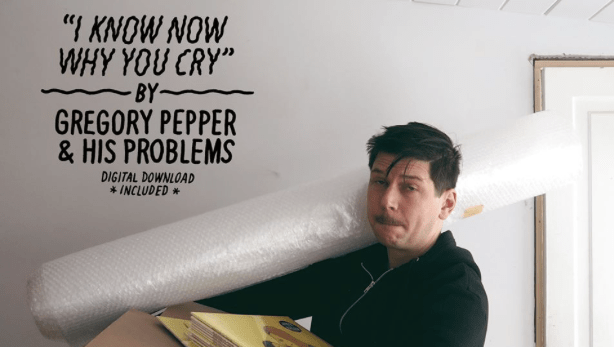 A toy piano kicks off “Good Call,” the opening track of I Know Why You Cry. The song also features a pretty wicked violin solo. It’s all part of the unpredictable whimsy we’ve come to expect from Guelph, Ontario’s favourite son, Gregory Pepper. But the song also touches on aging, life struggles, and questions of identity, themes that appear throughout the record. I Know Why You Cry is actually a curated selection from Pepper’s mammoth “Song of the Week” exercise from 2017-18, a “long, cheeky, confessional mixtape” says Pepper that produced 52 tracks of sometimes undisciplined, often manic melody. Amid the chaos of delivering a new song each week Pepper also grappled with classic transitional life events like losing a parent, having a baby, and rebuilding a kitchen. Now, almost two years later, Pepper offers up a precisely crafted distillation of the experience. And the results are good. Very good indeed.
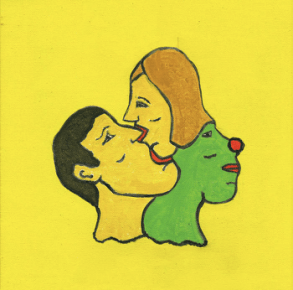 The album’s ‘dark’ side opens rather sprightly with “Good Call,” despite a melody and march-like feel that belies its serious themes. “Bottle of Ink” is basic biography. Pepper is also an accomplished graphic artist that uses his bottle of ink to capture things that are ‘funny and sad when life is a drag.’ Then its full on into darkness, with songs exploring worry (“Worrier Spirit”), loss (“Maybe I’ll See You”), identity (“Unsolved Mystery”) and coping (“Bogus Journey”). But darkness Pepper-style is not really a downer at all. The tuba and Monty Norman Bond coda on “Worrier Spirit” cuts the dread down the size pretty effectively. Things do occasionally get somber, as on “Bogus Journey” when Pepper channels Yann Tierson in his Amélie and Goodbye, Lenin! phase. But never for too long. Case in point: the lovely situational sketch drawn out in “Sublime Sun Tattoo” where a shop song query segues into surreal speculation about Enya’s lonely castle and stalkers so obsessed they stab themselves. It takes a certain kind of wonderfully twisted creativity to deliver this stuff.
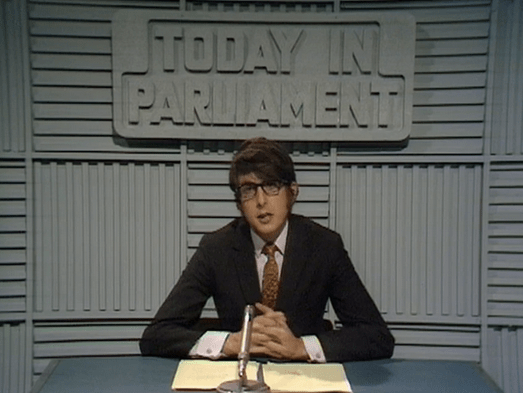 There may be bad news on the doorstep but our musical headlines are nothing but blue skies ahead! Today’s news breakers include a brand new long-player, a recent album release, as well as an overlooked gem from years past.
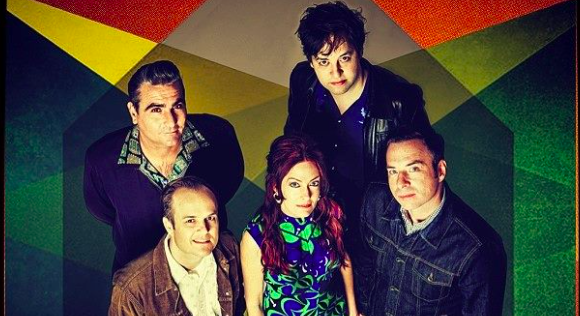 Looking for a new fave 1960s-influenced band? Your search ends here. Today’s post is all about the beauty of Austin, Texas retro poprock should-be hit-makers The Ugly Beats. Often referred to as ‘garage rock,’ the band definitely has one foot in the car port but a dip into any one of their five LPs shows they have are so much more to offer.
 Take the band’s most recent 2019 release, Stars Align. Sure, track three, “Count to Ten” is arguably garage-y, but it’s the tidiest one on the block. Meanwhile tracks one (“All In”) and four (“Heidi”) are vibing R.E.M. big time. The rest of album ranges across various sixties influences, from the Monkees-ish “In Her Orbit” to the early Kinks guitar squawk kicking off “She Come Alive.” What I love about this band is that the influences are obvious but never overbearing. “What Was One” combines an indie-fied British dollybird vocal with alternating jangle and power chord guitar – brilliant! And seldom have I heard a band use an organ to such good effect – check out the pulsating Farfisa in “Boy You’re in Love.” Meanwhile, few solely garage outfits can produce the nuanced Rubber Soul acoustic/electric guitar blend backing on “One Down.”
 More good news: if you like the latest record, you’re going to love the band’s back catalogue. The 2005 debut Bring On the Beats established the group’s strong garage rock cred with some pretty sweet 1960s touches, particularly on tracks like “I’ll Walk Away” and “I’ll Make You Happy.” Think of what
  2010’s Motor! put the organ even more front and centre on tracks like the Plimsouls-ish “Things I Need to Know” and “Through You.” While featuring the fabulous garage juggernaut instrumental “Motor,” most of the album sees the band flexing their musical chops across a number of styles. A bit of the Bakersfield sound on “Harm’s Way,” Blue Rodeo country tinges on “You’ll Forget Me,” some Merseybeat on “Please Don’t Go,” and classic mid-1960s American poprock with “Funny Girl.” 2014’s Brand New Day is more of the good same, from the manic garage intensity of “Up on the Sun” to the groovy jangle on “All of the Things.”
 Marshall Crenshaw has long been my fave solo artist. Why MC? Maybe it was the glasses – he looked kinda smart and rock and roll. But what first caught my attention was the 1000 watt hook lighting up Field Day’s first single, “Whenever You’re on My Mind.” Has anyone recorded a more perfect seven seconds of poprock intro? I don’t think so. But then I’ve always been a sucker for a stunning lead guitar line – stuff like the Beatles’ “I Feel Fine” and “Day Tripper” or the Church’s “Unguarded Moment” and Big Country’s “In a Big Country.” But it’s more than just hooks that makes Crenshaw a poprock legend, there’s something about his songs that can always toggle the joy and an involuntary smile from me. And it’s all there with his combination of 1950s Buddy Holly and Everly’s roots, Beatlesque melodies and a 1980s new wave/indie delivery.
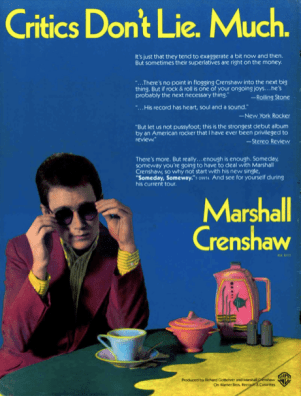 With ten albums, six EPs, and a host of one-off singles, compilation contributions and covers there’s plenty of Crenshaw to choose from. What follows is just my whirlwind and idiosyncratic take on a pretty fabulous and inventive career. Now to begin, let’s be clear that MC’s first two albums, the self-titled Marshall Crenshaw and Field Day, are pretty much poprock perfection. I shouldn’t single anything out – these records are nonstop ear candy. I’ll say this much, you can dance to “She Can’t Dance” while “One Day With You” is a masterclass in melodic songcraft. Funny, though I first heard MC via Field Day’s initial single, I didn’t pick up the album until years later. Problem was, as an older release (by one year when I first heard it!) the damn record never went on sale at my local retailer.
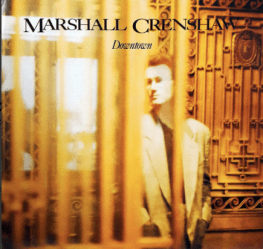 The first Crenshaw album I really got into in real time (i.e. when it was released) was Downtown and it remains my favourite, mostly for sentimental reasons. I bought it and played it non-stop in my first one-room apartment in Vancouver’s West End. It was both a declaration of adult independence and – thematically, with its retro 1960s Warner Brothers vibe – a strong link to my parents’ record collection. The album rocks on tracks like “Right Now,” “Little Wild One,” “Terrifying Love,” and “(We’re Gonna) Shake Up Their Minds” while Everly-ing the hell out of “Vague Memory” and “Lesson Number One.”
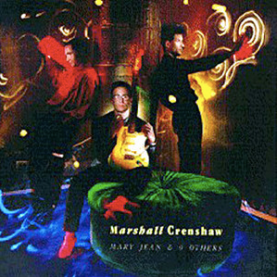 From then on I’ve pretty much picked up every EC release as soon as they hit the shelves and never been disappointed. If you’re just starting out, here would be my picks from each to get you into the groove. From 1987’s Mary Jean & 9 Others I’d drop the needle on “Mary Jean” and “Calling Out for Love at Crying Time.” You really get a sense of Crenshaw’s mastery of the hooky lead line here. 1989’s Good Evening is hard to make choices over given its exquisite, dynamic mix of originals and covers. Personally I love “Someplace Love Can’t Find Me,” “She Hates to Go Home,” and “On the Run” but really I feel like I’m choosing which limb to hack off because every song here is pretty special. In 1991 MC left Warners for MCA with Life’s Too Short. In interviews for the record Crenshaw talked about the work he put into extending his guitar technique and it showed on should-be hit singles like “Delilah,” “Fantastic Planet of Love,” and “Don’t Disappear Now.”
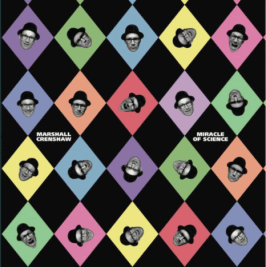 And then Crenshaw left the major label scene altogether for the relative freedom of more independent releases, first with Razor and Tie and then with his own 429 Records. Since then he’s moved in some new directions musically but always offered up some melodic poprock gems, like “What Do You Dream Of?” and “Starless Summer Sky” from 1996’s Miracle of Science, or “Television Light” and “Right There in Front of Me” from 1999’s #447. In the new millennium there’s been “A Few Thousand Days Ago” from 2003’s What’s in the Bag? and “Long Hard Road” from 2009’s Jaggedland. #395 is MC’s EP collection from 2015, a kind of quasi-album at 14 tracks, and it sees Crenshaw back in excellent form with “Moving Now,” “Front Page News,” and a killer Bobby Fuller cover “Never to be Forgotten.”
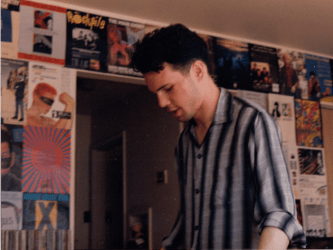 Just to prove my MC cred, here’s snap from my past featuring my unique bachelor apartment decor! Ok, this is actually my second apartment (circa 1987) but if you look up in the far right corner, you’ll see the Billboard magazine ad/poster for MC’s debut LP that appears above on the wall! Photo credit: James Koester.
 Poprock Record