Tags
American Soft, Cheap Shades, Chris Staples, Golden Age, Goodman, Isn't It Sad, Square America, The Top Boost, Twins, What We Want
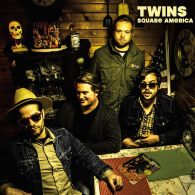 Twins were a first for me. Their publicist sent me a blurb and link to their latest release in advance of its drop date, asking me to have a listen. I’m glad I did. Hailing from the bustling burb of Waterloo Iowa, Twins have a great pockrock feel, channeling a super new wave vibe on their first album, 2014’s Tomboys on Parade, particularly on “Tomboy.” By 2016 their Kiss of Life EP had a sweet melodic 1960s pop single in “This Time.” But their new album Square America takes all these various influences and kicks it up a notch on such great songs as “Breakin’ Up” and “Take That Gurl.”
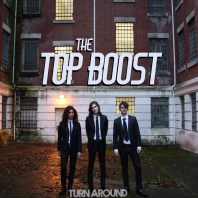 Power Pop Square turned me on to Vancouver’s The Top Boost and not long after Powerpopaholic wrote about them in glowing terms. The hype is genuine – this band has got something special going on, combining classic mid-1960s guitars with spacey 1980s vocals. “What if She Loves You” is a classic sounding single, with chiming guitars and great vocals.
 A casual and inattentive listen might have you thinking that Chris Staples is just another LoFi drifter, with a few more hooks to offer. But there is some serious genius going on in his multiple releases over the past decade. Staples spent a number of years rocking out with bands like TwoThirtyEight and Grand Canyon before embarking on his present, more mellow solo career. What I love about Staples’ work is the casual poetry of his arrangements. His songs are deceptively simple in conception and execution.
 “Relatively Permanent” from his most recent Golden Age combines a distinctive electric guitar line, acoustic guitar, haunting background vocals, and Staples own dry folky vocal delivery. “Cindy, Diana, Janet and Wanda” from the 2015 EP Cheap Shades demonstrates Staples’ talent for imaginative lyrics that gel with his music in a way that appears completely free of artifice. The guitar lick opening is so casually addictive, the distant harmonica so evocative, that when the lyrics come in they are surprisingly and similarly melodic. The lyrics really are brilliant for their ordinary complexity: “How could I forget Diana, she moved here from Gary, Indiana” or “She left me for a married professor, extra credit for letting him undress her.” “Dark Side of the Moon” from 2014’s American Soft has a lovely swinging acoustic guitar base and a sweet love sentiment. “Cincinnatti” from his 2011 EP Faces sees Staples shifting from a great swinging electric guitar line to lyrics that match the swing. And there is much more discover this Pensacola, Florida native on sites like Bandcamp.
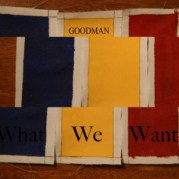 Michael Goodman, who goes by just Goodman on his recordings, is one of those amazingly talented young men. Bandcamp features some pretty impressive and catchy demos from the 13-year-old version of Goodman, talent that only blossomed in later years. Things really start to come together on Goodman’s 2012’s release, What We Want, with the infectious single “Night Person” and the great title track. 2014’s Isn’t it Sad has many highlights but “Blue Eyed Girl” stands out for its killer chorus. Since then there has been a succession of quality singles like 2015’s “Telegram Girl” and 2016’s “Shallow.” Goodman has all the poprock chops, a solid foundation in 1950s and 1960s song structures, but funneled through late twentieth century sensibility.
Twins, The Top Boost, Chris Staples and Goodman exist in this digital world of MP3s but also have a real corporeal existence – and that requires dollars on the barrelhead, or whatever passes for currency in your neck of the world. Pay them a visit, pay them some cash …
 When people think “Bryan Adams” it’s easy to visualize the rock swagger or call to mind the many, many power ballads that have dominated wedding receptions from the mid-1980s on. But Adams is also a master of the polished poprock gem. The list of infectious hook-laden tunes is so long we couldn’t possibly recount them all here. His most recent album, 2015’s Get Up, is more proof he’s still got the knack for pumping out catchy songs. Producer Jeff Lynne does an amazing job of tweaking and sweetening the pop tinge with his signature suite of production techniques. There’s more than a little ELO flavour to tracks like “That’s Rock and Roll,” “Do What You Gotta Do,” and “Don’t Even Try,” the latter featuring a great Beatlesque guitar sound circa Beatles for Sale. Adams also gets back to his 1980s poprock roots on tracks “You Belong to Me,” “Go Down Rockin’” and “Yesterday Was Just a Dream.” But the standout track is “Brand New Day” with its driving, propulsive rhythm guitar that recaptures some of the excitement of his early to mid-1980s poprock glory days.
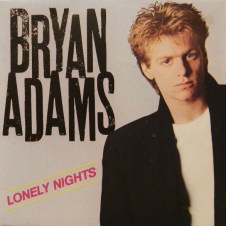 I had discovered Adams on a bus going downtown in Vancouver sometime in 1981. I was listening to CFOX on some strange FM-only portable radio when “Lonely Nights” came on: I was floored. I loved the shimmery lead guitar, what would become Adam’s signature crunchy rhythm guitar, and the tune. I immediately went downtown and picked up You Want It, You Got It. Side One of the album still blows me away: “Lonely Nights,” “One Good Reason,” “Don’t Look Now,” “Coming Home,” and “Fits Ya Good” – I could (and did) play it over and over. It remains my favourite Adam’s album (and my 16-year-old self did find Adam’s cover shot pretty cute). Cuts Like a Knife also had so many great tunes, though I would single out “This Time” as a pretty perfect poprock single. Reckless would be Adams’ masterpiece with nary a false move. Its key single, “Run to You,” is as good as poprock gets, a remarkable bit of songwriting, production, and arrangement. The atmospheric keyboard backdrop and ringing guitar lines alone are worth the price of the album.
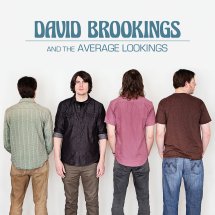 Virginia native and L.A. transplant David Brookings cut his teeth on the classics of the poprock. His sound melds the Beatles with the 1970s Beatles-influenced bands like ELO and Badfinger. His previous six albums channel these influences in a catchy DIY sort of way, with great album covers evoking the spirit of the 1960s, and some standout tracks like “Obsessed,” “Dead Battery,” and “If I Don’t Make it Back.” But his latest longplayer, David Brookings and the Average Lookings, represents a career peak, with his finest songs and most impressive performances. “Hearts” is a solid single, featuring an impressive layering of sonic effects in terms of instruments and vocals. I thought it was far and away the obvious track to feature from the album, but the more I listened to “Time to Go” I wasn’t so sure. So they both appear here. Honourable mention to the very catchy “Place We Can Go.”
 The arrangements on this Gordy Garris Group album are so subtle, meant to complement and enrich what could essentially be a record of acoustic singer/songwriter tunes. For instance, “Nightfall” starts with a nice acoustic guitar finger roll, which is quickly augmented by a low impact organ undercurrent, and eventually joined by the full band and some nice ‘oohs’ background vocals.
 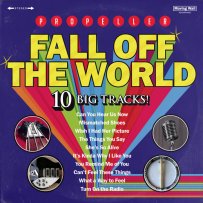 This unabashed love single to the Ramones by Propeller works at so many levels. It manages to be so Ramones without being just a derivative knock off of that band while also being a solid tune on its own merits. “Turn on the Radio” is featured on Propeller’s latest album, Fall Off the World, which features a cover that is a spot-on reincarnation of the many K-Tel compilation albums (that certainly did not feature the Ramones!) from the 1970s. Other strong tracks include “Wish I Had her Picture,” “She’s So Alive,” and “Can’t Feel These Things.”
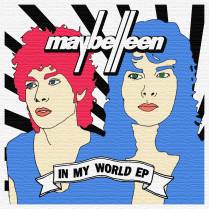 Montreal’s Maybelleen have got a unique sound, a blend of 1960s musical motifs (great signature vintage guitars, harmony vocals) with various 1980s synth keyboards, a mix that defies easy categorization. “Bring to Light” is from their debut EP, Gold in Your Hands, a collection of very professional sounding demos. Their first official EP Stereotypes has refined the vocal sound with songs that continue to riff on and develop their hybrid 1960s/1980s sound with the catchy title track,“Models on TV,” and particularly on “To Know Me Better Now.” Their most recent EP In My World has brought the guitars up front and tweaked the vocals to create a more conventional (but still great) poprock sound, as is showcased in “When I’m Right.”
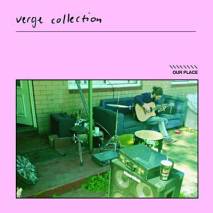 Sometimes a band says, “ya, we’re from Australia” with every line they sing. Perth’s Verge Collection ooze Australia, from their charmingly accented singing to the various Australianisms littered throughout their songs. “Our Place” is a swinging bit of fun that makes you want to hit replay as soon as it ends, with some languid sounding lead guitar and a subtle bed of organ anchoring the song. The single’s B-side “Feel Bad Songs” is also great.
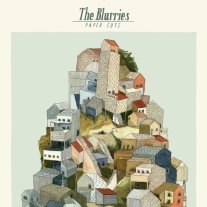 Austin, Texas has so much great music going on, including The Blurries, who kick off their 2011 record Paper Cuts with a track that bolts out of the gate and doesn’t stop. “Little Marie” is driven by a combination of acoustic and electric guitar, with the acoustic anchoring the song and the electric providing its propulsive tension. You can watch the band perform a version of the song for the podcast
  … and you’re sitting, well, not on top of the world, but somewhere – interesting. Since 2004 California’s Rogue Wave have been releasing albums that tweak and redirect that state’s peculiar dream-state, inviting a melancholy re-assessment of life and the act of living it. Their 2005 single “Publish My Love” stood out from the pack of bands peddling acoustic-guitar based, pleasant-sounding pop songs for its starkly original sound: all the classic poprock motifs were there but somehow Rogue Wave put it together in a distinctive way.
 Their new release is the whimsically-titled Delusions of Grand Fur and it reproduces all that the band excels at: highly textured production, a solid bed of acoustic guitars, creative instrumentation, and catchy tunes made more interesting by inventive vocal and percussion arrangements. Highlights include “In the Morning,” “Look at Me,” and the stunning, stand-out single, “California Bride” with its shimmering guitars and dreamy vocals.
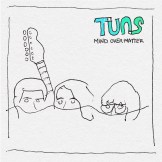 TUNS are a do-not-delay, go straight-to-download recommendation. From its opening chugging riff, “Mind Over Matter” grips you in an expectation of the power pop glory to come with some surprising departures from the genre, like the delicious drawn-out ‘ooh’ vocals and the measured but still raunchy solo guitar motif that appears briefly after the first chorus. This tiny nugget of poprock gold will have to do for the time being as a full album from this Canadian supergroup (which includes members of Sloan, Super Friendz, and Inbreds) won’t drop until the end of the summer. If their June show at the Garrison in Toronto was anything to go by, the album will be stunner.Mind Over Matter
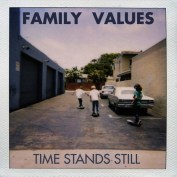 Norway’s Family Values have some serious 1986 time-warp issues going on with their recently released single, “Paris Syndrome.” A bit of Athens, Georgia poprock, perhaps a splash of Kelowna’s Grapes of Wrath: I mean, what’s not to love? There’s not much else to find from this band, with this single featured on their four song EP Time Stands Still and a previous EP from 2015 (jokingly titled Greatest Hits) that has a charmingly less-polished, 1980s-Aztec-Camera sort-of sound.
 Just in time for Father’s Day, the enormously talented Pete Yorn released this homage to fathering, perhaps his own, maybe anyone’s. This free-flowing poprock tune has shades of Teenage Fanclub or Sloan, in Yorn’s typically subtle style: tuneful, without hitting you over the head with it. This song does not appear on Yorn’s just released (and amazing) Arranging Time album.My Father
 Free Energy have a number irresistible singles across their two albums and EP. Things started off well with their debut song “Free Energy.” There is something audacious and mildly amusing about forcing deejays to say ‘here’s “Free Energy” by Free Energy!’ Say what? Even before they got their own material out, they had a killer cover of Springsteen’s “I’m Going Down.” Their 2010 debut album Stuck on Nothing channels a mixture of Bachman Turner Overdrive riffing with 1980s pop song sensibilities. “Light Love” has it all – swirling, candy-coated guitar sounds, fattened up vocals, and some great slow burn hooks. 2013’s Love Sign offers up more of the same, along with a few more languid pop gems, like “Dance All Night.” Free Energy are like a retro-1980s dance party band, but with fresh material. Since 2013, things have slowed considerably for the band, with some solo material from various band members emerging. However, their Facebook page did recently indicate that more would be coming from this band.
 September 2012 I casually checked out something called iTunes Festival on the Apple TV home screen and accidentally discovered Jake Bugg. The feeling was electric. Kinda like when I saw Tracy Chapman open for John Martyn in Manchester in 1988 three months before her breakthrough appearance at the Nelson Mandela concert at Wembley Stadium in London – everyone in that northern club knew we had just seen a major talent. Bugg’s debut album came out in October and it did not disappoint. Everything that made his iTunes performance amazing was there. Shockingly, the album opened at number one on the British charts.
 Many have written about Jake Bugg’s youth, his songs, guitar playing, and singing style, but what struck me as special about Bugg was his authenticity. His songs were all about working class life in middling England in the new millennium, something overlooked in most of popular culture. Indeed, the absence of any cultural mirror for the experiences of working class youth in most western countries makes the occasional mention stand out in stark relief. Bugg’s debut album gave voice to a generation left behind by the economy and the political class in songs like “Two Fingers,” “Seen It All,” and “Trouble Town.” Sure, some fans and music writers just listened esthetically, hearing the folk, folk blues, and rudimentary rock and roll sound, but the ability to speak authentically about his community’s class experience touched a nerve for those who were listening. However, after touring with the album for over a year, Bugg told journalists he doubted he could write about such experiences anymore because his life had changed so much.
 Bugg’s new album, On My One, is almost out and it appears to be similar to and different from his earlier material. The social themes remain but he pushes himself artistically into new genres. Growing up in the new century nobody consumes just one style of music so it was hardly surprising that Bugg’s talent could not be contained in just a few styles. “On My One” evokes the lonely solo acoustic guitar sound of Don McLean’s American Pie album, specifically “Vincent” and “Till Tomorrow,” while drawing from Bugg’s experience as a performer on tour. “Love, Hope and Misery” confirms Bugg’s talent for remaking the American blues ballad in his own style. But my favourite amongst the currently available selections from the record is “Bitter Salt,” a song unlike anything Bugg has done to date, a catchy poprock effort with a punchy arrangement and solid hooks.
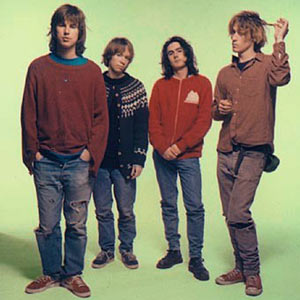 Back in 1996 I got my copy of One Chord to Another and thought it was pretty cool, but frankly I was a bit distracted. I didn’t give it the worship it deserved. Reviewing it now I can better appreciate how this band had it all going on – great sound, solid hooks, and a palpable authenticity. How did Nova Scotia produce such a monster act? Their first EP Peppermint and full length album Smeared had a great indie sound, with both versions of “Underwhelmed” worth hitting repeat on. But their first major label effort, 1994’s Twice Removed, announced the arrival of a polished and original musical force, with “Penpals” a great weird single. Then they turned around and dumped their major label (Geffen) and turned out another great record, 1996’s One Chord to Another, spending one-tenth the budget of the previous one. While the album is bursting with great tracks, I’m partial to the very Beatle-esque “The Lines You Amend.” Talk was, Sloan would be the next big thing worldwide. But things didn’t really pan out that way.
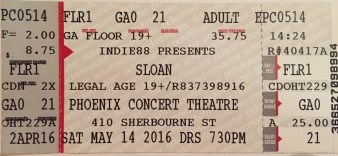 Earlier this month I saw Sloan play One Chord to Another in its entirety at the Phoenix in Toronto as part of 20th anniversary tour commemorating the album. The show was broken into two sets, with the first blasting through OCTA and the second drawing from their other ten albums. Despite owning three of their records, I couldn’t name a single tune, though their audience was pretty well informed, drowning out the band on a few sing-a-longs. After such an amazing show, I decided to school myself on all things Sloan. Was this a band just reliving the glory of a few early records? After reviewing their catalogue, I can honestly say ‘no’. If anything, Sloan’s records only improve over time as the band expands its sonic range and songwriting scope. And that is saying something because those early records – Smeared, Twice Removed, One Chord to Another, Navy Blues – showcase the signature early sound of Sloan where the vocals and guitars slide together into a great sonic mash of hook-laden tunes. But, I will have you believe, their later material is even better.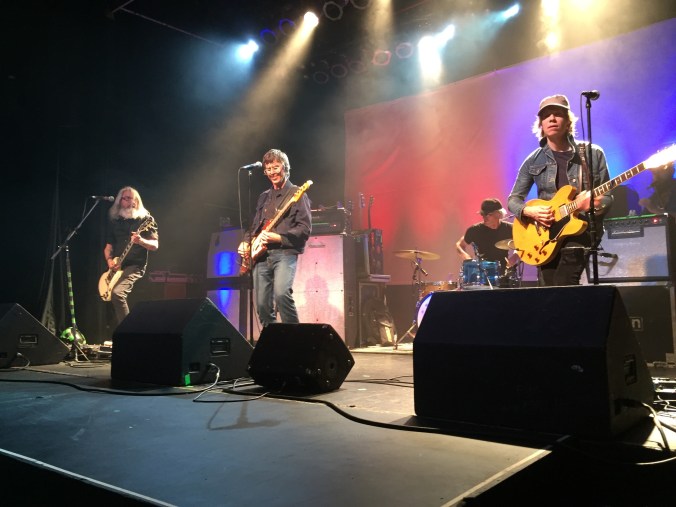
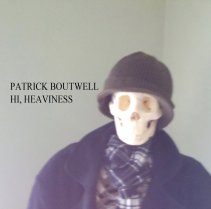 Patrick Boutwell’s first solo outing came highly recommended from
 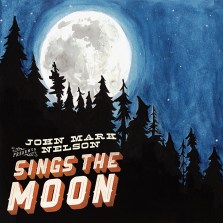 I saw John Mark Nelson open for Little Green Cars in Toronto last month and I was struck by his boyish earnestness, a quality that permeates a great deal of his recorded material. His first three albums are alternatively folky, whimsical, sometimes even vaudevillian, occasionally poprock, while his most recent, I’m Not Afraid, marks a departure into more serious territory. Check out his video for “
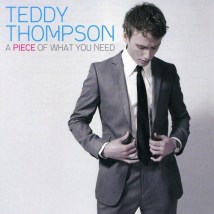 At the risk of turning this blog into a Teddy Thompson fan site, I had to feature “In My Arms” from his 2008 album A Piece of What You Need. On his fourth album, Thompson exudes a new confidence, bringing all his disparate influences together into a bold new style, with “In My Arms” as a dynamic single. The opening drums signal some classic poprock is being served up and Thompson does not disappoint. The hooks are so subtle you don’t realize you’re being seduced until you find yourself singing along. The accompaniment is both traditional and unusual: solid acoustic guitar anchoring the song, nice electric guitar flourishes, great background vocals, but then inserted here and there are what sound like video game sound effects and a killer, full-on, in-your-face organ solo. In your own personal imaginary video, the top is down on the convertible, the wind is blowing through your hair (in the most photogenic way), and the radio playing this song is cranked. Of course, this video captures the sentiment nicely too.
  There is something very Dandy Warhols about the recent Turbo Fruits single, “Show Me Something Real.” On their most recent recordings, both bands appear to combine a late 1990s rock sound with some classic late 1960s ambience, to great effect. While a number of
  Victoria’s Sam Weber has material that sounds deceptively simple but there is significant depth to his songs: subtle hooks, sophisticated production, and great arrangements. His 2014’s debut album, Shadows in the Road, has so many great songs it is hard to showcase just a few. Certainly “Right Hearted” has to be singled out as the obvious radio single. While the intro might be a little long, when the acoustic guitar kicks in the song takes off, stratospherically so when the keyboard appears at the 1:17 point. There is a very Sam Roberts feel to the hooks and chorus.Right Hearted
 Sam Weber and band appearing live in a Toronto living room, May 2016.
