
Tags
Dan Israel, David Sheinin, First Thing Tomorrow, Important with a Capital I, KC Bowman, Lane Steinberg, Lane Steinberg and his Magic Pony, You're Free
 There is so much great music out there, waiting to be noticed. I can hardly keep up writing about just a fraction of it! Our turn around the dial this time showcases a quartet of hardworking journeymen songwriters and performers who have done their time in the trenches and could use a little more glory.
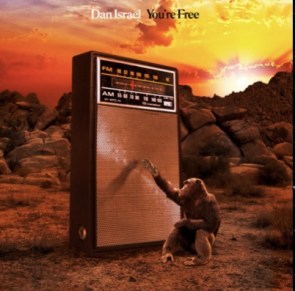 We’re written about the sublime joy that is Dan Israel before. He writes a kind of cross-over, folk-inflected poprock that is increasingly rare in our hipster-hyphenated, genre lockdown. Here I’m thinking Cat Stevens at his most melodic or even a more upbeat Jim Croce. It’s all there on Israel’s new album You’re Free. This is a relaxing at the cabin or driving somewhere record, that deftly mixes more slow-moving introspection with uptempo rock and roll. The album kicks off kicks off with what sounds like a very Cat Stevens-like vocal and song structure on “Gets You Through It,” channels some early 1970s Paul Simon on the breezy “Make This Life Mine,” and vibes Tom Petty on the more rockin’ “Someday You’ll Say.” But the album highlight is the obvious single, “You’re Free.” This baby has a driving beat and melodic hook reminiscent of both John Lennon and Bob Dylan, when they deigned to cast out some hooks. You’re Free is another winner for Dan Israel, very much worth the cover price.
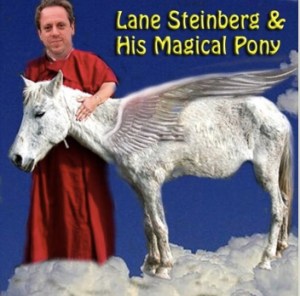 It’s hard to get a fix on Lane Steinberg. Whatever the genre, the guy is obviously supremely talented, with an enormous back catalogue of work spanning decades, performed by range of musical combos. The diversity is in evidence on his latest release, Lane Steinberg and his Magic Pony. The cover alone has gotten attention – its looks like a somewhat bizarre record store find, perhaps dug out of a bin alongside Spock’s Music from Outer Space. The record itself is a curious blend of melodic satire, gentle political commentary, and straight up poprock, with a few Noel Coward-ish piano tunes thrown in for good measure. Steinberg is clearly having fun, mocking everything from the technology (“You’re Not Connected to the Internet”) to fake social concern (“I’m Tony Hayward and I’d Like My Life Back”) to the sureties of both the political left and right (“Crazy as a Shithouse Rat”). But he is also deadly serious about his poprock craft. “Another Early Autumn” hits all the Beach Boys marks. “Everyone Thinks I’m Happy Now” channels the Beatles c. 1966, with help from that “Strawberry Fields Forever” organ. On a more contemporary note, both “Franklin and First” and “Who Does Your Mind Control?” have the confident melodic sheen of the best work by the Eels. But the standout track for me here is the mildly strident yet seductive “After Taxes,” a song that allows Steinberg’s varied influences to really gel into a distinctive sound of their own. I think Lee Dorsey would agree – it’s time to ride your (magic) pony!
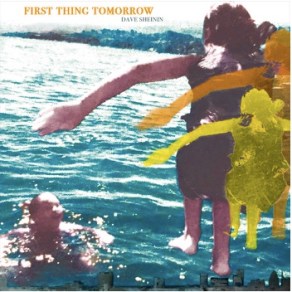 You’re a celebrated national sports writer and best selling author but in your spare time you decide to put out your first album of 1960s-inspired poprock songs? That’s David Sheinin on his new album, First Thing Tomorrow, and it’s a winner. This is a breezy fun collection of pop ditties that draw from all the great artists from the 1960s through the 1980s. Just listening to the record you’d swear Sheinin is some twenties-something wunderkind, full of young idealism and enthusiasm. “Oh Amelia” captures this nicely with its rippling guitar lines, or “City You Left Behind” with it’s swinging hooks. Not that Sheinin just mellows out – there is a great new wave rock and roll feel to “Talking to Myself” that reminds me of Elvis Costello or Michael Penn. And then there’s the early 1960s throwback sound of “What’s the Matter.” The whole record is sonic treat, a soundtrack for convertible driving at sunset!
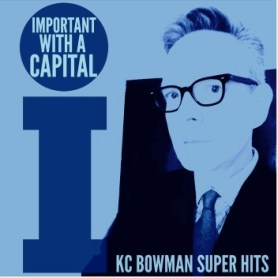 I wonder if KC Bowman sleeps. The guy has put out an enormous amount of material over the years, a lot of it available for free on his bandcamp site under his various band monikers: Lawsuit, Rhythm Akimbo, Agony Aunts, Preoccupied Pipers, Vinny’s Vipers, etc. I’ve heard the occasional single over the years on this or that compilation but haven’t really kept up with his career. Well now you and I can both catch up with his exquisite career-spanning compilation album Important with a Capital I. There are so many highlights on this record I can single out only a few choice cuts, like the opening should-be hit single “Blithering Heights” or the equally single-licious “Super Bad Report.” Bowman has unerring knack for squeezing a hook into just about any song form, utilizing a range killer guitar licks and sweet sounding compressed vocals. Check out his genius homage to Schoolhouse Rocks’ “I’m Just a Bill” on “Mine Called Somebody Else” – this is some pretty subtle referencing! And so on. This record will have you searching through the depths of Bowman’s back catalogue for what you’ve been missing all these years.
There was a time when hearing a great song on the radio would send me running to record store so I could buy it and hit replay again and again. Now it’s so much easier. You can click on the links for Dan Israel, Lane Steinberg, David Sheinin, and KC Bowman and save the bus fare!
 Let the summer begin! From the glorious keyboard roll out that kicks off this song, you know you are in a time-warp sunshine groove, with girls in satin shorts on roller skates and hair feathered to within an inch of its life. Channeling equal parts Todd Rundgren’s Utopia and Philly soul, with a dollop of Hall and Oates at their most melodious, “Summer of ‘76” is poprock perfection. Click on the lyric video below and I guarantee your summer playlist will have a new add, it’s a single of epic earworm proportions. The song is taken from the self-titled debut album of Astral Drive, a project that is largely the work of Phil Thornalley, a producer, performer, and songwriter with a staggering musical resume. He’s worked with some pretty talented people and it’s clearly rubbed off, if this single is anything to go by. I really can’t wait to hear the whole album. Really.
 People write me about their music and most are spot on in terms of getting what we’re doing at Poprock Record. As long as what you got is melody-heavy, we can find some room for it here!
 Case in point – Blake Jones and the Trike Shop. As you can hear from their recent Make album, these guys are wonderfully weird. Bit of Talking Heads and Devo in their quirky inventiveness. Then again, some They Might be Giants is there too in terms of humour, wonderfully captured on “My Soft Rock Girlfriend.” I’m not into art for art rock’s sake so thankfully the band takes a lot hooks with them as they walk on the wild side, evident on “At Every Train Stop” and “Take a Look at the Stars.” But my personal fave on the record is the boppy “Alchemy C’mere.”
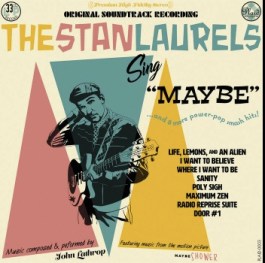 John Lathrop is The Stan Laurels, a one man, cinematic distillation of Beatles influences c. 1966-67, with a Jeff Lynne-esque sense of ambition. His back catalogue contains an album, EP and a movie soundtrack, the latter featuring both incidental music cuts and actual songs. Early tracks from 2009’s Death of the Sun like “Lovebirds” and “If I Walked with the Dead” have a great psychedelic pop vibe. But with 2013’s Bill and Theodore soundtrack there’s new depth to the recordings, particularly with the very-present banjo on “Blue Song” or the lovely acoustic guitar on “A Million Miles High.” Then Lathrop takes satirical aim at early 1960s stalker pop with the alternatively hilarious/horrifying “DAMN, I Shot My Baby (Again).” “Jack the Car Back” is one of the particularly engaging instrumental/incidental music numbers. The Stan Laurels’ new album Maybe, another soundtrack (this time for the film Maybe Shower), is perhaps the best yet. Lead off single “Maybe” is a slow groove, hooky number with Harrisonian undertones here and there – a great poprock single! I also like “Life, Lemons and an Alien.”
 Variously described as psych Scouse-pop and Scousedelia, the connection to the Liverpool music scene appears to be strong with Annexe the Moon. Though to my ears, these guys have a got a softer, more dreamy pop sound than I typically identify with rough and tumble Scousers like The La’s, Cast, and The Real People. It’s always good to challenge my assumptions about such things! Early releases like “Ever Meaning Less” and “Bring You Down” almost sound Moody Blues-ish to me, particularly on the vocals. The sound gets more complex on the bouncy “1000 Miles from Hollywood” and the most recent single, “Full Stop.” The latter is really a tour de force of sonic layering, echoing some of the best 1980s keyboard-based poprock bands.
 Excuse me, I’m having a D.A. Stern moment here. Sometimes when you’re clicking through hundreds of new tunes by all manner of artists something just jumps out as strikingly original and different, just a bit off the poprock beaten track. That would be the new album from D.A. Stern, Aloha Hola. Oh, all the usual influences appear –the Beatles, Beach Boys, 1970s mannered radio pop, 1990s indie, etc. But you get a sense from the execution here that Stern’s endearingly oddball personality makes all those influences different, without necessarily becoming eccentric. The album opens with some nice trippy pop numbers – “Am I Ever On Your Mind?” and “Bluegenes” – with ever so shoegazey vocals. But then Stern shakes things up with tracks like “In Pain” and “When I Said That You Were Right” that draw on different song forms and add more weight to the vocals. For instance, “When I Said There You Were Right” has a great Rubber Soul-era Beatles acoustic shuffle, artfully laying a load of bitter lyrics over a bed of musical pleasantness. “Spirit of New York” changes things up again with sunshiny pop quality that says single to me. There are other moments where Stern really does channel a lovely Teenage Fanclub vibe, like on “Miami” and “Isn’t It Obvious?” the latter from a maxi-single released a month after (and not included on) the album.
 We do occasionally rock here at Poprock Record. But we seldom rawk. The long hair, the spandex, it’s just not our thing. But there are a few border cases, bands on the edge of rawk yet anchored by strong melodies. Today’s crew all have their amps cranked up to eleven but the hooks are still there.
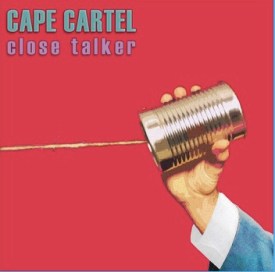 Now that it looks like spring has finally sprung it’s time to fill the playlist with some swinging, vocal swirling, feel good music. Cape Cartel deserve a strong ‘add’ to your rotation with their delightfully sunny “More.” Just hit play below and tell me, honestly, isn’t everything just a little bit brighter? With guitar lead lines dripping like a sonic waterfall, and intricately layered vocals that rival the best of the Moody Blues, this little gem is the stand out track on the band’s recently released debut album. Oh, there are other highlights on Close Talker. The record effortlessly ranges across multiple styles: a bit of jazz and folk, a dose of blistering rock, even some Jack Jones Hawaiian vibes, and throughout there are wonderful vocal arrangements. For instance, I’m also keen on “No One to Bear,” “The Great Indoors,” and “Feeling Cursed.” But get started with “More” – it’s the solid single.
 Ever since Bonnie Jo Mason first warbled “Ringo, I Love You” back in 1964 there’s been a regular outpouring of musical love for the famous. Some serious, most not, with a great deal of it amounting to little more than hopeful AM radio opportunism. Some are so clever, you can’t tell if the songs are sincere or mockery. Nick Lowe produced a lovely tongue-in-cheek tribute to one uber-famous teen sensation in the 1970s with his “Bay City Rollers, We Love You,” though, tellingly, he kept his name off the 45 (it was credited to the Tartan Horde). But another approach combines genuine admiration with a proper sense of fun. After all, loving the famous shouldn’t be taken too seriously!
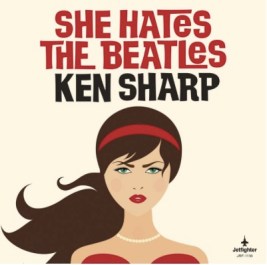 I got started on this theme after hearing Ken Sharp’s fab new single, “She Hates the Beatles,” thinking I could whip up a post focusing on songs about the Beatles. But that went bust quickly. There weren’t that many songs, surprisingly, with most of the good ones written by ex-Beatles themselves! Heading back to the thematic drawing board, I decided to broaden the focus to include songs about the musically famous more generally, stopping short of Beethoven. Now I could gather a solid handful of tunes. Sharp led the pack with his aforementioned new single.
 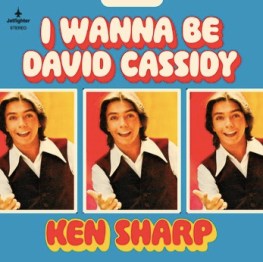 This guy is one impressive dude: longtime music journalist, author of numerous books on great musical acts, and a not too shabby songwriter and performer. “She Hates the Beatles” is the product of challenge from producer Fernando Perdomo, who provided the title and push to turn it into a song. The result is a wonderful, definitely Beatlesque, pop song. The only real concern here is how the protagonist got into this clearly doomed relationship at all! Sharp also secured our number two position with his hooky homage to David Cassidy on “I Wanna Be David Cassidy.” This single hits all the Partridge Family marks, maybe better than the original. The amazing of-the-period-style artwork on these two singles is also worth mentioning.
 Ah, the telephone. That iconic 20th century technology is all over the rock and roll canon, mostly in its original analog form but with a few recent smartphone additions. Plenty of obvious telephone songs to choose from in terms of hits: The Marvelettes’ “Beechwood-45789,” ELO’s “Telephone Line,” Blondie’s “Call Me,” Tommy Tutone’s “867-5309,” and many, many more. There’s also a slew of less obvious yet popular niche tunes like the Nerves’ “Hanging on the Telephone,” Nick Lowe’s “Switchboard Susan,” and R.E.M.’s “Star 69.” But in this post I wanted to feature some less obvious material, either with songs that focus on key aspects of the phone experience or by lesser known but certainly deserving artists.
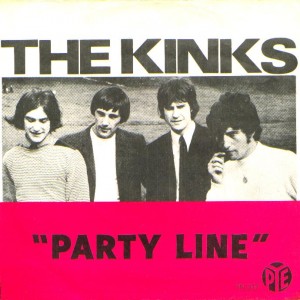 “Party Line” appeared on the Kinks’ 1966 album Face to Face and even saw release as a single in Norway (it was the B-side of “Dandy” everywhere else). Leave it to the Kinks to go right for the classed aspect of the modern phone experience, no surprise really given Ray Davies’ lyrical attention to social issues. Nearly everybody from a working class background in the 1950s and 1960s had a party line, a cheaper phone service that you had to share with other households. Like “Dead End Street” and “Picture Book” the song catalogued the not-so-hidden injuries of class in 1960s England, in this case the indignity of the singer’s failed efforts to make a private call. At one point he even mock threatens, “I’m not voting in the next election if they don’t do something about finding out who is on my party line.” One can definitely hear the cross-pollination of Kinks/Beatles reciprocal musical influences on this tune, particularly on the guitar work.
 The Records debuted with a pretty great album, 1979’s Shades in Bed, featuring should-be hits like “Starry Eyes” and “Teenarama.” The record also featured “The Phone,” which opened with a classic operator voice-over announcing “I’m sorry, but that number doesn’t answer. Would you please try your number again.” The singer bemoans the phone’s ability to bring food, love and possibly danger but not necessarily connection. In contrast to such serious themes, Rupert Holmes showcases the lighter side of 1970s telephonic tunes on “Answering Machine” from his 1979 album Partners in Crime. In the late 1970s answering machines were just taking off as mass market items and Holmes’ protagonists play an early game of telephone tag with a marriage proposal and response, including the distinctive (and jarring) message-ending beep.
 But enough of the past – there are some great recent telephone songs too. Twin Peaks kick up their heels on the rollicking “Telephone” from their 2014 album Wild Onion, a song that sounds so light but recounts love lost via the phone line. Mo Kenney also finds the phone a barrier to communication with her significant other. From Kenny’s 2014 release In My Dreams, the song has some great lines, both lyrical and melodic, and a great
  Daisy House are an American treasure. They know the past, they breathe the 1960s, but they somehow make it all sound new and relevant for now. Their latest album is Bon Voyage, the last installment of what the band’s musical visionary Doug Hammond calls their “modern Amerikan trilogy” (which includes Western Man and Crossroads). The record is another tour de force of sophisticated songwriting, inventive instrumentation, and breathtaking vocals, creatively stamped by the 1960s but not stuck there. Remember when you could listen to a whole album by your favourite artist without wanting to needle drop your way to the hits? Daisy House is that kind of band. Get comfy because Bon Voyage is a pleasure cruise from beginning to end.
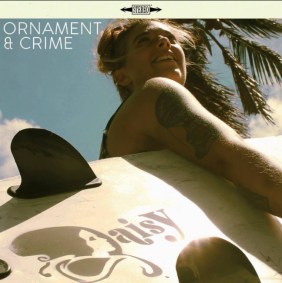 Got the heads up on Daisy from Don over at
  Poprock Record