Here in the great white north the first August long weekend offers a national statutory holiday but cast in bespoke local themes. Each province does its own thing: British Columbia has ‘BC Day,’ Nova Scotia has ‘Natal Day’ and so on. So to aid this year’s party planning, we’re doing our celebration a little early with this Sunday singles jamboree! And I can clear some of the backlog of great songs in the queue …
Someone put me on to the countryfied poprock magic that is Portland’s Blitzen Trapper. I hastened to my local Mp3 seller and quickly downloaded a bunch of songs from all over their nine album catalogue, committed to writing something about them. Well, that didn’t happen (sorry guys!). But here we are with a new album soon to arrive so now I’m making up for lost time. “Masonic Temple Microdose #1” is the first single from their upcoming LP Holy Smokes Future Jokes and it’s a winning slice of melodic rock and roll in the best Eels or Brendan Benson style. Heading slightly north on the I5 will get us back to a band we have covered in times past, Tacoma’s poptastic Vanilla. This time they take their XTC influences in a decidedly fun country direction with “Easy,” duetting with special guest Jessica Van Horn. This sweet harmony treat is just one of a series of singles released by the group since the start of 2020 (so an album surely can’t be far off). Nashville’s Aaron Lee Tasjan has a new EP out, Found Songs Vol. 1, and it’s definitely up to his usual fantabulously high standards. I love how he can slip in the most innocent musical hook, like the high pitched keyboard hook in “Fake Tatoo,” and voila! – instant earworm affliction. The rest of the EP is pretty solid, with two touching acoustic-heavy tunes, “What a War” and “August is a Blessing.” Meanwhile back in LA, The Reflectors turn up the amps and blast the chords on an ode to early 1980s new wave with “Teenage Hearts.” You could easily party like it was 1979 with these dudes! The song begs to heard live with plenty of room for dancing.
Chatham, Kent’s Pete Molinari has long been cast in the Dylan/folkie milieu, both for his songwriting and vocal style. But his new record Just Like Achilles should blow up any easy generalization about what he is doing musically. Just check out the amazing “I’ll Take You There” with its hat tips to Buddy Holly, California’s 1960s sunshine pop, and the Mavericks. This is a mini masterpiece of a song, effortlessly combining so many dynamic catchy elements. Heading back to the USA, Rookie have that laid back feel so well worn by fellow Chicago-area bands like Twin Peaks, dubbed by some as ‘cosmic country.’ Personally, I hear a more popified The Band going on here. The self-titled debut is now out and it’s a delight, particularly the first single “Sunglasses,” which sounds like an updated 1970s classic FM radio staple. LA’s Theo Katzman is one smooth, smooth operator, with a vocal delivery that could rival Bruno Mars in combining soul and pop. His new album Modern Johnny Sings is a unique mix of acoustic pop and 1970s R&B influences, captured perfectly in the obvious single, “You Could Be President.” This track is a wonderfully executed bit of swing pop and soul jam, sometimes vibing Queen in their more acoustic moments. How is this song not a radio hit already? Malmo, Sweden is the home of a band named Mom and what’s not to like about their chugging blast of guitar and hook-filled choruses on their recent single “Tonight”? Again, 1979 springs to mind with the pop-glam guitar chords, neat keyboard riffs, and lighter-than-air vocal harmonies.
Pete Molinari “I’ll Take You There”
Let’s wrap up with a comeback story. Brooklyn’s The Rabies had a new wavey thing going on circa 1981-3 with a few singles, an EP, and appearances at the legendary CBGBs. But then life happened. Now, practically centuries later, they’re back with a new pair of tunes and it’s like they never left. Actually though, they’ve fattened up their sound in a tasty way, sounding Bob Mould Sugar-ish or even Smithereens-like vocally. “Adderall Girl” has a slight 1950s feel song-structure-wise but the execution is a crisp indie new millennium performance. B-side “You’re the Glue” has a wonderful thumping stomp to the guitar and drums that will get your head banging.
Imagine it’s a summer like any other. Sunshine, lotion, BBQ, and sweet sweet tunes on the portable stereo. There are songs just made for summer and today’s contributors are all vying for a place on your summer soundtrack.
Austin’s Nite Sobs alternate between a Jonathan Richman-led Weezer project (“Vowelerie”) and a reinvented Merseybeat sound (“I Need to Hear It”) on their debut longplayer Do the Sob! So if you’re looking for a bit of sock-hopping fun, minus all the drama and insecurity, then dial into this record. I mean, lyrically, there’s all the usual heartache, sometimes with a delightfully madcap delivery (“Aftermath”). But it’s hard to stay down with so much upbeat material on offer here. I love the updated beat group sound on tracks like “Saving You a Place” with its great synth shots. Or check out the sweet sweet harmonies carrying the album’s first single, “I Could Tell You.” You can clearly see the influences in the band’s spot on cover of the Lennon-McCartney cast off composition “I’ll Keep You Satisfied,” a 1960s hit for Billy J. Kramer and the Dakotas. It’s all there packaged perfectly in the sign off should be single, “Victoria,” with its driving beat, jaunty guitar and punchy vocal delivery. This is a record packed with good vibrations.
Every now and then a band comes along that is smart, well-informed and seemingly able to knock out a cracking tune on any theme. Today that band is Glasgow’s Brontosaurus. The sort-of title track “(Theme from) These People” sets the tone for the album of proletarian poprock to follow, casting bitter lyrics about how “we don’t have dreams, we don’t have freedoms, we don’t have hopes, we don’t have reasons” against some sparkling and hooky guitar work. “Band of the Week” turns the camera back on the self-indulgence of the indie artist with their ‘box of CDs’ and ‘band of the week’ designation from ‘May 2014’ (with just a melodic hint of “Band on the Run” laced throughout the tune). “Blogger” cuts a bit close to home, singing about people who ‘write a blog no one reads about bands no one likes’ – ouch! The song is pretty brilliant though, cleverly quoting The Smiths (‘people see no worth in you but I do’) and deftly exposing the blogger/band racket: “‘we need each other, band and blogger …” With vocals that sound sometimes Morrissey-ish (if he actually cared about something) or Marc Almond (minus all the overwrought libidinous affectation), what comes through is a strong dose of sincerity, despite the send ups. Songs like “Contact Centre Advisor” manage both incisive social commentary lyrically (the job is experienced by the worker as ‘a filter for your rage on the minimum wage’) and catchy guitar solos. Other highlights for me include the Beautiful South-meets-Spook School “A Do-It-All Dad’s Denim Dream,” “Powerpop by Numbers” with its killer chorus, and “The Supergeek,” which explains everything you need to know about how to respond to online trolls (key lyrical insights: ‘there’s more to life’ and ‘he needs this more than you’). Not since Pulp’s “Common People” has a band so effortlessly captured our present working class malaise. ‘I am a binman for the council’ indeed!
You put together two phenomenal and prolific talents like Lisa Mychols and Super 8 and you’re pretty much guaranteed something pretty special. His lock on the late 1960s sunshine sound (from the Village Green to Haight Ashbury) combined with her unerring power pop chops makes their debut collaborative album a nonstop summer delight. “What Will Be” sets the groovy tone from the outset while “Trip and Ellie’s Music Factory” assures listeners a rollicking good time will be had by all. The laid back California sound is all over this record, in multiple registers. There’s the sophisticated Dionne Warwick, Bacharach & David smooth pop of “You & Me, Me & You” and “Honey Bee.” Or the San Francisco acoustic vibe behind “The Monkey Song,” “Your Summer Theme,” and their amazing cover of Kenny Rankin’s “Peaceful” (which owes more to his original than Helen Reddy’s cover). But there are departures, like the great Rolling Stones homage “Time Bomb,” the mournful, serious “Flying Close to the Sun,” and the Sgt. Pepper-esque psych pop feel to “The Arms of Water.” Recognizing all these highlights, I think my fave track is the exquisite “Laguna Nights to Remember” with its amazing vocal from Lisa, which reminds me of work from Juliana Hatfield and Liz Phair. Believe me, you’re going to want to add this Lisa Mychols and Super 8 record to you ‘don’t forget’ beach list, right after the sun screen and disguised bottles of Bud Light.
Ok, I’ll admit what caught my eye about The August Teens was their new album cover and its title, I’m Selfish and So is My Cat. But what caught my ear was the band’s straight-ahead 1980s FM radio sound – equal parts early 1980s new wave, with echoes of the BoDeans and the Eels as well. Goofy album title notwithstanding, this is a no nonsense rock and roll outfit. Exhibit A: “You’re Not Like Me Baby” – a track that Pat Benatar would surely give her eye teeth for. The album opens with a foot on the accelerator with guitars blasting through “This Time,” a song sweetened in the chorus with some dynamite harmonies. “Oh Emily” kicks off like an early Who outtake before easing into a more easy-going jangle-laden melody. “Backup Man” then shifts things into a more country gear. And so on. So many classic-1980s sounding songs: a bit of Tom Petty (“Be Still, My Rock and Roll Heart”), a touch of Springsteen (“You’re Going to Lose Me”), and smokin’ hot dance number (“I’m in Love with Rock and Roll”). And then there’s the obvious single, “Crestfallen,” a brilliant hooky number that barrels along with some nice change ups. You know what, forget the jokey album cover for a minute. This is a seriously high quality piece of poprock goodness. It deserves your full listening attention.
If you need a nearly mid-summer pick me up, a song featuring a deliciously addictive hook that will have you hitting replay again and again, have I got the song for you! Kyoto, Japan’s The Mayflowers have nailed multiple generations of the Liverpool sound with equal parts La’s and Beatles on this should-be hit single, “Maybelline.” The opening riff clearly echoes The La’s “There She Goes” (which itself echoed earlier 1960s styles) while the song’s broader melody arc reminds one of The Who’s “The Kids Are Alright,” without sounding derivative The guitars here are exquisite, sibilant and shimmering, while the vocals layer up perfectly. The song originally appeared on the band’s 2012 album Plymouth Rock, recorded at Abbey Road studios, but is also included on the recent 2019 The Best of Mayflowers: From the Beginning, a good introduction to the breadth of their seven album catalogue.Maybelline
And while you’re here, you might as well check out the band’s loving tribute to the late Fountains of Wayne co-founder Adam Schlesinger, a just-released cover of his fab movie song “That Thing You Do!” Man, these guys are good! Here’s the fun video and click here to download the single for free. To download the song, scroll down to the song player, click on the boxed-in Japanese lettering in red, and then in the new window choose Mp3 or FLAC.
Check out the wonderful world of The Mayflowers. You’re gonna want to live there.
There are philosophers who will tell you that when it comes to living the good life, the journey is the real destination. But most professional musicians usually dream of actually arriving somewhere, like maybe the top of charts. Still, despite the fact that relatively few make the Top 40 (let alone number one), there are some acts that just keep soldiering on. Like today’s trio of journeymen poprockers – all continue to put out great music even though stratospheric fame has proven illusive. All the more reason to fly their flag right now!
Imagine stumbling across someone with an album catalogue like all those great indie rock and rollers – Elvis Costello, John Hiatt, Nick Lowe, Don Dixon, etc. – delivered with a Nick Lowe or T-Bone Burnette production-style. Well, imagine no more! Michael Shelley is here and he’s got six albums or so, just brimming with melodies and sweet melancholia. I discovered Shelley as the producer of Juniper’s recent hip record and just a bit of digging revealed his own killer catalogue. If I had to boil down his sound it would be easy to slot him into the Rockpile diaspora, with its retro rock and roll, pub rock country and new wave elements. Sure, it would be obvious to compare him to Nick Lowe, Elvis Costello and Marshall Crenshaw, but think a bit further afield in this crowd, like the country pop sound of Carlene Carter’s Musical Shapes album or the poppy soul of Paul Carrack’s Suburban Voodoo (both produced by Nick Lowe). Nor can Shelley be limited to just this sub-genre, as his amazing collaboration with former Teenage Fanclub drummer Francis Macdonald in Cheeky Monkey makes clear. Contemporary comparisons of the Shelley sound might bring to mind Edward O’Connell and Richard X. Heyman.
Shelley’s 1997 debut Half Empty nails down the formula with a moody indie vibe on “Don’t” (love the great rumbly guitar and organ – sounds so classic 1960s), strong melodic interventions with “Think With Your Heart,” “Rollercoaster” (particularly the chorus!), and “Mary,” while “Tonight Could be the Night” has a lovely Ben Vaughn simplicity. The follow-up, 1998’s Too Many Movies widens the stylistic scope, adding surfer fun (“Surfer Joan”), Beach Boy harmonies (“The Pill”), country rock (“Lisa Marie” and “She’s Not You”) and solid indie pop with “Jigsaw Girl” and “Summer, I Pissed You Away” (the latter echoing a real Marti Jones feel on the songwriting front). I love the hooks carrying “Too Many Movies” while “You Were Made to Break My Heart” sounds like the kind of obscure tunes that Nick Lowe finds to slip into his records and make sound like great lost classics. There’s even a cool song about brushing your teeth – “That’s Where the Plaque Is” – and that’s not easy to pull off! Keyboards come more to the fore on 2001’s I Blame You with the solid single “Mix Tape,” the McCartney-esque jauntiness of “Face in My Pocket,” and the Robbie Fulks playfulness of “Let’s Fall in Hate.”
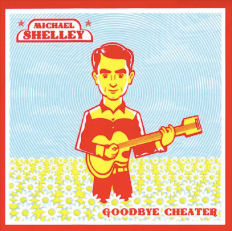
I think my favourite release from Michael Shelley is undoubtedly 2005’s Goodbye Cheater. The album veers between solid retro country and hook-laden poprock without losing its own sense of purpose. “Hurry Up and Fall in Love” and “A Little Bit Blue” mine the Buck Owens/Dwight Yoakum vein of electric guitar-picking country while the cover of the Roger Miller/George Jones song “That’s The Way I Feel” and the instrumental “Ha Ha Ha Ha Ha” actually have a more western feel. On the poprock side there’s the early Elvis Costello vibe to “We Invented Love,” “Move Along,” and “Goodbye Cheater.” Or there’s the Bacharach pop swing of “Suddenly Free” and the Monkees-meets-Simon and Garfunkel elan of “Out.” There’s even a winning instrumental in “Goofball.” 2012’s Leftovers offers up a winning collection of cover tunes and unreleased and live material – check out the great covers of Bobby Fuller, NRBQ, and Teenage Fanclub as well as quality demos of “Don’t” and “Goofball.” Shelly’s most recent release is the 2015 collection of instrumentals entitled Jimmy’s Corners (check out “Ahmed’s Best” and “Back of the Country Squire”). Surely fifteen years after his last album of conventional songs, we are due for some new Shelley material? The answer is yes.
Astro Chicken is the moniker that Barney Miller (no, not that guy) has used for the past 25 years for both solo and group efforts, the latter with John Laprade and brother Mike Miller. His story is textbook late 1990s rock and roll: multiple labels, missing the curve of what’s (momentarily) hot, then solo releases, breaks, and now some new tunes. Gotta admire the stamina! 1997’s debut release was the Disposable EP and right away you can practically see the Elvis Costello fingerprints all over the should-be single, “So Can I.” 1998’s Sugarwater takes things in a new direction with “Waste” sounding very Odds, “Honeymoon” acing the Beatles background vocals with a killer, insistent “Getting Better” guitar chime, while “Nothing Around for Me” is faintly Crowded House. 2001’s Almost Anywhere takes yet another turn, this time leaning a bit country in a Blue Rodeo or Jayhawks sort of way, which you can really hear on “Blame Yourself” once it gets going.
So Can IWasteBlame Yourself
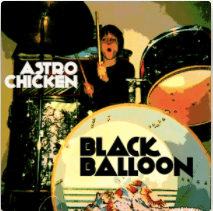
From there, the drive to chart success stalled for a bit, with Miller releasing just two essentially solo albums between 2005 and 2018, still under the Astro Chicken label. But the solo work really provides an insight into the breadth of Miller’s songwriting. 2005’s Sweet Truth is alternatively hilarious and introspective, all the while harbouring a lightly stoked sense of outrage. Anchored by acoustic guitar and a Graham Parker vocal delivery, the record offers acerbic commentary on death (“My Funeral is Gonna Be Packed”) and popular culture (“F You American Idol”), sometimes vibing Fountains of Wayne (“Soak Up the Night”) or E from the Eels (see ‘Funeral …’) or an Imperial Bedroom era EC (“I Am Not Blue About You”). 2018’s National Detective Agency Miller describes as album of leftover Astro Chicken demos, tarted up for release, along with a few new tunes. A lot here is stripped down Americana, like the Wilco-ish “Try” and the pretty acoustic guitar number, “Change Your Mind.” “Lock It Up” also has a nice hooky, easygoing swing. Which brings us the present: with Mike and John back with the group, the band’s brand new 2020 EP is Black Balloon. Check out the title track, a nice rocking tune with a solid Tom Petty feel to it.
F You American IdolI’m Not Blue About YouChange Your MindBlack Balloon
Tulsa native David Burdick is the real rock and roll deal. The way he tells is, life has been one long series of joining and quitting and joining band after band, playing across the southern American Midwest, putting out the occasional 45 while recording an enormous number of home demos. From grade 5 on he’s played with The Jeeps, The Jetsons, The Jacks, The Insects, Color of Time, Sins Tailor, The Rickebackers, The Stand, and many more. His bands have opened for the likes of The Motels, The Cramps, The Fleshtones, The Lords of the New Church, the reunited Byrds, Charlie Sexton, and, yes, many more. Long before artists started to do ‘song a week’ gimmicks Burdick challenged himself to record a song a day and then proceeded to do so for sixty days! All of this is to say that Burdick’s career and recordings particularly have been unconventional by mainstream standards – no nice neat release of single, then album, then greatest hits. More like an explosion of bits from all over his career, some professionally recorded, others home demo’d on whatever equipment was to hand. The results are often raw, truly garage rock, like they were recorded in real garage somewhere. And like good 1960s garage rock, they’re exciting, both his originals and many, many covers of rock and roll classics.
You can get a good sense of David Burdick from his 2016 release Under the Influence, which contains songs recorded throughout his decades-long career. As far as I can tell, “Letters” first came out in 1983 and it’s a masterpiece of a single, with fantastic lead line guitar hooks and poppy vocals. This should have been a monster hit! “I Can’t Sit Still” captures that late 1970s new wave reinvention of 1960s poprock, “Let’s Go for a Ride” has a great Lou Reed-tude, while “Independence Day” is a departure with its early 1980s The Fixx atmosphere. If you go digging, Burdick has a collection called Relapse with more great tunes, like the jangle-laden “Sister,” “Look at it Rain” with its hypnotic guitar riff, and the hilarious “Redneck Zombies.” A lot of Burdick’s various band recordings are pretty rough but the Sins Tailor songs were clearly professionally done. Personally, I love the ringing Brydsian jangle on “Morning Calling.” If you want to mainline rock and roll authenticity, hook yourself up with Burdick’s work.
SisterLook At It RainSins Taylor – Morning Calling
Journeymen put in the time because … they have to. Something drives them to play, record, and put the music out there. The least we can do is to check out what Michael Shelley, Astro Chicken and David Burdick been up to. After all, while they’re clearly not in it for the money, but they undoubtedly could use some.
When Cut Worms’ 2018 album Hollow Ground came out I was a total convert. I loved the throwback 1960s polished poprock sound of “How Can It Be” and “Don’t Want to Say Goodbye” with its shades of The Cyrkle and Paul Simon melodic hookiness. But somehow I overlooked his prior 2017 EP release Alien Sunset. Now that he has a few new singles out, it seems an ideal time to revisit the musical pleasures of Cut Worms, then and now.
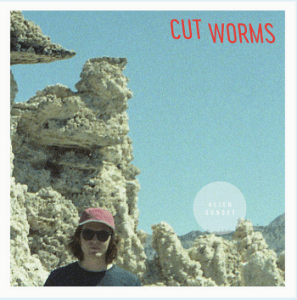
A skip through the six songs that comprise Alien Sunset, one might be tempted to cast it as a mini-Hollow Ground, minus a bit of the polish. There is some overlap, with reworked versions of “Don’t Want to Say Goodbye” and “Like Going Down Sideways.” But the EP has distinct charms of its own, like its lovably ragged indie quality and a kind of insurgent pop urgency to the tunes (particularly apparent on the title track). Or the way that the stripped down “Like Going Down Sideways” sounds like a melody-pumped take on Leonard Cohen. Some of Cut Worms’ country balladeering roots show up more here on cuts like “A Curious Man.” And I particularly like the original “Don’t Want to Say Goodbye” which sounds a bit folkier or roots-era Everly Brothers.
Fast forward to 2020 and Cut Worms is extending his songwriting range, stretching out the development of the tunes into an early 1970s country rock mode. His new single, “Unnatural Disasters” takes it time delivering the hooks, first creating a solid backdrop of a laidback Bacharach-style country theme. But this subtle tune pays repeated listens. B-side “Baby Come On” is a winner too, though perhaps more direct in its melodic payoffs. There’s something so familiar about the song’s cadence, its arrangement, but the final product is still somehow fresh and timeless. Can’t wait to see how these new songs will factor into a new Cut Worms album.
Get your supply of Cut Worms from bandcamp or right from the source or from the usual e-music distributors.
Canadian content or ‘Cancon’ rules place a quota on radio programming in Canada requiring that a certain percentage of the music played must be from Canadian artists. While decried by market libertarians, there’s a reason the Canadian music scene exploded in the 1970s – the rule worked. Before its introduction, worthy Canadian acts could not get onto playlists, crowded out by high profile American and British artists. For Canadians, success in Canada would only follow making it in the United States, a path successfully taken by group like the Guess Who but few others. But from the 1970s on, thanks to Cancon, a host of homegrown acts could make a living just being stars in Canada. This Canada Day (yes, international audience, today is Canada’s national holiday), let’s focus on just two great Canadian acts made possible (at least in part) by the legacy of Cancon.
Welland, Ontario’s Daniel Romano is an irrepressible musical force, unrestrained by genre boundaries or conventional marketing strategies. Country, metal, new wave, prog rock – different musical styles are just a blank canvas for Romano to work out his songwriting and performance magic. Seriously, is there anything this guy can’t do? I got turned on to his talent with his killer swinging single, “When I Learned Your Name” from 2017’s Modern Pressure. I just had to keep hitting replay. Then his 2018 double album drop of Nerveless and Human Touch turned my head. Man, I thought, can he crank out the songs. Well 2020 has seen Romano surpass even his previous over-achieving bar, releasing seven albums so far! And with no compromise on quality. I’m going to highlight tracks from just a few of them but, really, you won’t go wrong with anything stamped Daniel Romano.
From Visions of the Higher Dream I’m digging “Where I Take My Rest” which has a nice, almost brittle 1979 sort of sound, with a great punchy change-up in the chorus. Super Pollen has a winning title track, a great barreling-forward poprock song, carried on a bed of blistering but still melodic electric guitars. But perhaps the most adventurous mix comes on Dandelion, a more mellow rock and roll rumination with touches of country and super smooth background vocals. There something so Canadian about this recording, with hints of the more radio-friendly Bruce Cockburn here and there guitar-wise. Check out the distinctive horn shots on the hit single hooky “If You Don’t or If You Do,” or the catchy rhythm acoustic guitar guiding “Silent Spring,” or the new wave keyboard on “Ain’t That Enough for You.”
Toronto’s Girlongirl describe themselves as “jangle pop smothered in grunge” and that is confirmed with “Take,” the opening track of their most recent album. I like it, but the band really get down to business in my view with track 2, the obvious single “Girls,” throwing out an irresistible guitar hook to anchor the song. This is a band with a tight, distinctive sound, typified by the dreamy rumble guitar behind “Nen” and “Burn Me” and strong vocals. Another should-be hit single is “Marathon” which alternates between ethereal jangle and grunge guitar, making the shift on the transition from verses and chorus. You can tell from the performances here that Girlongirl would be a kick ass live band. Someday we’ll get to find out …
We’re not the flag-waving, love-it-or-leave-it types up here in the great white north. Canada Day often passes with little more than a BBQ and some cranking of the backyard tunes. This time, add Daniel Romano and Girlongirl to your Cancon-inspired holiday playlist. Cancon or no, they’re most deserving.
This startling new direction from Vancouver’s The Top Boost has a bit of the Beatles For Sale era country-style Beatles, The International Submarine Band and Buck Owen’s distinctive lead guitar player Don Rich. The band has always had a special new wave jangle going but this single suggests they won’t be contained in any neat genre boxes. “Tell Me That You’re Mine” takes off with a rollicking pace that doesn’t let up, riding some easygoing country hooks and nice pedal steel guitar. B-side “Early Morning Days” is no slouch either, offering up a slower, more measured dollop of shimmering guitars and heavenly harmonies. These guys are definitely going places. Just where I’m not sure but with records like these I’m happy to be surprised.
You can get caught up on all The Top Boost you need at bandcamp, Facebook and their band website.
With records that are all hot off the digital presses, this is definitely a timely episode of breaking news. And the anticipation is high for these five artists because they regularly hit it out of the poprock park. Have they done it again? Spoiler – get ready for some jangling good times.
Scottish jangle stalwarts The Vapour Trails wrap their new album Golden Sunshine in sixties pop psychedelia and the results are out of this world. The opening title track rides that fine line between melodic tripping and more free-form musical extemporization. The sound is a new sonic frontier for the band, melding sixties influences with 1980s reinventions of those themes from bands like The Stone Roses and even mid-period Grapes of Wrath. This carries on with “Dr. Barnes” which offers up a hooky sitar-like rumination on the traditional psychedelic sound. But the band doesn’t push the theme too far, returning to more familiar jangle pop on “Lonely Man” and “Why Wonder Why?” Then there’s the magnificent “Behind You” with its stunning “Day Tripper” like lead line. Nobody throws down 1965 lead guitar work quite like this band – I mean, just wait for the sprightly lead guitar instrumental break – heaven! This song alone is worth the price of admission. Other ear candy moments include acoustic guitar-driven “This May Be the Time,” with its distinctive drum feel and lovely harmonies, and beautiful, understated “Seabird.” With The Vapour Trails you might come for the jangle but you’ll stay because they offer so much more. This is a band that has yet to reach its musical summit and I’m loving the ride.
You only need to hear about ten seconds of the guitar hook kicking off album opener “Upper Hand” to know you are in for something special with Nick Piunti and the Complicated Men’s new record. Piunti’s been at this a long time and he knows where he fits into the power pop pantheon so Downtime delivers the taut melodic rockers we’ve come to expect. Needle-dropping this record, I sometimes hear the Beatles or early period Bryan Adams, Mike Viola, or the under-appreciated Odds. But really this record has a timeless, classic poprock sound all its own. All the songs on this release are pretty strong but click on “Bright Light” for a masterclass in melody-drenched rock and roll, featuring some heavenly background vocals. As for the rest, well how do you pick out highlights when everything is so good? You won’t go wrong with the Bryan Adam-ish “Every High” and “Never Belong to Me” while “Contract” has a great blast of guitar driving it along and a very Odds-like chorus. My personal fave is the Squeeze-meets-Tom Petty “Gonna Be Good” with its hypnotic occasional keyboard backdrop. And just to show he can slow things down, “Good Intentions” offers up a lovely acoustic guitar and piano number. All the hip indie bloggers are talking up Downtime. Don’t be left out.
With a career like Bill Lloyd’s you might expect him to kick back and take it easy. He’s played with so many cool artists, put out a great body of work as one-half of Foster and Lloyd, and has countless killer solo albums to his name. But Lloyd’s got more music to share and the message from his new Don’t Kill the Messenger is definitely positive. Why? It’s the songwriting. Lloyd keeps churning out listenable tunes, delivered in his comfortable poprock style. Put your ear next to “I’ll Take It From Here,” particularly when Lloyd leans on ‘Amanda’ in the chorus, and tell you me you haven’t caught something you can’t get out of your head. Similar hooks can be found in songs like “Not This Time ‘Round” and “Sorry, But I’ve Got to Take This.” I did do a double-take on a few tracks, mistaking them for cuts from some new Marshall Crenshaw album (like “Don’t Kill the Messenger,” “Undone,” and “The Girls of Sylvan Park”). At other times, the songs reminded me a little of Ben Vaughn (“I’ve Had Enough of Your Love”) or some good old pub rock (e.g. “Kake’ n’ 8 it” and “You Got Me”). And Lloyd cooked up a few surprises, like the Talking Heads-ish “Etch-A-Sketch” and the breezy, instant standard “Kiss of the Summer Wind.” So you don’t need to hesitate over this album. Paraphrasing Merle Travis, a record from Bill Lloyd is like money in the bank – guaranteed!
Richard Turgeon kicks off his new album Sea Change with some ominous chords ringing out over “Never Leaving California,” perfectly capturing the enduring sense of dread that defines out times. The song’s chilling POV is the rumination of a mythical Charles Manson follower, drawn into the myth and mayhem of a particular moment of time for the Golden State. From there Turgeon grinds out his distinctive Matthew Sweet-meets-grunge sound on winning, timely tracks like “Still Not Ready to Die” and “Running for Your Life.” Sea Change confirms Turgeon as a veritable hook machine as the songs here are all just brimming with catchy melodies. I mean, check out the ear worm choruses of “Car Crash” and “Cull the Herd” for a quick confirmation. And then there’s the real treat, the bliss-inducing, obvious should-be hit single “Higher” – power pop perfection! This record also features a few nice departures from the usual, like the Weezer-vibing “Jolene,” the low-key dreamy “Sunset,” and the Crosby, Stills, Nash and Young-like vocalizing on the “The Journey,” with its cool sparse finger-picking opener. This record just confirms why Turgeon keeps showing up on so many ‘best of’ lists each year.
On Even TimeEd Ryan returns to his roots, re-recording some tunes from previous bands The Rudies and Jupiter Jets, as well some new material. Having noted that, opening and title track “Even Time” marks a bit of a departure for the normally guitar-oriented Ryan with a reliance on keyboards to anchor the tune that adds just a bit of dramatic tension. There’s also some refreshing naked acoustic guitar here on “I’ve Got the Smile” and the rollicking “I Want to Go.” But worry not, power pop Ed is here full force on should-be singles like “Say What You Will” and “Let It Out,” with some catchy neo-1950s background vocals elevating “Never Lied to You.” “Here and Now” kicks off with a blast of Springsteen-like energy before settling into a solid rocker. I really like the nice change of pace with the piano-based “Everywhere,” a delightful tune with shades of Styx in places (and that’s not a bad thing, in this case). Ryan then wraps things up with a return to tradition on “Make It Through the Night,” a track that really captures the classic power pop sound of late 1970s sound, complete with punchy chorus. All in all, Even Time marks a welcome return to the studio for this music veteran.
For digital access, click on the artist names above. For compact disc or vinyl, visit Futureman/Big Stir records for The Vapour Trails and Kool Kat Musik for Nick Piunti, Bill Lloyd, and Richard Turgeon. With so much news breaking, it’s hard to keep up with all the new releases. That’s what we’re here for. These releases are all Poprock Record Grade A-approved long-players. Imbibe with confidence.
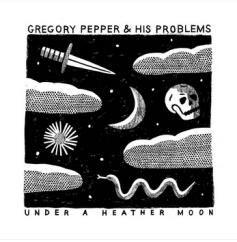
When last we left our hero he had just released a smash new album, I Know Why You Cry, to critical blogger acclaim and, no doubt, impending worldwide domination. But before he could launch a tour that surely would have left audiences swooning and American late night talk shows clamouring for appearances, COVID 19 hit. Unperturbed, work at his Camp Pepper headquarters continued, preparing the release of The Complete “Dad Year” Recordings (2017-2018) and now a new treat, Under a Heather Moon. I’ve gotten to the point where I count down the days to a new Pepper release, a ritual previously reserved for the likes of Marshall Crenshaw, Nick Lowe, Fountains of Wayne and early 1980s Paul McCartney. Under a Heather Moon does not disappoint. It is a delightful slice of everything that is magical about Gregory Pepper: clever wordplay, subtle melodies, with just a touch of sardonic social commentary. But don’t blink – you might miss this record. The album’s seven tunes collectively barely clock in at five and a half minutes! The bandcamp edition includes three bonus tunes that stretch things out to almost a quarter hour. But hey, I’m not complaining. Short they may be but the tracks are undeniably little gems.
Pepper has a McCartney-esque facility with different musical styles, ranging from music hall (“Smile”) to musicals (“Mayor’s Tomb”) to heel-clicking danceable poprock (“Do Sports”). “Whoa Dude, Whoa” has a deliciously ominous vibe, like the soundtrack to mid-1960s secret agent movie. Then he gets his wist on with lovely piano pieces like “(Isolation)” and “Finite Thing” (though the latter has a nice blow up half way through). “Recluse Abandon” really showcases Pepper as a master melodian, squeezing hooks into the tightest song spaces. The bonus tracks allow things to stretch out a bit. Particularly noteworthy is an extensively reworked version of “Funny, Eh” (originally from the Dad Year recordings), this time a little less manic and bit more ornate (in a good way).
Why not enjoy a (brief) respite from whatever you’re avoiding or stressing over right now with this new mini-album from Gregory Pepper and his Problems? And don’t forget, it’s available in extended form on bandcamp. It’s delightful. It’s even delovely.
I can get wild. Sometimes. Ok, let’s face it, any genre boundary-crossing I’m doing still involves a lot hookyness, even if there’s some guitar distortion, yelly vocals, or an amp cranked past 11. Cases in point – today’s featured acts. They’ve got dialed up guitars and discordant singing or some cool stylistic weirdness going for them. And it works!
San Diego’s premier postmodern pop band is TV Girl. With three EPs and four albums released since 2010, this is a group that knows how to get wonderfully weird and stay there. I’m impressed with their ability to pastiche up and over a host of influences, riffing on great hooks (sometimes) borrowed with ease from multiple pop culture sources. Take the oh-so-soul sounding familiarity of “Benny and the Jetts” or the winter skating-rink party ambience of “Baby You Were There.” It’s a winning formula on these early EPs: TV Girl build original pop songs from bits and pieces of old time sixties and seventies sampled hits, like the blast of Todd Rungdren’s “Hello It’s Me” that kicks off and then haunts their own “If You Want It.” You can really hear the Burroughs cut up production style all over the first TV Girls longplayer, The Wild, The Innocent, The TV Shuffle released in 2012. Check out the brilliant melding of early 1960s girl singer Linda Scott’s classic “I Told Every Little Star” into the band’s original song, “Misery,” or the threading of the Beatles’ version of Arthur Alexander’s “Anna” throughout “On the Fence.”
By the release of 2014’s French Exit the band’s songwriting really comes on stream with catchy numbers like “Pantyhose,” “Birds Don’t Sing,” and “Angela.” Since then TV Girl have explored more dance and hip hop grooves on 2014’s Who Really Cares and 2018’s Maddie Acid’s Purple Hearts Club Band and some chilly dream pop on Death of a Party Girl from later that same year. But personally I’m really digging the just released 2020 collection of outtakes from French Exit, dubbed The Night in Question. Think The Shortwave Set with a dash of Simple Kid and Tally Hall and you’re in the ballpark.
Boston’s Wakes evokes the holy spirit of rock and roll with spooky sounding guitars and somber world-weary vocals. But embedded in most tunes is that subtle melody-ness I associate with Buddy Holly and Bruce Springsteen. It jumps out in the jaunty guitar lines carrying “Headlines” from Wakes 2014’s album Feral Youth. The overlay of crackling, haunting vocals just seals the deal. Actually, the guitars on this album keep things shifting back and forth from an edgy rock and roll dance party to a car-driving radio-relay-tower passing ambience. From there Wakes dials down the productivity, offering just a covers EP and final mini-album in 2017 before calling a halt to music altogether. The swan song collection of unreleased stuff is gold, ranging from an industrial 1950s vibe to sweet fairground attractions to stark acoustic folk-iness. Entitled Ends, it kicks off with “I Don’t Want to See You Anymore,” an off-kilter bit of Eddie Cochrane-infused psycho-billy brought to life by a furious, driving guitar hook. I also love the stroll-down-the-fairway vibe on “Year After Year,” guided by a mellifluous Del Shannon organ. One can only hope that Wakes’ Tim Oxton’s design/art career goes gangbusters and he can return to a bit of music on the side.
I’m not afraid of a bit of avant garde, genre-blending indie music, as long as a load of hooks are buried somewhere in the mix. That’s what you get with TV Girl and Wakes. Take a walk on their wild side right now.
 Here in the great white north the first August long weekend offers a national statutory holiday but cast in bespoke local themes. Each province does its own thing: British Columbia has ‘BC Day,’ Nova Scotia has ‘Natal Day’ and so on. So to aid this year’s party planning, we’re doing our celebration a little early with this Sunday singles jamboree! And I can clear some of the backlog of great songs in the queue …
 Imagine it’s a summer like any other. Sunshine, lotion, BBQ, and sweet sweet tunes on the portable stereo. There are songs just made for summer and today’s contributors are all vying for a place on your summer soundtrack.
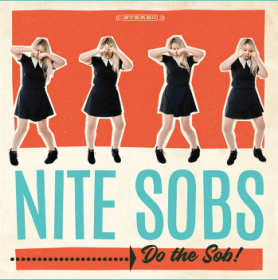 Austin’s Nite Sobs alternate between a Jonathan Richman-led Weezer project (“Vowelerie”) and a reinvented Merseybeat sound (“I Need to Hear It”) on their debut longplayer Do the Sob! So if you’re looking for a bit of sock-hopping fun, minus all the drama and insecurity, then dial into this record. I mean, lyrically, there’s all the usual heartache, sometimes with a delightfully madcap delivery (“Aftermath”). But it’s hard to stay down with so much upbeat material on offer here. I love the updated beat group sound on tracks like “Saving You a Place” with its great synth shots. Or check out the sweet sweet harmonies carrying the album’s first single, “I Could Tell You.” You can clearly see the influences in the band’s spot on cover of the Lennon-McCartney cast off composition “I’ll Keep You Satisfied,” a 1960s hit for Billy J. Kramer and the Dakotas. It’s all there packaged perfectly in the sign off should be single, “Victoria,” with its driving beat, jaunty guitar and punchy vocal delivery. This is a record packed with good vibrations.
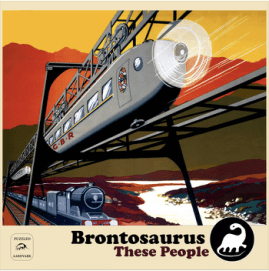 Every now and then a band comes along that is smart, well-informed and seemingly able to knock out a cracking tune on any theme. Today that band is Glasgow’s Brontosaurus. The sort-of title track “(Theme from) These People” sets the tone for the album of proletarian poprock to follow, casting bitter lyrics about how “we don’t have dreams, we don’t have freedoms, we don’t have hopes, we don’t have reasons” against some sparkling and hooky guitar work. “Band of the Week” turns the camera back on the self-indulgence of the indie artist with their ‘box of CDs’ and ‘band of the week’ designation from ‘May 2014’ (with just a melodic hint of “Band on the Run” laced throughout the tune). “Blogger” cuts a bit close to home, singing about people who ‘write a blog no one reads about bands no one likes’ – ouch! The song is pretty brilliant though, cleverly quoting The Smiths (‘people see no worth in you but I do’) and deftly exposing the blogger/band racket: “‘we need each other, band and blogger …” With vocals that sound sometimes Morrissey-ish (if he actually cared about something) or Marc Almond (minus all the overwrought libidinous affectation), what comes through is a strong dose of sincerity, despite the send ups. Songs like “Contact Centre Advisor” manage both incisive social commentary lyrically (the job is experienced by the worker as ‘a filter for your rage on the minimum wage’) and catchy guitar solos. Other highlights for me include the Beautiful South-meets-Spook School “A Do-It-All Dad’s Denim Dream,” “Powerpop by Numbers” with its killer chorus, and “The Supergeek,” which explains everything you need to know about how to respond to online trolls (key lyrical insights: ‘there’s more to life’ and ‘he needs this more than you’). Not since Pulp’s “Common People” has a band so effortlessly captured our present working class malaise. ‘I am a binman for the council’ indeed!
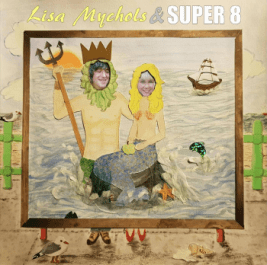 You put together two phenomenal and prolific talents like Lisa Mychols and Super 8 and you’re pretty much guaranteed something pretty special. His lock on the late 1960s sunshine sound (from the Village Green to Haight Ashbury) combined with her unerring power pop chops makes their debut collaborative album a nonstop summer delight. “What Will Be” sets the groovy tone from the outset while “Trip and Ellie’s Music Factory” assures listeners a rollicking good time will be had by all. The laid back California sound is all over this record, in multiple registers. There’s the sophisticated Dionne Warwick, Bacharach & David smooth pop of “You & Me, Me & You” and “Honey Bee.” Or the San Francisco acoustic vibe behind “The Monkey Song,” “Your Summer Theme,” and their amazing cover of Kenny Rankin’s “Peaceful” (which owes more to his original than Helen Reddy’s cover). But there are departures, like the great Rolling Stones homage “Time Bomb,” the mournful, serious “Flying Close to the Sun,” and the Sgt. Pepper-esque psych pop feel to “The Arms of Water.” Recognizing all these highlights, I think my fave track is the exquisite “Laguna Nights to Remember” with its amazing vocal from Lisa, which reminds me of work from Juliana Hatfield and Liz Phair. Believe me, you’re going to want to add this Lisa Mychols and Super 8 record to you ‘don’t forget’ beach list, right after the sun screen and disguised bottles of Bud Light.
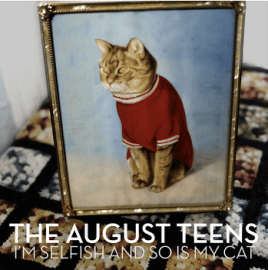 Ok, I’ll admit what caught my eye about The August Teens was their new album cover and its title, I’m Selfish and So is My Cat. But what caught my ear was the band’s straight-ahead 1980s FM radio sound – equal parts early 1980s new wave, with echoes of the BoDeans and the Eels as well. Goofy album title notwithstanding, this is a no nonsense rock and roll outfit. Exhibit A: “You’re Not Like Me Baby” – a track that Pat Benatar would surely give her eye teeth for. The album opens with a foot on the accelerator with guitars blasting through “This Time,” a song sweetened in the chorus with some dynamite harmonies. “Oh Emily” kicks off like an early Who outtake before easing into a more easy-going jangle-laden melody. “Backup Man” then shifts things into a more country gear. And so on. So many classic-1980s sounding songs: a bit of Tom Petty (“Be Still, My Rock and Roll Heart”), a touch of Springsteen (“You’re Going to Lose Me”), and smokin’ hot dance number (“I’m in Love with Rock and Roll”). And then there’s the obvious single, “Crestfallen,” a brilliant hooky number that barrels along with some nice change ups. You know what, forget the jokey album cover for a minute. This is a seriously high quality piece of poprock goodness. It deserves your full listening attention.
 If you need a nearly mid-summer pick me up, a song featuring a deliciously addictive hook that will have you hitting replay again and again, have I got the song for you! Kyoto, Japan’s The Mayflowers have nailed multiple generations of the Liverpool sound with equal parts La’s and Beatles on this should-be hit single, “Maybelline.” The opening riff clearly echoes The La’s “There She Goes” (which itself echoed earlier 1960s styles) while the song’s broader melody arc reminds one of The Who’s “The Kids Are Alright,” without sounding derivative The guitars here are exquisite, sibilant and shimmering, while the vocals layer up perfectly. The song originally appeared on the band’s 2012 album Plymouth Rock, recorded at Abbey Road studios, but is also included on the recent 2019 The Best of Mayflowers: From the Beginning, a good introduction to the breadth of their seven album catalogue.Maybelline
 There are philosophers who will tell you that when it comes to living the good life, the journey is the real destination. But most professional musicians usually dream of actually arriving somewhere, like maybe the top of charts. Still, despite the fact that relatively few make the Top 40 (let alone number one), there are some acts that just keep soldiering on. Like today’s trio of journeymen poprockers – all continue to put out great music even though stratospheric fame has proven illusive. All the more reason to fly their flag right now!
 Imagine stumbling across someone with an album catalogue like all those great indie rock and rollers – Elvis Costello, John Hiatt, Nick Lowe, Don Dixon, etc. – delivered with a Nick Lowe or T-Bone Burnette production-style. Well, imagine no more! Michael Shelley is here and he’s got six albums or so, just brimming with melodies and sweet melancholia. I discovered Shelley as the producer of Juniper’s recent hip record and just a bit of digging revealed his own killer catalogue. If I had to boil down his sound it would be easy to slot him into the Rockpile diaspora, with its retro rock and roll, pub rock country and new wave elements. Sure, it would be obvious to compare him to Nick Lowe, Elvis Costello and Marshall Crenshaw, but think a bit further afield in this crowd, like the country pop sound of Carlene Carter’s Musical Shapes album or the poppy soul of Paul Carrack’s Suburban Voodoo (both produced by Nick Lowe). Nor can Shelley be limited to just this sub-genre, as his amazing collaboration with former Teenage Fanclub drummer Francis Macdonald in Cheeky Monkey makes clear. Contemporary comparisons of the Shelley sound might bring to mind Edward O’Connell and Richard X. Heyman.
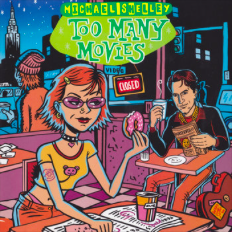 Shelley’s 1997 debut Half Empty nails down the formula with a moody indie vibe on “Don’t” (love the great rumbly guitar and organ – sounds so classic 1960s), strong melodic interventions with “Think With Your Heart,” “Rollercoaster” (particularly the chorus!), and “Mary,” while “Tonight Could be the Night” has a lovely Ben Vaughn simplicity. The follow-up, 1998’s Too Many Movies widens the stylistic scope, adding surfer fun (“Surfer Joan”), Beach Boy harmonies (“The Pill”), country rock (“Lisa Marie” and “She’s Not You”) and solid indie pop with “Jigsaw Girl” and “Summer, I Pissed You Away” (the latter echoing a real Marti Jones feel on the songwriting front). I love the hooks carrying “Too Many Movies” while “You Were Made to Break My Heart” sounds like the kind of obscure tunes that Nick Lowe finds to slip into his records and make sound like great lost classics. There’s even a cool song about brushing your teeth – “That’s Where the Plaque Is” – and that’s not easy to pull off! Keyboards come more to the fore on 2001’s I Blame You with the solid single “Mix Tape,” the McCartney-esque jauntiness of “Face in My Pocket,” and the Robbie Fulks playfulness of “Let’s Fall in Hate.”
 I think my favourite release from Michael Shelley is undoubtedly 2005’s Goodbye Cheater. The album veers between solid retro country and hook-laden poprock without losing its own sense of purpose. “Hurry Up and Fall in Love” and “A Little Bit Blue” mine the Buck Owens/Dwight Yoakum vein of electric guitar-picking country while the cover of the Roger Miller/George Jones song “That’s The Way I Feel” and the instrumental “Ha Ha Ha Ha Ha” actually have a more western feel. On the poprock side there’s the early Elvis Costello vibe to “We Invented Love,” “Move Along,” and “Goodbye Cheater.” Or there’s the Bacharach pop swing of “Suddenly Free” and the Monkees-meets-Simon and Garfunkel elan of “Out.” There’s even a winning instrumental in “Goofball.” 2012’s Leftovers offers up a winning collection of cover tunes and unreleased and live material – check out the great covers of Bobby Fuller, NRBQ, and Teenage Fanclub as well as quality demos of “Don’t” and “Goofball.” Shelly’s most recent release is the 2015 collection of instrumentals entitled Jimmy’s Corners (check out “Ahmed’s Best” and “Back of the Country Squire”). Surely fifteen years after his last album of conventional songs, we are due for some new Shelley material? The answer is yes.
 Astro Chicken is the moniker that Barney Miller (no, not that guy) has used for the past 25 years for both solo and group efforts, the latter with John Laprade and brother Mike Miller. His story is textbook late 1990s rock and roll: multiple labels, missing the curve of what’s (momentarily) hot, then solo releases, breaks, and now some new tunes. Gotta admire the stamina! 1997’s debut release was the Disposable EP and right away you can practically see the Elvis Costello fingerprints all over the should-be single, “So Can I.” 1998’s Sugarwater takes things in a new direction with “Waste” sounding very Odds, “Honeymoon” acing the Beatles background vocals with a killer, insistent “Getting Better” guitar chime, while “Nothing Around for Me” is faintly Crowded House. 2001’s Almost Anywhere takes yet another turn, this time leaning a bit country in a Blue Rodeo or Jayhawks sort of way, which you can really hear on “Blame Yourself” once it gets going.
 From there, the drive to chart success stalled for a bit, with Miller releasing just two essentially solo albums between 2005 and 2018, still under the Astro Chicken label. But the solo work really provides an insight into the breadth of Miller’s songwriting. 2005’s Sweet Truth is alternatively hilarious and introspective, all the while harbouring a lightly stoked sense of outrage. Anchored by acoustic guitar and a Graham Parker vocal delivery, the record offers acerbic commentary on death (“My Funeral is Gonna Be Packed”) and popular culture (“F You American Idol”), sometimes vibing Fountains of Wayne (“Soak Up the Night”) or E from the Eels (see ‘Funeral …’) or an Imperial Bedroom era EC (“I Am Not Blue About You”). 2018’s National Detective Agency Miller describes as album of leftover Astro Chicken demos, tarted up for release, along with a few new tunes. A lot here is stripped down Americana, like the Wilco-ish “Try” and the pretty acoustic guitar number, “Change Your Mind.” “Lock It Up” also has a nice hooky, easygoing swing. Which brings us the present: with Mike and John back with the group, the band’s brand new 2020 EP is Black Balloon. Check out the title track, a nice rocking tune with a solid Tom Petty feel to it.
 Tulsa native
  You can get a good sense of David Burdick from his 2016 release Under the Influence, which contains songs recorded throughout his decades-long career. As far as I can tell, “Letters” first came out in 1983 and it’s a masterpiece of a single, with fantastic lead line guitar hooks and poppy vocals. This should have been a monster hit! “I Can’t Sit Still” captures that late 1970s new wave reinvention of 1960s poprock, “Let’s Go for a Ride” has a great Lou Reed-tude, while “Independence Day” is a departure with its early 1980s The Fixx atmosphere. If you go digging, Burdick has a collection called Relapse with more great tunes, like the jangle-laden “Sister,” “Look at it Rain” with its hypnotic guitar riff, and the hilarious “Redneck Zombies.” A lot of Burdick’s various band recordings are pretty rough but the Sins Tailor songs were clearly professionally done. Personally, I love the ringing Brydsian jangle on “Morning Calling.” If you want to mainline rock and roll authenticity, hook yourself up with Burdick’s work.
 A skip through the six songs that comprise Alien Sunset, one might be tempted to cast it as a mini-Hollow Ground, minus a bit of the polish. There is some overlap, with reworked versions of “Don’t Want to Say Goodbye” and “Like Going Down Sideways.” But the EP has distinct charms of its own, like its lovably ragged indie quality and a kind of insurgent pop urgency to the tunes (particularly apparent on the title track). Or the way that the stripped down “Like Going Down Sideways” sounds like a melody-pumped take on Leonard Cohen. Some of Cut Worms’ country balladeering roots show up more here on cuts like “A Curious Man.” And I particularly like the original “Don’t Want to Say Goodbye” which sounds a bit folkier or roots-era Everly Brothers.
 Fast forward to 2020 and Cut Worms is extending his songwriting range, stretching out the development of the tunes into an early 1970s country rock mode. His new single, “Unnatural Disasters” takes it time delivering the hooks, first creating a solid backdrop of a laidback Bacharach-style country theme. But this subtle tune pays repeated listens. B-side “Baby Come On” is a winner too, though perhaps more direct in its melodic payoffs. There’s something so familiar about the song’s cadence, its arrangement, but the final product is still somehow fresh and timeless. Can’t wait to see how these new songs will factor into a new Cut Worms album.
 Canadian content or ‘Cancon’ rules place a quota on radio programming in Canada requiring that a certain percentage of the music played must be from Canadian artists. While decried by market libertarians, there’s a reason the Canadian music scene exploded in the 1970s – the rule worked. Before its introduction, worthy Canadian acts could not get onto playlists, crowded out by high profile American and British artists. For Canadians, success in Canada would only follow making it in the United States, a path successfully taken by group like the Guess Who but few others. But from the 1970s on, thanks to Cancon, a host of homegrown acts could make a living just being stars in Canada. This Canada Day (yes, international audience, today is Canada’s national holiday), let’s focus on just two great Canadian acts made possible (at least in part) by the legacy of Cancon.
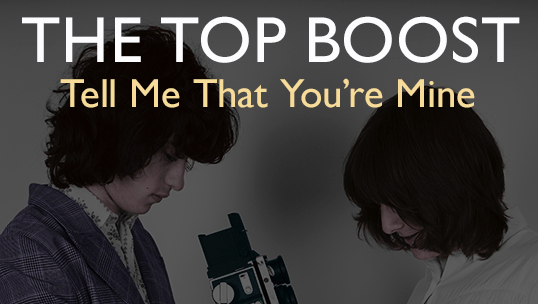 This startling new direction from Vancouver’s The Top Boost has a bit of the Beatles For Sale era country-style Beatles, The International Submarine Band and Buck Owen’s distinctive lead guitar player Don Rich. The band has always had a special new wave jangle going but this single suggests they won’t be contained in any neat genre boxes. “Tell Me That You’re Mine” takes off with a rollicking pace that doesn’t let up, riding some easygoing country hooks and nice pedal steel guitar. B-side “Early Morning Days” is no slouch either, offering up a slower, more measured dollop of shimmering guitars and heavenly harmonies. These guys are definitely going places. Just where I’m not sure but with records like these I’m happy to be surprised.
 With records that are all hot off the digital presses, this is definitely a timely episode of breaking news. And the anticipation is high for these five artists because they regularly hit it out of the poprock park. Have they done it again? Spoiler – get ready for some jangling good times.
 When last we left our hero he had just released a smash new album,
  Pepper has a McCartney-esque facility with different musical styles, ranging from music hall (“Smile”) to musicals (“Mayor’s Tomb”) to heel-clicking danceable poprock (“Do Sports”). “Whoa Dude, Whoa” has a deliciously ominous vibe, like the soundtrack to mid-1960s secret agent movie. Then he gets his wist on with lovely piano pieces like “(Isolation)” and “Finite Thing” (though the latter has a nice blow up half way through). “Recluse Abandon” really showcases Pepper as a master melodian, squeezing hooks into the tightest song spaces. The bonus tracks allow things to stretch out a bit. Particularly noteworthy is an extensively reworked version of “Funny, Eh” (originally from the Dad Year recordings), this time a little less manic and bit more ornate (in a good way).
 I can get wild. Sometimes. Ok, let’s face it, any genre boundary-crossing I’m doing still involves a lot hookyness, even if there’s some guitar distortion, yelly vocals, or an amp cranked past 11. Cases in point – today’s featured acts. They’ve got dialed up guitars and discordant singing or some cool stylistic weirdness going for them. And it works!
