Tags
All Change, Britpop, Cast, Comedy, Fine Time, Shack, The La's, There She Goes
How did I manage to miss Shack and Cast in the 1990s? I did hear The La’s at the time but really only the single “There She Goes.” These bands exude all the essential rudiments of great poprock: sparkly guitar lead lines, great vocal arrangements, with a healthy dose of swing. They have songs that can be carried off on just an acoustic guitar. Though the members of these bands were contemporaries, the bands themselves broke at different times, which was good because there was considerable overlap in the membership of these three groups.
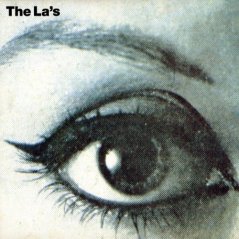 Really, The La’s come first in 1990 with their sole proper album, the self-titled The La’s. As countless re-releases since then demonstrate, the album was actually recorded a number of times through the late 1980s with different producers: John Porter (the Smiths), John Leckie (XTC), Mike Hedges (the Cure), but finally with Steve Lillywhite (Big Country, U2) who upon comparative listens of the different versions really did nail the proper mix. The band’s creative force, Lee Mavens, was like a mad scientist never happy with his formula. He argued that the band’s sound was looser than the smooth sound Lillywhite produced, something perhaps better captured on the amazing BBC sessions recorded mostly in the late 1980s and released in 2006. The La’s is undoubtedly a masterpiece. Leaving aside the monster single, “There She Goes Again,” picking out the best tunes from this record is kind of like picking out the best Beatles’ song from Revolver or Rubber Soul. No one is going to agree. But my own personal faves include the rollicking “Son of Gun,” the sweet downward drift of “Timeless Melody,” the freewheeling acoustic blues of “Doledrum” (particularly the sprightly BBC version), the great guitar hooks of “Way Out,” and the early Beatles sound of “I.O.U.”Son of a GunI.O.U.Doledrum (BBC 1987)
But of course if Lee Mavens had only ever written and recorded “There She Goes” he would still be ripe for a lot of poprock glory. The song is practically a ‘how to’ of poprock single writing. The two versions featured here are striking for their differences from the album version. The first is the original 1988 single where the guitars are a bit more upfront. The second is an acoustic version recorded by Steve Lillywhite that really captures the range of Maven’s vocals. Oh what this band might have been if they just had more than one record in them.There She Goes (original 1988 single)There She Goes (Steve Lillywhite acoustic version)
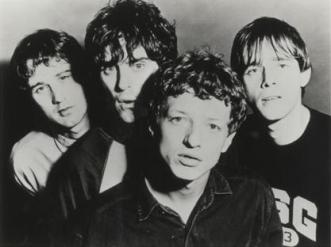 Cast features La’s cast off, John Powers, who stuck through the long multiple sessions for the La’s debut, only to leave shortly after to escape Maven’s dysfunctional approach to recording and focus on his own songwriting. Cast’s 1995 debut, All Change, has some of the La’s acoustic trappings but cast in a broader rock vein – less skiffle, more Who. The whole record is strong but “Sandstorm” and “Fine Time” stand out. And unlike The La’s, the record was a hit, producing four top 20 singles in the UK. Two years later Mother Nature Calls had a great acoustic number in “Live the Dream” as well a strong B-side with “Dancing on the Flames.” Two more albums followed but by 2001 the band was ready to split. But their 2012 comeback album, Troubled Times, suggested no diminution in the winning formula, with the swinging acoustic “Bad Waters” a definite highlight. A new record is set to be released this fall.Fine TimeLive the DreamBad Waters
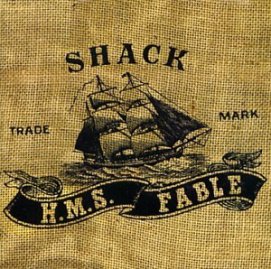 Shack preceded Cast in forming but followed them in gaining commercial success, with the early version the band including Peter Wilkinson, who would leave to join Cast. After struggling to get three records out between 1988 and 1991 that went largely unnoticed, Shack resurfaced in 1999 with their big breakthrough record, HMS Fable, a seeming distillation of all the acoustic and poprock sounds of the previous decade. “Comedy” would prove to be the band’s biggest hit but “I Want You” should have been released as single with its swirling vocal arrangements and great hooks. Discovering Cast and Shack after all these years is kind of like finding another book by your favourite author who is now deceased – you didn’t expect to get it so you enjoy it all the more.ComedyI Want You
I have to include this clip of The La’s appearing as a duo (Lee Mavens and John Powers) on Canadian Much Music television where the clueless Erica Em tries to interview them and in classic understated Liverpool style they dodge her questions but pull off a pretty amazing vocal and acoustic strumming performance.
Today old bands never die, they just live on forever with Facebook and webpages. Check out these for The La’s, Cast, and Shack.
 The 1960s were such an explosively original decade in music that countless bands just keep riffing off its influences. Hey, that’s OK if you want to be a bar band cover outfit, but with bands pushing original music it can sound more than a little derivative. The trick is to take your cherished influences and meld them into something new. Today’s bands all manage to signal where their debts lie while cashing out with something more original than just homage. Perth, Australia’s The High Learys walk the finest line on their earlier material with the catchy “Clear My Mind” mining organ riffs that sound like they were lifted directly from records by the Zombies or the Animals. But just one year later the band has transformed those influences into a more original, sixties-influenced indie sound on “Cabinet,” with its fabulous fuzzed out guitars and swirling organ. Roanoke, Virginia’s The Young Sinclairs acknowledge their love of sixties poprock but refuse to live in the past, as is apparent on the single “Girl, I’m for Real,” which effortlessly blends Bryds and REM influences into a new mix. Austin, Texas’ Whalers roll out a killer sixties guitar lick on “Cheat on Each Other” that has the hook and timbre of the original era but the vocals are pure 1990s.
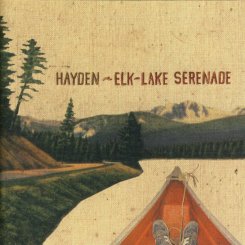 Having said that, Hayden would be hilarious if he wasn’t so morose. With song titles like “Lonely Security Guard,” Weight of the World,” and “Blurry Nights” he manages to make Morrissey seem cheerful. Some songs are mini-sketches – both “Hollywood Ending” and “Lonely Security Guard” are vignettes performed with cinematic feeling, while others – “No Happy Birthday,” “Home by Saturday,” “Weight of the World” – just channel a sordid sounding sadness. This is not a criticism. I’m totally for sordid sounding sadness sometimes. Others step out of type with a more upbeat sound, if not sentiment. I love the simple piano riff that propels “Damn This Feeling” or distinctive guitar lines that undergird “The Place Where We Lived” and the majestic “Blurry Nights,” a track with ‘hit single’ written all over it. Hayden is currently touring behind a 20th anniversary edition of his first indie cassette tape release Everything I Long For. Hollywood EndingWeight of the WorldDamn This Feeling
 The good people at
  Butch Young joins a long list of performers transformed by the Beatles and their influence. There is hardly a note of his recent Mercury Man that does not bear the mark of the Fabs. But where he takes that influence is not merely homage – there are some great songs here. The title track has a very 1970s Beatle-influenced sound, a time when so many bands like Badfinger and ELO continued updating the style of the masters. “One Foot In” expands the musical footprint, adding a bit of Beach Boys and a host of other vocally-oriented 1960s bands. “Dime Store Jesus” sounds a bit 10cc to me, in a good way. But my favourite track is, hands down, “Asteroid,” with its whimsical loping pace and great organ, piano and vocal parts.
 I love performers with a great range of performance styles. The ‘all caps’ band, the CLIFFS, come from a number of prior musical commitments – The Blurries, Apples in Stereo, Deathray Davies, and more – but none sound like this new venture. The CLIFFS’ new album, Bill, You’re Only Human, is a stripped down punky poprock effort. “Volcano” goes along in an understated way until you get to the chorus, which winds up a great hook through the repetition of the title. Both “Jimmy Monet” and “Future Tense” seem to channel a low key Fountains of Wayne influence to my ears. “Crash” has that distinctive 1970s punky take on early 1960s disaster poprock. Probably my favourite track on the album is “I’m in Love with Tonight.” The title of the song is all the lyrics you get, but it still draws you in with its wonderful arrangement, adding a subtracting layers to good effect.
 Rounding things out is Cupid’s Carnival from their recent Everything is Love release. This is a band that wears their Beatles’ influences on both sleeves. A lot of the material here has been released by the same musicians under other names (Cherrystone, Roland Skilton) but not in these versions. This recording really ups the complexity of their Beatles vibe. “Girl” is a perfect example. The opening guitar slide sounds like it was lifted right off George Harrison’s early solo records but the vocal arrangement is more Meet the Beatles or Something New. Wow. These guys know their Beatle motifs and combine and rearrange them in original ways.Girl
 … I started this blog, with some trepidation, excitement, and a strong sense of purpose – to let anyone who might stumble across it know about all the great music I’d been finding, particularly those who might think that all the best music was in the past. My point, repeatedly stated over the past year, is that if you love music from 1950s through to the 1990s, people are taking up those influences today in wonderful, creative, and surprising ways. I have always loved all kinds of music, across a host of genres (e.g. rock and roll, country, jazz, etc.), but if I had to boil it all down, my favourite music is built out of a great song, something catchy you can sing on your own without accompaniment and still get a sense of the tune. For me, that has always been best represented in the broad category I call poprock.
 In the pantheon of emblematic poprock I would start with Buddy Holly and the Everly Brothers, segue to the Beatles and the Byrds, and carry on into the 1970s from there. I got started with my parents’ record collection, which covered most of the classics from the 1950s and 1960s. I was a child of the 1970s and the swan song of top 40 radio. I came of age with New Wave and all the early 1980s alternative scene. My first big discoveries on my own were performers like Elvis Costello, Marshall Crenshaw and Joe Jackson, and bands like XTC, Squeeze and Split Enz. Music has always been a huge part of my life. I started collecting records as teenager and by my late 30s had amassed nearly 6000 pieces of vinyl: 5000 long players and a 1000 45s (I’ve since ‘focused’ the collection down to about 1700 units). There were a few years where I lost touch with a lot of the new music that coming out as I bore down on completing graduate school and getting a permanent job, but I still caught the occasional show or discovered some new band. Over the past few years, I’ve ramped up that process of music discovery with great results.
 Since I started this blog a year ago I have managed to stay on target with roughly one blog post per week. I’ve also been in touch with a number of poprock bloggers, who’ve given great advice and suggestions for content. I’ve seen a bevy of live shows over the last twelve months featuring many of the bands I’ve been writing about, one advantage of living in Canada’s biggest city. But my biggest take-away from this experience has been grappling with the enormous surplus of talent out there. The world is full of talented people putting out great stuff, if you can just find it. Our humble efforts here at Poprock Record have been about supporting that process.
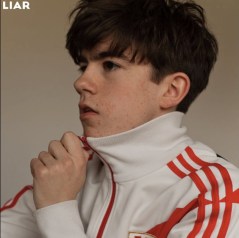 In 2015 Declan McKenna broke out of nowhere as a 16-year-old with his homemade single, “Brazil,” a catchy song that is a scathing indictment of the corruption at the core of FIFA and international soccer. Comparisons to Jake Bugg are common, but only for me because they both attempt to give voice to voiceless and take up political themes in an effortless way. His second single and video, “Paracetamol,” took up transgender issues. Part of McKenna’s appeal is the obvious authenticity of his lyrics and performance: imagine a more political Jonathan Richman. His EP Liar contains his first three singles and one more song, “Howl.”
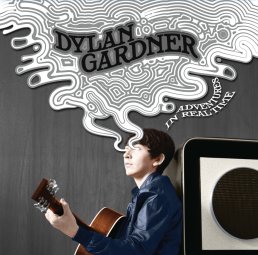 Dylan Gardner loves the Beatles and 1960s garage rock but only the former appears as influence on this first record. Recorded mostly in his bedroom, 2014’s Adventures in Real Time is chock full of poprock hits, if this blog were any arbiter of public consumption. “Let’s Get Started” and “Too Afraid to Love You” were the official videos and singles, and they are great, but my vote for AM radio top 40 perfection goes to “I Think I’m Falling for Something,” a track that kicks off with great keyboards and a nice horn section before settling into a super lurching poprock sound with interesting vocal arrangements. So too does “With a Kiss” bolt out of the gate on its acoustic strumming rhythm and a melodic hook that won’t let you go. “I’m Nothing Without You” has that Beatles majesty, nicely executed on the record but also charmingly performed in his bedroom in a video that has unfortunately disappeared from the internet. Gardner’s Facebook says he working on his second album.
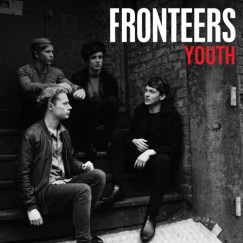 Over to the UK where the Fronteers have been going from strength to strength. When I heard their first single in the summer of 2015, “Youth,” I was impressed with their harmony vocals and folksy rock sound. But that didn’t prepare for what came less than a year later. “Idol” was like a totally different band, though not in a bad way. Great acoustic opener, hypnotic electric lead riff, and more great harmonies, but watch for the surprise bridge which seems to be channeling some spooky Everly Brothers vibe. Then just last month they released an EP, Streets We Were Born In, which ups the rock quotient again with tracks like “Full Moon.”
 Summer is slipping away before our very eyes. Time to reach for the beach one more time with tunes that celebrate the sand, sunscreen, and a summer love that probably won’t last much past Labour Day.
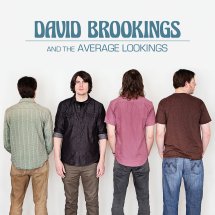 Virginia native and L.A. transplant David Brookings cut his teeth on the classics of the poprock. His sound melds the Beatles with the 1970s Beatles-influenced bands like ELO and Badfinger. His previous six albums channel these influences in a catchy DIY sort of way, with great album covers evoking the spirit of the 1960s, and some standout tracks like “Obsessed,” “Dead Battery,” and “If I Don’t Make it Back.” But his latest longplayer, David Brookings and the Average Lookings, represents a career peak, with his finest songs and most impressive performances. “Hearts” is a solid single, featuring an impressive layering of sonic effects in terms of instruments and vocals. I thought it was far and away the obvious track to feature from the album, but the more I listened to “Time to Go” I wasn’t so sure. So they both appear here. Honourable mention to the very catchy “Place We Can Go.”
 The arrangements on this Gordy Garris Group album are so subtle, meant to complement and enrich what could essentially be a record of acoustic singer/songwriter tunes. For instance, “Nightfall” starts with a nice acoustic guitar finger roll, which is quickly augmented by a low impact organ undercurrent, and eventually joined by the full band and some nice ‘oohs’ background vocals.
 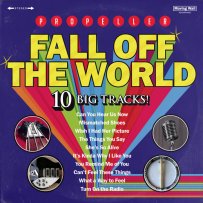 This unabashed love single to the Ramones by Propeller works at so many levels. It manages to be so Ramones without being just a derivative knock off of that band while also being a solid tune on its own merits. “Turn on the Radio” is featured on Propeller’s latest album, Fall Off the World, which features a cover that is a spot-on reincarnation of the many K-Tel compilation albums (that certainly did not feature the Ramones!) from the 1970s. Other strong tracks include “Wish I Had her Picture,” “She’s So Alive,” and “Can’t Feel These Things.”
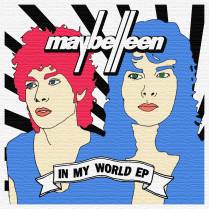 Montreal’s Maybelleen have got a unique sound, a blend of 1960s musical motifs (great signature vintage guitars, harmony vocals) with various 1980s synth keyboards, a mix that defies easy categorization. “Bring to Light” is from their debut EP, Gold in Your Hands, a collection of very professional sounding demos. Their first official EP Stereotypes has refined the vocal sound with songs that continue to riff on and develop their hybrid 1960s/1980s sound with the catchy title track,“Models on TV,” and particularly on “To Know Me Better Now.” Their most recent EP In My World has brought the guitars up front and tweaked the vocals to create a more conventional (but still great) poprock sound, as is showcased in “When I’m Right.”
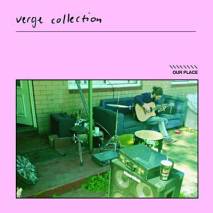 Sometimes a band says, “ya, we’re from Australia” with every line they sing. Perth’s Verge Collection ooze Australia, from their charmingly accented singing to the various Australianisms littered throughout their songs. “Our Place” is a swinging bit of fun that makes you want to hit replay as soon as it ends, with some languid sounding lead guitar and a subtle bed of organ anchoring the song. The single’s B-side “Feel Bad Songs” is also great.
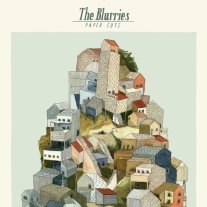 Austin, Texas has so much great music going on, including The Blurries, who kick off their 2011 record Paper Cuts with a track that bolts out of the gate and doesn’t stop. “Little Marie” is driven by a combination of acoustic and electric guitar, with the acoustic anchoring the song and the electric providing its propulsive tension. You can watch the band perform a version of the song for the podcast
  Two Vancouver bands with striking similarities take us in a motherly direction in this post. They were both formed in the mid-2000s and branched out musically from more stripped down roots and acoustic leanings in their early recordings to embrace indie rock, new wave, and even dance influences later on. “Mother” is from Said the Whale’s 2013 album hawaii. While overshadowed somewhat by the 1981-ish, new wave sounding hit single “I Love You,” “Mother” is a solid release in its own right. Kicking off with a rather spare bass and drum sound, the vocals stand out for their effervescent quality, only to break out into a surging chorus laden with great keyboards and guitar lines, while the lyrics perfectly capture the transitional anxiety of young adults as the singer urges “don’t tell my mother till I pull myself together.”
 You’ll never see the rock critics expounding on the seminal influence of Simon and Garfunkel to contemporary music – but it is there. Not because S&G broke new ground like the Beatles or the Kinks or the Who. Nor did they exude a counter culture rock persona like the Rolling Stones or Jimi Hendrix. But they did contribute to the unique 1960s synthesis of musical styles, songwriting, and performance that would define the popular song in the decades to come. Paul Simon’s genius was in melding the authenticity of folk music with the more relentless hooks from pop music, cast against a dazzling array of musical backdrops (something more fully exploited in his solo career). But in S&G, his talents produced a unmistakable sound, regardless of the style of the material. That sound can be found all over the contemporary music-sphere.
 Poprock Record