Tags
All Over Your Face, Amy, Fooled You Twice, Hawksley Workman, I Wake Up Everyday, Let Me Be Your Ferris Bueller, Small Sins, The Carnations, Thomas D'Arcy, Tommy Hawkins, What We Want, Why Don't You Believe Me?
 In the 1960s the Canadian imprint of Decca, London Records, released a series of The World of … albums: The World of the Zombies, The World of the Rolling Stones, The World of Cat Stevens, etc. Now Poprock Record would like to present The World of Thomas D’Arcy. Why? Because this guy is all over the musical map, in a very good way. From his teenage punky poprock band, the Carnations, to a one album appearance with All Systems Go!, to his one-man, keyboard-based band Small Sins, to a slew a solo material and a recent collaboration with Hawksley Workman in their Tommy Hawkins project, D’Arcy is master of all he turns his talents to. For a host of acts behind the scenes, his studio production credits alone should make him a star. But constant throughout his varied career are the songs: quirky, catchy, usually with a subtle hook that sneaks up and refuses to release its hold.
 I saw the Carnations live at the Horseshoe Tavern in Toronto in the late 1990s, opening for some band I don’t remember. They were a blast of hooky teen exuberance. I bought their debut CD, Superluminal, at the show, which was a good thing as none of their recordings appear to be available digitally. The seven songs owe a debt to the alienated charm of bands like Weezer but the result is still pretty original, with “Bald Avenger” and “Let Me Be Your Ferris Bueller” as stand out tracks. D’Arcy has posted three Carnations videos on his YouTube page which give you some sense of how the band developed over time, with songs like “Scream and Yell” and “I’ve Got Spies” showcasing a more muscular sound on later records.Let Me Be Your Ferris Bueller
Sometime after 2006 I saw D’Arcy’s new vehicle, Small Sins, play a show at a tiny club in Victoria, B.C. and didn’t even make the connection to his work with the Carnations, the sound was so different. Guitars took a backseat to a distinctive synth/keyboard sound, contrasted with taut vocals, particularly on songs like “Why Don’t You Believe Me?”
By 2012 he was just releasing work under his own name, like his spot on supergroup re-recording of the Monks goofy new wave Bad Habits album. Then 2013’s What We Want featured the great keyboard-heavy single, “I Wake Up Everyday” while 2015’s Fooled You Twice had a broader sound, with the single “All Over Your Face” vibing some serious ELO influence.
Then in 2016 he turned in another new direction, working with Hawksley Workman to produce a more earthy, rough-edged EP entitled Amy, credited to Tommy Hawkins. Filed under “Tommy Hawkins” is also where you’ll find a host of rare Thomas D’Arcy material on Soundcloud.
You can be welcomed to The World of Thomas D’Arcy at his new website and Facebook page.
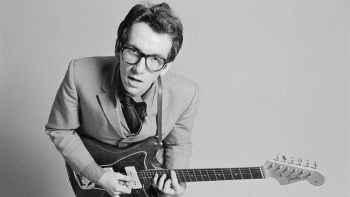 A lot of words have been written about Elvis Costello (the artist himself added a few hundred thousand in his recent autobiography
 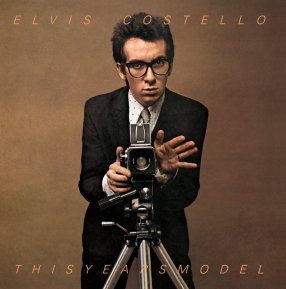 Things changed dramatically with album number two, now backed by Costello’s defiant new band, the Attractions. This Year’s Model charges out of the gate, its stripped-down, in your face rock and roll delivered with a crisp ferocity unmatched by any of Costello’s other recordings. This is the critics’ favourite album for a reason. I like it less than the debut but still love it, particularly the catchy lead guitar line on “You Belong to Me.” Elvis dials back some of the attack on his third album, Armed Forces, letting the listener in on some impressive aural landscapes that illustrate his talent for arranging his music. This is captured nicely on the single, “Accidents Will Happen.”You Belong to Me
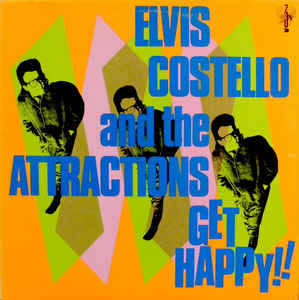 Get Happy!! and Taking Liberties were both released in 1980, the latter a compilation of B-sides (released as Ten Bloody Marys & Ten How’s Your Fathers in the UK). With each record topping out at 20 songs, together they represented a cornucopia of poprock. What is striking here is the restraint, the subtle hooks of “B Movie,” “New Amsterdam” and “Secondary Modern” on Get Happy!! or “Radio Sweetheart” and “Hoover Factory” on Taking Liberties. One almost gets a sense that the songs were chiseled into shape, worked over until every detail reflected the light just so. Of course, there were also more raucous examples like “Possession” or “Crawling to the U.S.A.”
 No, not Lee Major’s late ex-wife. I’m talking about the knock out band from London that put out four albums between 2000 and 2010 and then dropped out of sight. I discovered Farrah in 2007 when a casual listen of “School Reunion” from that year’s Cut Out and Keep turned me into a big fan. I loved the over-the-top sweetness of the sentimentality, cut by just a hint of genuine pathos. The song’s story of a wanna-be musician who takes to the big city but fails could be seen as Farrah’s own story as none of their albums took off in the UK or North America (though, I kid you not, they are actually big in Japan!). Of course, the band’s decision to blaze a trail as a self-distributing independent group probably limited their exposure as they were arguably too far ahead of the social media curve to made it work. Still, the band’s catalogue is a success if creating great poprock is the measure.
 Farrah’s debut album, Moustache, has a Fountains of Wayne power pop sound with a number of strong tracks like “Terry,” “Living for the Weekend,” and “Talk about Nothing.” Three years later Me Too seemed to slow things down as the band experimented with slower material like “First and Last,” “Half as Strong,” and their great moody cover of Joe Jackson’s “It’s Different for Girls.” But for me, it all comes together on Cut Out and Keep, an album that has the band in firm control of their own distinctive sound. The album shifts effortlessly between uptempo Squeeze-esque numbers like “No Reason Why” or the more FOW sounding “Fear of Flying” to wonderful acoustic songs like “As Soon as I Get Over You” and “Things We Shouldn’t Say.” They blast the calculation and insincerity of the music business brilliantly on “Dum Dum Ditty.” I could go on – there really isn’t a weak track on the album.
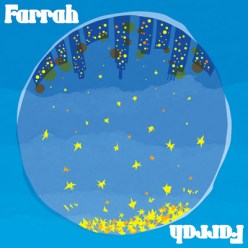 In 2010 the band released another strong record, the self-titled Farrah, and it was also full of would-be hits. The hooky “Swings and Roundabouts” was the obvious single but other uptempo highlights include “Stereotypes” and “If You Were Mine.” The album also has quite a few more languid, Beatlesque acoustic numbers like “DNA,” “Wasting Time,” and the wistful “Sleep Above the Covers.” But my favourite track is banjo-driven story song “Scarborough,” with its spot on rendition of awkward office romance.
 Jonathan Coulton is an American musical treasure. His ouvre could be cast somewhere between the goofy bombast of Weird Al Yankovic or Jim Stafford and the more subtle, sardonic touch of Randy Newman or Lyle Lovett. Still, Coulton’s ability to write great tunes means that his work is not merely a series of punch lines. His material is often funny, sometimes in an in-your-face style, but as often as not the humour is delivered in a throw-away line that you might miss if you’re not paying attention. The point is, you might tune in for the jokey title but you hit repeat because the hooks and melodies won’t get out of your head.
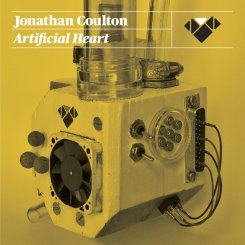 A lot has been written about Coulton and his connection to geek culture or how he has eschewed conventional models in the music business and yet still succeeded. The latter is particularly interesting given the challenges that musicians are facing today in making a living doing music. Coulton basically releases all his music himself, sans record company contract, and works the geek scene with careful attention to his fan base via social media and themed boat cruises. Somehow he is making money, but check out Clive Thompson’s
 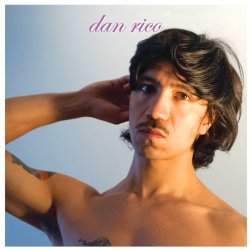 Imagine the Tardis landed and dumped out this guy direct from 1976. It would not be a stretch for a Dr. Who plotline or from what appears on Dan Rico’s debut solo album Endless Love. The record channels an early DIY punk esthetic through that 1970s mash-up of 1950s nostalgia, breathy emotive R&B male vocals (that Prince would use to great effect in the 1980s), and crunchy rock and roll guitars. Having said that, what marks the record is the coherency of its sound, even as it showcases multiple styles in songwriting and production. That’s saying something as Rico has produced a lot of recorded material with other bands that is great fun but lacks this album’s poise and restraint, qualities that allow the strength of his material and performance to really come to the fore.
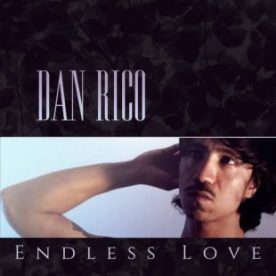 Here we can see the creative tension at work on the record, as the material straddles the shift in 1970s sounds from 1950s revival influences apparent in “On a Tear” (the song structure is so 1950s, with great trebly guitar) to the emerging new wave sound of the late 1970s on tracks like “Casual Feeling.” But far and away my favourite track (other than the delightful “Soft Feeling”) is “Dangerous.” From the wonderful organ opener with its perfectly arranged juxtaposition of sounds, the rest of the song is an R&B-ish rock and roll grind at its best. One could easily hear the Rolling Stones doing this one.
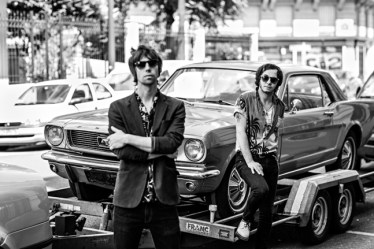 All popular music is synthesis, really. Everyone is influenced and the best somehow take their influences and combust them into something that sounds very different from where they started – so different that people mistake it for something totally new. Bosco Rogers is that perfect distillation of influences that breaks out into a new sound. It would be easy to pick out the various familiar musical motifs from the 1950s through to the 1980s on their debut album Post Exotic – the fifties Chuck Berry swinging guitar lines, the psychedelic meets glam meets garage rhythm section, the great textured vocal effects – but that wouldn’t do it justice. These guys are masters of the produced sound: each element of any song is placed into the mix ‘just so’ for maximum impact and effect. Is it surprising that the band’s two members run their own separate recording studios in the south of England and France? Not really.
 Yet this would be of fleeting effect if the material itself was not strong. And it is. It is hard to pick out just a few highlights from this album as each song contains its own special bit of ear candy, some great original sound, a distinctive instrumental choice, a hook that won’t let go. If pressed, I’d have to steer listeners to the super folk blues sound of “Anvers” with its catchy psych pop middle section, or the hypnotic whistle motif of “The Middle.” Then again title track “Post Exotic” has a seductive guitar swing, “Beach! Beach! Beach!” is an alternative universe beach party staple, “Drinking for Two” recreates the sunshine pop sound using classic 1960s vocal arrangements, “Roses” oozes 1980s synth pop, and so on. In a world of individual song downloads, Post Exotic rewards the listener with the complete album experience: all player, no filler.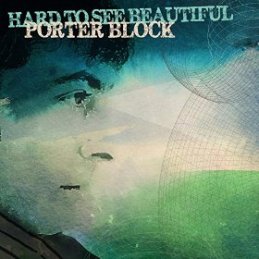
 I’ll admit, my first pass through the catalogue was selective, just four songs: “Wonder About Me” from their 2007 debut Suburban Sprawl, “Solitary Hotel” from the 2007 EP of the same name, “Die a Little Every Day” from 2010’s Peter Block, and “Long Gone” from this year’s Hard to See Beautiful. At first listen, I thought they were nice, bordering on pretty good. But after a week on replay their subtle hooks had gotten under my skin – pretty good became pretty great. So I went back for more. There’s too much to share here but there are a few songs you’ve just got to hear, like the hilarious “Lars,” the folk/country “Blackberry Girl,” two stellar vocal performances from Gowanis Yatch Club, and the John Waite “Missing You” period sound of “True Enough” and “Second Wind.”LarsBlackberry GirlMorning Finds YouMoving Around the SunTrue EnoughSecond Wind
 When I first heard “Baby Ran” from their 1986 album 5440 (aka the green album) I was hooked. There was something so simple and catchy about the chorus, I couldn’t get it out of my head. Over the years, I kept buying their albums and CDs but reviewing them now I’m surprised how much of their material has always been folky and acoustic as well as jangly alt rock. The contrast is brought together on their latest release, La Difference, subtitled A History Unplugged. Some might complain that an ‘unplugged’ album is the last refuge of the musical scoundrel, where artists go when they have run out of ideas. But this effort really is a creative reinvention of the band’s singles catalogue. The most stark example is probably “Baby Ran,” which shifts from rock to country in this iteration without losing any of its hooky charm. Both new and old version appear below for easy comparison. The whole record is strong but for me the highlights include “One Day in your Life,” “I Go Blind,” and “Casual Viewin’.”
 The music biz is an increasingly DIY affair, with everyone doing the McCartney I thing, i.e. writing, playing and producing everything or nearly everything on their records. Of course, today’s technology allows artists without a Beatlesque past to make some pretty sweet recordings. Case in point: Red Cabin, the tidy and picturesque project of Long Island, New York’s Jonathan Foster. Red Cabin ranges from the amplified home recording sound of his first album, Right This Way, and EP Wander in 2014, to the more complex and professional-sounding Camp Fire and White Morning, both released simultaneously in 2016. In the middle are some key transition singles, namely “The Pull” and “Patterns.” Linking all the changes is a keen attention to unusual vocal arrangements, amid fairly rapid shifts in musical attack – singular acoustic guitars suddenly flooded by electric instruments, or a full on band drops out to reveal just a guitar or keyboard part.
 But they did not prepare me the double blast of Red Cabin albums early in 2016. Both Camp Fire and White Morning are stellar efforts. Camp Fire runs a gamut of styles, with electronic keyboards, acoustic and electric guitars, and tightly arranged vocals. “The Darkest Relief” reminds me a bit of Todd Rungdren, “I Want To” has a great soaring chorus melody line, “Secret Stories” exudes a lovely wistful quality with its acoustic guitar and arranged vocals, while “I Can’t Wait” has a more conventional poprock feel.
 White Morning has the ambiance of a concept album, right down to the cover art. “Stuck” sounds a bit Weezer at times (in a good way), with a Beatles melody wash over the vocals, “All the Years” is a bit more indie poprock with great keyboards, guitar, and stronger, edgier vocals than Red Cabin typical, and “Juliet” has a nice swing with vocals that remind me of Tally Hall. Also, don’t miss Foster’s previous band, Snowday, whose 2013 single “Prickerbush” is a catchy number, again vibing on Weezer just a little.
 When people think “Bryan Adams” it’s easy to visualize the rock swagger or call to mind the many, many power ballads that have dominated wedding receptions from the mid-1980s on. But Adams is also a master of the polished poprock gem. The list of infectious hook-laden tunes is so long we couldn’t possibly recount them all here. His most recent album, 2015’s Get Up, is more proof he’s still got the knack for pumping out catchy songs. Producer Jeff Lynne does an amazing job of tweaking and sweetening the pop tinge with his signature suite of production techniques. There’s more than a little ELO flavour to tracks like “That’s Rock and Roll,” “Do What You Gotta Do,” and “Don’t Even Try,” the latter featuring a great Beatlesque guitar sound circa Beatles for Sale. Adams also gets back to his 1980s poprock roots on tracks “You Belong to Me,” “Go Down Rockin’” and “Yesterday Was Just a Dream.” But the standout track is “Brand New Day” with its driving, propulsive rhythm guitar that recaptures some of the excitement of his early to mid-1980s poprock glory days.
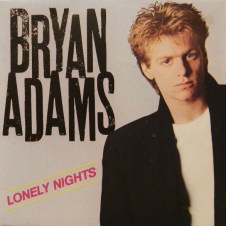 I had discovered Adams on a bus going downtown in Vancouver sometime in 1981. I was listening to CFOX on some strange FM-only portable radio when “Lonely Nights” came on: I was floored. I loved the shimmery lead guitar, what would become Adam’s signature crunchy rhythm guitar, and the tune. I immediately went downtown and picked up You Want It, You Got It. Side One of the album still blows me away: “Lonely Nights,” “One Good Reason,” “Don’t Look Now,” “Coming Home,” and “Fits Ya Good” – I could (and did) play it over and over. It remains my favourite Adam’s album (and my 16-year-old self did find Adam’s cover shot pretty cute). Cuts Like a Knife also had so many great tunes, though I would single out “This Time” as a pretty perfect poprock single. Reckless would be Adams’ masterpiece with nary a false move. Its key single, “Run to You,” is as good as poprock gets, a remarkable bit of songwriting, production, and arrangement. The atmospheric keyboard backdrop and ringing guitar lines alone are worth the price of the album.
 Poprock Record