
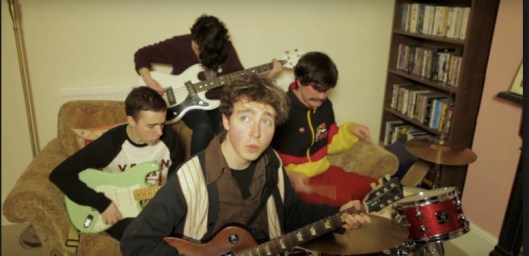
 Every now and again a band comes along that writes great tunes and performs them in an ever so pleasing poprock way but also has something important to say. Really important, in fact. That is The Spook School. The Glaswegian foursome’s early recordings were favourably compared to the Buzzcocks with their general demeanor of punky urgency but quickly established that they were their own musically distinctive entity. The Spook School are all about gender identity and the many ways it shapes and is shaped by what people do. Their music and lyrics capture the confusion, heartbreak, loneliness and danger that accompanies anyone who is gender non-comforming. I challenge anyone to listen to the band’s recorded output and remain indifferent to the aching, tender, and angry insights they have to offer. And they are kick ass songwriters, with a quirky, delightful approach to re-inventing 1970s and 1980s rock and roll.
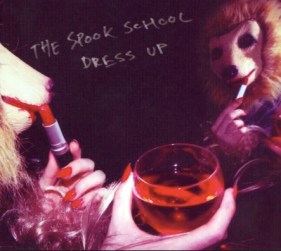 The debut album, 2013’s Dress Up, has all the band’s key themes on display: chugging rhythm guitars, searching lyrics, and hearts on sleeves, particularly on tracks like “Are You Who You Think You Are?” “I Don’t Know” and “History” with its great rock lead line. 2015’s Try to Be Hopeful takes this formula forward with “Burn Masculinity” and “Try to be Hopeful” but also offers up more single-ish material like “Speak When You’re Spoken To” and the wonderfully celebratory “I Want to Kiss You.” Continental Drift is a compilation from 2016 with two great contributions from The Spook School, the deliriously frantic “Sometimes I Hide From Everybody” and the hooky “Gone Home.”
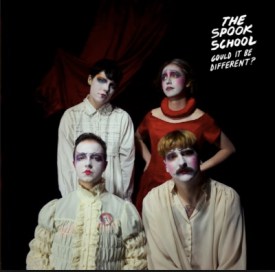 But nothing could prepare fans for 2018’s Could It Be Different?, an album that roils with explosive intensity and a powerful sense of confidence. The Spook School kick out the gender jams on this release. The tone is set with the opening track, “Still Alive,” as the singer lets loose with “Fuck you, I’m still alive,” surely the most clear statement any oppressed group can make. From there the album is a tour de force, a major statement about being different and how hard that is. The killer tracks are just about everything: “Best of Intentions,” “Bad Year,” “Alright (Sometimes),” “I Hope She Loves You,” and “While You Were Sleeping” with its great lead guitar opener. This record is a top ten for the year, no doubt.
Do you know someone struggling with gender and gender identity? Because The Spook School is the kind of cultural support they need. Something that can give voice to their struggles and pain and, even, joy sometimes – with music and words. And everybody else wouldn’t suffer from hearing The Spook School either. Check our their tunes and latest adventures online.
 At a glance Hamburg’s The Catherines appear to be the bastard child of The Smiths and The Magnetic Fields with their jangly guitars, parade of gorgeous 1960s diva single covers, and outrageously long and involved song titles. But that is just scraping the surface – there really is so much more. Yes, track titles like “Is Your Bigmouth Girlfriend Really So Charming” obviously vibe Morrissey but this band takes things further. Much further. Into the hilarious and absurd. I love how over the top things get with “If You Come Back You’ll Know What’s in the Fridge” and “Yes You’re Beautiful to Look at but So Ugly Inside.” Still, things live or die on the quality of the tunes and they are excellent.
  Excuse me, I’m having a D.A. Stern moment here. Sometimes when you’re clicking through hundreds of new tunes by all manner of artists something just jumps out as strikingly original and different, just a bit off the poprock beaten track. That would be the new album from D.A. Stern, Aloha Hola. Oh, all the usual influences appear –the Beatles, Beach Boys, 1970s mannered radio pop, 1990s indie, etc. But you get a sense from the execution here that Stern’s endearingly oddball personality makes all those influences different, without necessarily becoming eccentric. The album opens with some nice trippy pop numbers – “Am I Ever On Your Mind?” and “Bluegenes” – with ever so shoegazey vocals. But then Stern shakes things up with tracks like “In Pain” and “When I Said That You Were Right” that draw on different song forms and add more weight to the vocals. For instance, “When I Said There You Were Right” has a great Rubber Soul-era Beatles acoustic shuffle, artfully laying a load of bitter lyrics over a bed of musical pleasantness. “Spirit of New York” changes things up again with sunshiny pop quality that says single to me. There are other moments where Stern really does channel a lovely Teenage Fanclub vibe, like on “Miami” and “Isn’t It Obvious?” the latter from a maxi-single released a month after (and not included on) the album.
 Daisy House are an American treasure. They know the past, they breathe the 1960s, but they somehow make it all sound new and relevant for now. Their latest album is Bon Voyage, the last installment of what the band’s musical visionary Doug Hammond calls their “modern Amerikan trilogy” (which includes Western Man and Crossroads). The record is another tour de force of sophisticated songwriting, inventive instrumentation, and breathtaking vocals, creatively stamped by the 1960s but not stuck there. Remember when you could listen to a whole album by your favourite artist without wanting to needle drop your way to the hits? Daisy House is that kind of band. Get comfy because Bon Voyage is a pleasure cruise from beginning to end.
 Move over ‘Selsdon Man,’ Croydon’s got a new cultural pace-setter to offer the world and he’s music to my ears: Nick Frater. Oh Frater’s not new, he’s been around. He’s played in countless bands and produced an impressive body of solo work, much of it mining a late-Beatles era kind of chamber pop. But on recent releases Frater has muscled up the sound with impressive effect. Goodbye Kayfabe showcases a range of influences from melodic and power pop to more crunchy poprock and smooth 1970s hooks. And the guy’s got a sense of humour (check out his cheeky album title/cover take-offs!). This video for his stand-alone single “Sara” captures a bit of the madness that is Nick Frater.
 The album races out of the gate with the incredible, obvious hit single, “Built to Last.” I hear Cheap Trick blasting through this song. Great guitars and background vocals keep the musical tension fraught right through to the end. But then “Paperchase” sounds like a radio hit too, with its strong rhythm guitar backing, elegant 1970s lead guitar lines, and strong vocal performance. “Fruit Punches” opens with some nice Shadows riffs before shifting to a 1970s-style, smooth vocal delivered over a spare Beatles-in-acoustic mode sound. Then – bang – a great surprise change-up in the chorus. All in all, a pleasant, delightful deep cut. “More Than This” reminds me of mid-period ELO, if Jeff Lynne had any element of restraint. Frater even manages to slip some Selsdon-meets-Brexit politics into the mix with the boppy “Remoaner.”
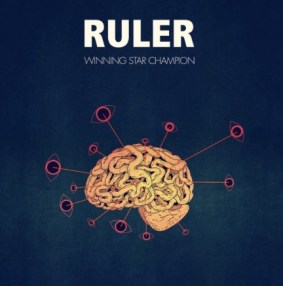 Ok, I can’t wait anymore. Winning Star Champion is the forthcoming debut album from Seattle’s Matt Batey, aka Ruler, due to drop May 25 of this year. But you need to hear this guy now. Besides, a few of his really catchy tunes are available now and won’t even figure in the line-up of the new record. Take “Easy Life” – my far and away fave Ruler track. This hook-filled treat swings just a bit, with a great break out in the chorus, only to drop out in the verses in an oh-so-seductive way. The layered background vocals are heaven! And the guy can afford to leave this gem off his debut album? Wow. Another free-standing single is “Complicated Mind,” a slow starting melodic burn than also takes off in the chorus. Winning Star Champion’s release is still months away but the three tracks in preview suggest this baby is going to cross the tape way ahead of the competition. The album’s opening track is “Petrified,” a perfect distillation of Ruler’s winning formula: ragged edges butted up against ever so expertly crafted poprock, with a few guitar riffs borrowed from your favourite New Order record. Another winner is “Unhindered Pace,” which reminds me Kevin Devine’s solo stuff and his work with Bad Books.
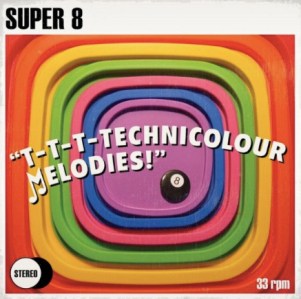 Hurry and get your hands on this really super collection from the mysterious and musically iconoclastic Paul Ryan, aka Super 8. As a record T-T-T-Technicolour Melodies is defined by an acoustic sensibility but never limited to it. Instead Ryan’s acoustic guitar acts like old faithful in the background, sustaining every song, which are then adorned with all manner of ear candy: harmonica, slide guitar, cello, horns, you name it. Naming influences on this record is a potentially endless task, it is such an amazing synthesis of musical styles. In terms of tempo and feel, I hear the laid back confidence of Van Morrison in his masterful early 1970s period. Over the range of songs, you can hear a bit of the Rolling Stones, Wilco, the Velvet Underground, even the Verve here and there. But overall, the performance really reminds me of Beck on Odelay in its freewheeling, seemingly effortless pastiche of different sounds and musical motifs. And then there’s the songwriting, which is pretty impressive. This batch of tunes is mellow, soulful, and hooky. Need some uplift? Put this on while tooling around the house and feel the colour of your day change.
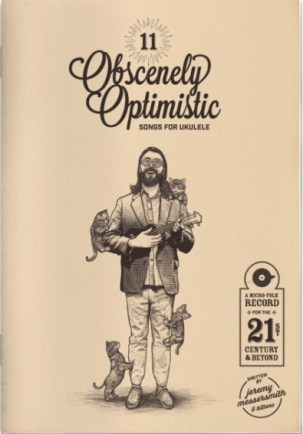 We need to start 2018 off on the right foot. Why not chase the blues away with ukulele-fueled songs of love, solidarity, and kittens? Yes, kittens. And snowflakes. And a bit of magic. It may look and sound like a hokey project at first glance but Jeremy Messersmith’s amazing 2017 release, 11 Obscenely Optimistic Songs for Ukulele: A Micro Folk Record for the Twenty First Century, delivers the goods. 10 songs performed in just under 16 minutes with an intense but laid back delivery that oozes authenticity. Some are sweetly charming (like “Everybody Gets a Kitten”) while others are just touchingly sweet (like “Everything is Magical” or “I’m a Snowflake Baby”). In anyone else’s hands these songs would quickly turn to mush but Messersmith manages to wring out every last drop of authentic feeling. It helps that the songwriting is so strong, careening from simple three chord wonders (“Everything is Magical”) to more saucy and complicated pre-WWII era jazz structures (“Love Sweet Love”). There isn’t a bum track on this all too brief album, which fittingly ends with the beautiful, delightful, and inspiring “We Can Make Our Dreams Come True.” Buy it. Play it. Again. I feel better already!
 Canadian Daniel Romano serves up a winning musical hand with the surprising release of not one but two new albums to kick off this new year. The records showcase two strong sides of his eclectic songwriting personality: country-folk and poprock.
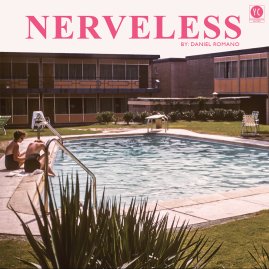 Nerveless starts out strong with it’s title track, the spare and roomy arrangement recalling a classic 1970s sound. From there it’s pretty hard to choose highlights – there are just so many great songs here! “Anyone’s Arms” hits all the poprock marks with its great pumping piano and hooky acoustic guitar – very 1970s power pop. “Good Will” and the “Devil’s Handshake” exhibit Romano’s great talent to embed no end of catchy elements to sweeten the basic song hooks. “I’ve Never Tried to Understand” has a lovely grand and sweeping pop song structure. “Bored Enough to Love” starts out like it’s almost going to launch into “I Got You Babe” before turning into a creative pastiche of different styles.
 By contrast, Human Touch is a more muted folk and country effort, the title perhaps a nod to some other guy’s paired album release from the early 1990s. The album kicks off with the very subtle built up on “Bring Me to the War.” “An Earthly Stretch of Colour” is a nice folky number with strong acoustic lead lines and slow burning hooks. “Don’t Fool Me” has that aching country ballad sound. But my favourite track is undoubtedly the understated title track, which sounds to me like a great lost 1970s country rock classic.
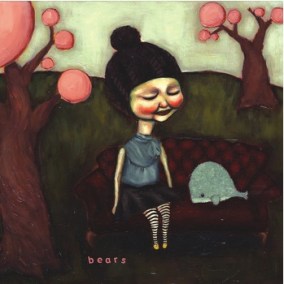 There are a variety of Bears with guitars out there. One has a former guitar player from King Crimson as a member. Another put out an album called Burrito Palace. But this group of Bears is from Cleveland and they peddle something they describe on their Facebook page as “indiepop! Or something else maybe.” They have a sound that is at times DIY and LoFi or even Elephant 6 when they really get excited. Their self-titled debut album Bears arrived in 2006 and the band’s two tonal moods are captured nicely with the moody “How to Live” (check out that crazy haunted movie music organ!) and the more upbeat, boppy “When You’re Away.”
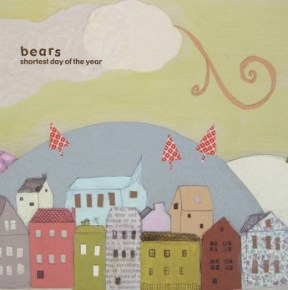 2007 saw the release of two EPs, Shortest Day of the Year and Summer Tour. Here’s a song from each: “You Can Tell” features the band’s signature strummy sound while “Wait and See” has a very Apples in Stereo vibe. The latter song appears again on the band’s 2008 LP Simple Machinery with a lighter, more keyboard heavy arrangement. From the same record, “Your Help” opens with an Amélie-like accordion sound and a vocal that exudes Morrissey on a good day. “Who Knows” came out the same year as a stand alone single and represented a sonic departure for the band with its early Elvis Costello organ burst at the start and various intervals of the song.
 Productivity slowed up after 2008. Aside from a holiday EP, fans had to wait for 2012’s Greater Lakes but it was worth it for the soaring and peppy “Wash My Hands” alone. In fact, the whole record had a stronger punch to the songs and arrangements. 2014’s double A-sided single “Friends/Choosing Your Words” is the last release from Bears, though more recent recordings from spin off projects are now emerging (see the Kalaika project
