
Tags
Brian Jay Cline, Gregory Pepper, Mo Kenney, Rob Bonfiglio, Rupert Holmes, The Kinks, The Records, Twin Peaks
 Ah, the telephone. That iconic 20th century technology is all over the rock and roll canon, mostly in its original analog form but with a few recent smartphone additions. Plenty of obvious telephone songs to choose from in terms of hits: The Marvelettes’ “Beechwood-45789,” ELO’s “Telephone Line,” Blondie’s “Call Me,” Tommy Tutone’s “867-5309,” and many, many more. There’s also a slew of less obvious yet popular niche tunes like the Nerves’ “Hanging on the Telephone,” Nick Lowe’s “Switchboard Susan,” and R.E.M.’s “Star 69.” But in this post I wanted to feature some less obvious material, either with songs that focus on key aspects of the phone experience or by lesser known but certainly deserving artists.
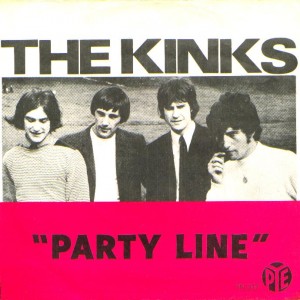 “Party Line” appeared on the Kinks’ 1966 album Face to Face and even saw release as a single in Norway (it was the B-side of “Dandy” everywhere else). Leave it to the Kinks to go right for the classed aspect of the modern phone experience, no surprise really given Ray Davies’ lyrical attention to social issues. Nearly everybody from a working class background in the 1950s and 1960s had a party line, a cheaper phone service that you had to share with other households. Like “Dead End Street” and “Picture Book” the song catalogued the not-so-hidden injuries of class in 1960s England, in this case the indignity of the singer’s failed efforts to make a private call. At one point he even mock threatens, “I’m not voting in the next election if they don’t do something about finding out who is on my party line.” One can definitely hear the cross-pollination of Kinks/Beatles reciprocal musical influences on this tune, particularly on the guitar work.
The Kinks – Party Line
 The Records debuted with a pretty great album, 1979’s Shades in Bed, featuring should-be hits like “Starry Eyes” and “Teenarama.” The record also featured “The Phone,” which opened with a classic operator voice-over announcing “I’m sorry, but that number doesn’t answer. Would you please try your number again.” The singer bemoans the phone’s ability to bring food, love and possibly danger but not necessarily connection. In contrast to such serious themes, Rupert Holmes showcases the lighter side of 1970s telephonic tunes on “Answering Machine” from his 1979 album Partners in Crime. In the late 1970s answering machines were just taking off as mass market items and Holmes’ protagonists play an early game of telephone tag with a marriage proposal and response, including the distinctive (and jarring) message-ending beep.
The Records – The PhoneRupert Holmes – Answering Machine
 But enough of the past – there are some great recent telephone songs too. Twin Peaks kick up their heels on the rollicking “Telephone” from their 2014 album Wild Onion, a song that sounds so light but recounts love lost via the phone line. Mo Kenney also finds the phone a barrier to communication with her significant other. From Kenny’s 2014 release In My Dreams, the song has some great lines, both lyrical and melodic, and a great video. Brian Jay Cline paints a melodic, Americana-inflected portrait of the passing of a broken down payphone and his relationship on “Payphone” from his wonderful 2017 album Idle Chatter. Taking phone technology into the 21st century (but with a poprock sound borrowed from the late 1970s), Rob Bonfiglio encourages his intended to “Text Me” on a track from his 2012 album Mea Culpa. There is something so Hall and Oates in this song’s mix of pop soul and guitar hooks. Rounding out our telephonic tribute, Gregory Pepper is not impressed with the advances in phone technology on his brief “Smart Phones for Stupid People,” from the hilarious collection of incredibly short songs that can be found on his 2015 release Chorus, Chorus, Chorus.
To get in touch with the Kinks, the Records, Rupert Holmes, Twin Peaks, Mo Kenney, Brian Jay Cline, Rob Bonfiglio and Gregory Pepper, I would love to tell you that operators are standing by, but we both know that would just prompt a recording from the ‘not going to happen’ exchange. Instead, just hit the links above. I mean, who needs a phone for such things now anyway?
 Public Access TV is a band in the process of coming into its own. Released less than a year ago, their first EP, Public Access, was great, featuring strong tracks like “Patti Peru,” “Metropolis,” and “Loose Ends” (with its great loopy piano solo). But starting with last November’s single “In Love and I’m Alone” the band really began to carve out a distinctive sound, which is reinforced with the first single from their forthcoming album: “On Location.” Public Access TV come to Toronto May 6 to play the
 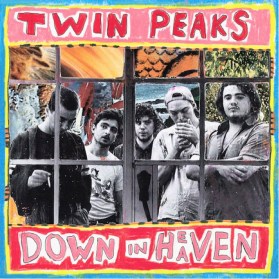 Twin Peaks looks like a band of stoner dudes, ready to party anywhere. But their music is not the spaced-out stoner jams of yesteryear. This is a rock and roll outfit whose material stretches from the buzzed out vocals of “Baby Blue” to the garage rock vibe of “In the Morning (In the Evening)” to the dirty power pop of “Flavor” to the crisp poprock production of “Telephone.” But they have outdone themselves on their new single “Walk to the One You Love.” This song is sonically more sophisticated and professional than anything they have ever done. The band owns this tune, riding a catchy guitar riff, mixing in great vocals, horns and piano. All this bodes well for their soon-to-be-released new album, Down in Heaven.
 There are a lot of bands named Swerve. This one is a California band that channels the great poprock sound of those mid-1980s Athens, Georgia, post-new wave acts. Even their smoldering cover boy above exudes 1980s angst, or is that just a chill in the air? It was hard to choose just one song from the Swerve’s recently released self-titled EP. “Aw Hell,” “You’re Wild,” and “Baby Blue” all have single written all over them but this time I’m going with “Remedy” which kicks off with a great wall of guitar before going a bit quiet and then coming back in strong on the chorus.
 John Faye is no newcomer to the music scene. He was for many years the creative force behind IKE, which had a number of hits. But if you’re familiar with his past work, you will hardly recognize him from this new solo album, Meddling Kid. On this new effort, he has traded in the FM radio rock sound for a more poprock palette. Highlights for me include “Meddling Kids,” “Into Philadelphia,” and our featured track, “Keep On Hanging Around.” The song builds masterfully from a simple acoustic guitar opening verse to then fatten up the vocals and introduce more of the band and electric guitar in a way that hooks the listener in. A ‘how to’ of great poprock production.
 Poprock Record