
Tags
For the Record: A Tribute to John Wicks, Futureman Records, Garden of Earthly Delights: An XTC Celebration, John Wicks, Kool Kat Records, Lame-O Records, The Records, Wild Honey Records, XTC
 What’s not to like about compilation albums? They’re like a load of presents crammed onto one or two pieces of vinyl, or they’re akin to a kind of melody buffet tempting to you to gorge on each one. This post runs the gamut of definitive compendiums on a theme (XTC) to compilations based on style (sunshine psychpop) to diverse collections serving other purposes altogether (the Wild Honey and Lame-O collections). Let’s dig in!
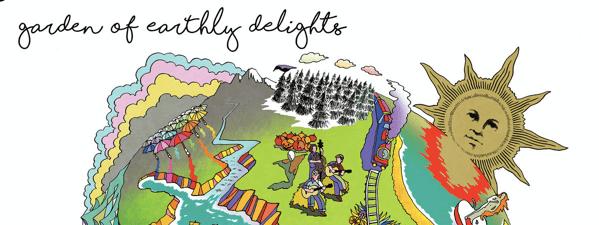
Kicking things off is a rather titanic offering, a truly ambitious labour of love that I’m happy to report is a stunning success: Futureman Records’ Garden of Earthly Delights: An XTC Celebration. XTC were a strikingly intelligent, musically adventurous, should-be hit machine. In some universe music creators as talented as the duo mostly responsible for XTC’s multi-decade output would be lauded with accolades and bags of cash. In this universe, by contrast, the eccentric, highly listenable genius of Partridge and Moulding produced 14 brilliant albums but mostly indifference from the record buying public, other than a small army of dedicated fans. Luckily, if this fabulous tribute album is anything to go by, just about every fan must have gone on to form a band! The collection draws from every period of the band’s catalogue with an amazing 49 cuts. And the quality is very high indeed.
Some of the covers here seem like spot-on recreations of the originals (e.g. Jim Laspesa and Rob Bonfiglio’s “Dear Madam Barnum”). Others take the songs in new directions, cast them in a different register, speed them up or slow them down, etc. (e.g. King Radio’s “Mayor of Simpleton”). Really, there something here for every kind of fan, from the band’s art rock/punk origins to their psychedelic Dukes’ records to the perfect poprock of their later period offerings and even some album deep cuts. I can’t possibly comment on them all so I’ll just single a few tracks that caught my ear. I love how the Kickstand Band kicks off “Life Begins at the Hop” in such a familiar way, but then bends and reinvents the melody a bit with their distinctive harmony vocals. Coke Belda and El Inquieta Roque elevate “Standing in for Joe” into classic-sounding poprock tune. You can hear the XTC-isms in Danny Wilkerson’s version of “Where Did the Ordinary People Go” but he also manages to highlight the song’s hookiness. The acoustic guitars in Gentle Hen’s take on “No Thugs in our House” lighten the mood and nicely accent the song’s melody without removing the dread that suffuses the tune. Glowbox add a nice bit of urgency to a great selection from XTC’s magisterial 1986 album, Skylarking. For XTC fans, or for those just discovering the band, Garden of Earthly Delights offers a unbeatable treasure trove of yet to-be-discovered treats.
The back story to the fabulous Kool Kat Records release of For the Record: A Tribute to John Wicks is nothing short of tragic. The legendary frontman for new wave indie darlings The Records had amassed an album full of superior tunes and got them half finished before sadly dying of cancer in 2018. But the happy ending is how co-songwriter and music blogger Richard Rossi, producer Jamie Hoover, and a cast of power pop luminaries finished the record. The album sounds amazing! The songwriting is so strong and the performances are stellar. Of course, with help from people like Peter Case, Paul Collins, Don Dixon, Bill Berry, Al Stewart and so many others, it’s hardly surprising that For the Record is such an enjoyable listen. Personally, I’m stumped picking out just a few faves. Love the “1-800-Colonoscopy” (lead vocal from REM’s Bill Berry), “Repo Man” (featuring Jamie Hoover), and Wick’s own turn at lead vocal on “She’s All I Need.” However, if I had to single out one tune it would be Paul Collin’s amazing take on “Glittering Gold,” apparently recorded live yet still hit-single-worthy. Buy this record, it’s worth it!
Our present state of corona virus upheaval has brought out the latent benefit record proclivities of both artists and record labels. We’re featuring two interesting contributions from Wild Honey and Lame-O Records, respectively. The Wild Honey release, The Benefit of Things to Come, has a great cover, mimicking the classic look of the California pop scene of the late 1960s. The Lame-O collection has a great name, Don’t Stand So Close To Me: A Lame-O Compilation For Self-Isolation – so apropos! The latter is mostly a lofi indie and rock and roll set but with a few sterling melodic contributions from U.S. Highball and Mike Bell and the Movies. The former is a bit more in our pop rock wheelhouse, with killer cuts from The Rubinoos, The Peawees, Doug Tuttle, MojoMatt, Peretta, and others. Our last featured collection is more about vibing on a style, this time perhaps drawing from some early Style Council plus light 1960s pop psychedelia on the fadeawayradiate records release, F.A.R. Out: A Sunshine Psychpop Compilation. It’s an eminently listenable collection, but make sure to check out the tracks from Night Heron, Young Scum, the Catherines and the Suncharms.
Compilations often give us a bit of what we know and a lot of what we might otherwise not check out. As such, there’s a real sense of adventure about the whole enterprise. And sometimes, as with the cases above, they’re also for a good cause. So click on the links and book your adventure to start now.
 Songs about years, songs with years in the titles … anything for a kooky theme. If you were born in the early to mid-1980s, or graduated from high school, these may be your years! While I searched in vain for a 1980 and 1982, I do have 1981, 1983, 1984 and 1985 covered.
 Ah, the telephone. That iconic 20th century technology is all over the rock and roll canon, mostly in its original analog form but with a few recent smartphone additions. Plenty of obvious telephone songs to choose from in terms of hits: The Marvelettes’ “Beechwood-45789,” ELO’s “Telephone Line,” Blondie’s “Call Me,” Tommy Tutone’s “867-5309,” and many, many more. There’s also a slew of less obvious yet popular niche tunes like the Nerves’ “Hanging on the Telephone,” Nick Lowe’s “Switchboard Susan,” and R.E.M.’s “Star 69.” But in this post I wanted to feature some less obvious material, either with songs that focus on key aspects of the phone experience or by lesser known but certainly deserving artists.
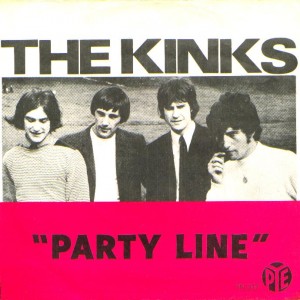 “Party Line” appeared on the Kinks’ 1966 album Face to Face and even saw release as a single in Norway (it was the B-side of “Dandy” everywhere else). Leave it to the Kinks to go right for the classed aspect of the modern phone experience, no surprise really given Ray Davies’ lyrical attention to social issues. Nearly everybody from a working class background in the 1950s and 1960s had a party line, a cheaper phone service that you had to share with other households. Like “Dead End Street” and “Picture Book” the song catalogued the not-so-hidden injuries of class in 1960s England, in this case the indignity of the singer’s failed efforts to make a private call. At one point he even mock threatens, “I’m not voting in the next election if they don’t do something about finding out who is on my party line.” One can definitely hear the cross-pollination of Kinks/Beatles reciprocal musical influences on this tune, particularly on the guitar work.
 The Records debuted with a pretty great album, 1979’s Shades in Bed, featuring should-be hits like “Starry Eyes” and “Teenarama.” The record also featured “The Phone,” which opened with a classic operator voice-over announcing “I’m sorry, but that number doesn’t answer. Would you please try your number again.” The singer bemoans the phone’s ability to bring food, love and possibly danger but not necessarily connection. In contrast to such serious themes, Rupert Holmes showcases the lighter side of 1970s telephonic tunes on “Answering Machine” from his 1979 album Partners in Crime. In the late 1970s answering machines were just taking off as mass market items and Holmes’ protagonists play an early game of telephone tag with a marriage proposal and response, including the distinctive (and jarring) message-ending beep.
 But enough of the past – there are some great recent telephone songs too. Twin Peaks kick up their heels on the rollicking “Telephone” from their 2014 album Wild Onion, a song that sounds so light but recounts love lost via the phone line. Mo Kenney also finds the phone a barrier to communication with her significant other. From Kenny’s 2014 release In My Dreams, the song has some great lines, both lyrical and melodic, and a great
  Poprock Record