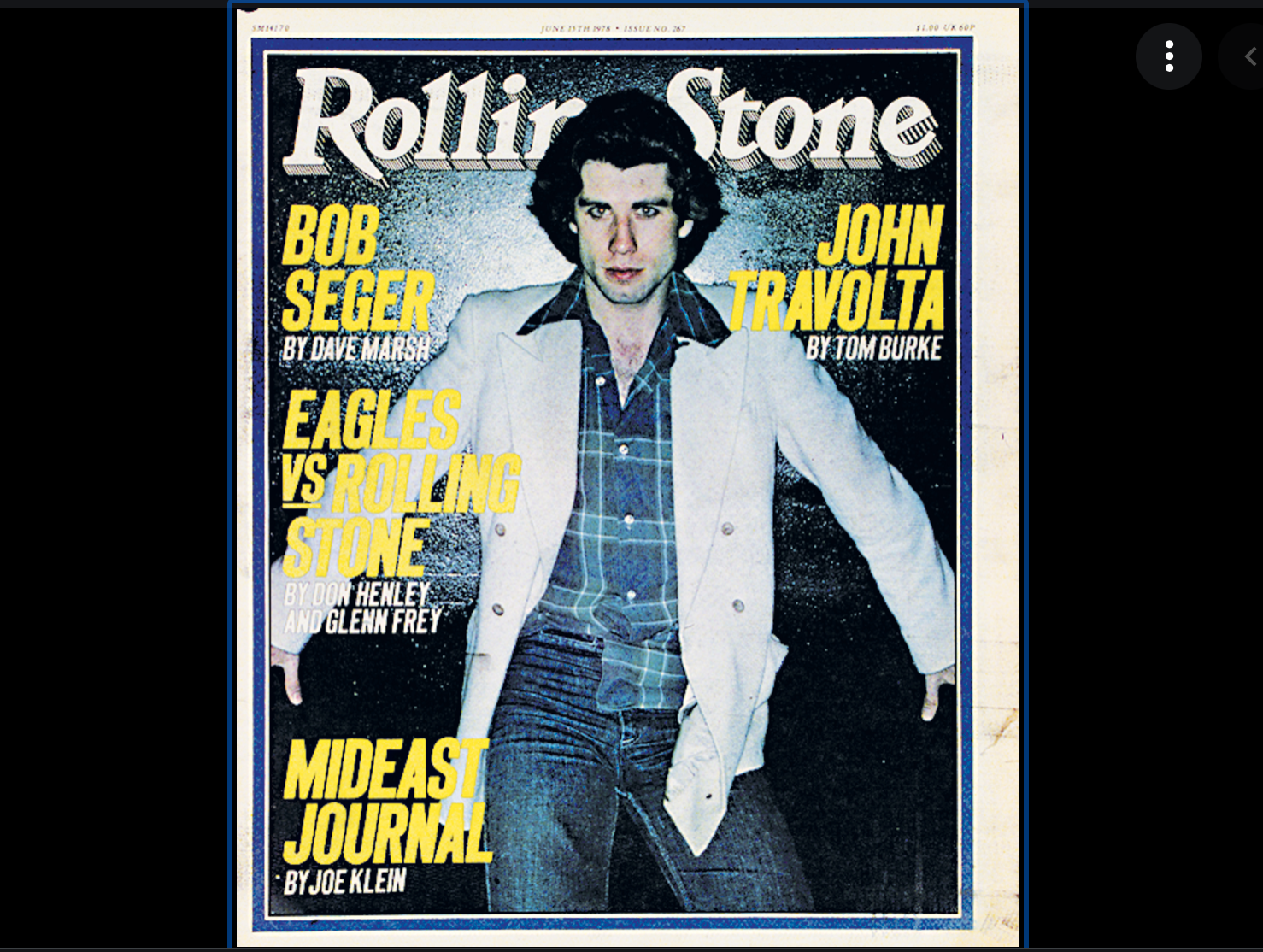
In 1978 John Travolta was everywhere: TV, movies, lunchboxes and on the radio. His success was due, in part, to his ability to traverse the shifting sands of 1970s masculinity. Visually he exuded a stereotypical Italian-American manliness. But his seventies successes had him engaged in (what were considered to be at the time) some pretty questionable manly pursuits, namely dancing, wearing a lot of stretch nylon outfits, and singing a slew of soft rock love songs. The lack of any real rock and roll connection to the Travolta phenomenon is, in retrospect, a bit surprising. No, the cartoonish Grease soundtrack doesn’t count. Luckily others have made the links. So let’s just skip over John’s musical contributions and go right to two great bands that take up the Travolta name and make it rock.
We begin with Salim Nourallah. Over the years I’ve bought a few of his albums but somehow neglected to write about them. This Travolta theme gives me a good excuse to do some backtracking. As a solo artist, Nourallah’s work consists of finely crafted tunes, peppered with subtle melodies and an overweaning aura of melancholy. Oh, he brightens up on occasion. Like with the light upbeat track entitled “Travolta” from his 2012 album Hit Parade. Nourallah had actually formed a band called The Travoltas in 2011 and brought out an album under that name in 2012 (later re-released with more songs in 2017). The record is uneven but only from a band point of view, sometimes sounding indistinguishable from Nourallah’s solo stuff, at other moments sounding more than just Nourallah plus four other guys. Opening cut “I Can’t Say No” and “If You Could be the Star” make the most out of the band setting, with the latter cut reminiscent of early Eels records. “Work of Art” and “Crying Shame” are classic Nourallah sophisticated poprock. And there’s some fun covers of some pretty obscure stuff, like Gene McDaniel’s “Tower of Strength” and Jonathan Richman’s “I was Dancing in a Lesbian Bar.” Altogether the whole record is an enjoyable outing from a guy with a producer’s eye for sonic detail and the artful placement of a killer hook.
The band most associated with our Hollywood star’s name are the Dutch outfit, Travoltas (sans the ‘the’). Oft described as a Beach Boys/Ramones hybrid, you can hear the punky synthesis all over the band’s dozen or so albums. Sometimes they really honour the Beach Boys vibe, as on the first few bars of the 2000 single “You Got What I Need” before the punk kicks in. Other times they riff on both the Beach Boys’ album artwork and sound, with 2003’s Travoltas’ Party looking and feeling like the original that inspired it. It’s a sound that is popular with a host of bands, for instance neighbour Denmark’s Tommy and the Rockets, but there is something distinctive about what Travoltas do with it. More recent releases have stretched the band’s formula in exciting new directions, like the 2020 poppy single “Find You There.” Now they’re returned with a new EP, Back to the City, and it moves the needle more to the pop side of pop punk, particularly on the hooky title cut. Meanwhile, opening track “Escape the Pressure” still leans on some adrenaline pumping guitar assault but the harmony vocals bring the melodic elements more the front. “Start Again” also starts guitar-noisy but here again the vocal style soften the edges in a most melodic way. And there there’s “Nightcrawler” which combines theatric vocals with an early 1980s over-the-top melodic drama. Back to the City signals that Travoltas have not finished their musical evolution just yet.
The difference between John and our various Travoltas is one of spectacle versus substance. John may have looked the rock and roll part but he never really delivered on it. As an entertainment icon and emblem of the late 1970s particularly John Travolta has given us enough. We can safely leave the rock and roll to these bands that bear his name.
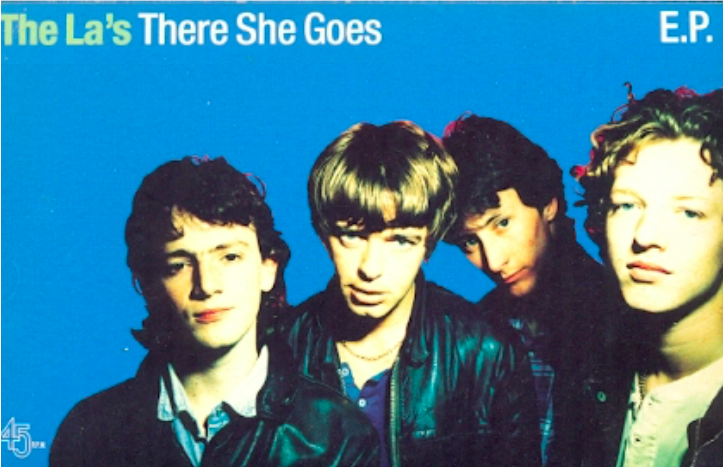 Was there ever a band with a more tragic story of fabulous talent meets destructive perfectionism and bad luck? If I were holding a contest,
 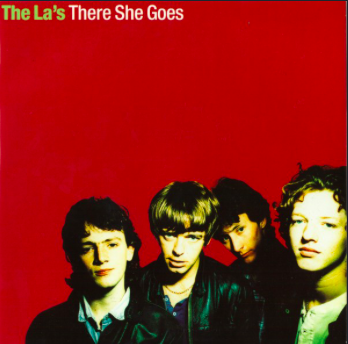 And what a song it is! From the hooky guitar lead line that lures you in, to the rhythmic acoustic guitar that anchors the song, to the hair raising vocal harmonies, the song really is poprock perfection. Personally, I prefer the original 1988 release of the song, produced by Bob Andrews, a slightly less sibilant version than the one worked over by Steve Lillywhite for inclusion on the band’s debut album in 1990. But they’re both great. Here’s the original and a Lillywhite produced acoustic version.
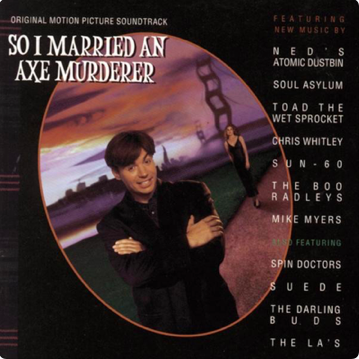 Commentators as disparate as New Music Express, Rolling Stone, Death Cab For Cutie’s Ben Gibbard and Oasis all think the song is pretty much perfect. So it’s not surprising it’s attracted some cover versions (though not as many as I would have expected). The earliest I can find is from
 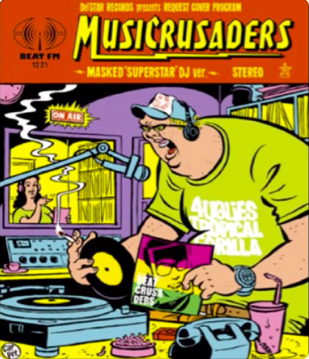 Things get more creative in the new millennium. First up, Japanese indie band
  Great treatments of the song here but my prediction? We have yet to see the real flood of covers coming for this tune. “There She Goes” is such a perfect distillation of the basic elements of poprock songcraft in its combination of lyrical, melodic and instrumental hooks that it will prove irresistible to future bands. In fact, I think we have yet to see the definitive treatment (other than the original, of course). For instance, I would love to see an adrenaline-fueled jangle treatment from the guys who put together That Thing You Do or Fountains of Wayne or Marshall Crenshaw, to name just a few. Final treat: watch this interview and performance (of “Timeless Melody”) with Mavers and John Powers on Canadian Much Music from 1991 – they really were a killer live act!
 Poprock Record