
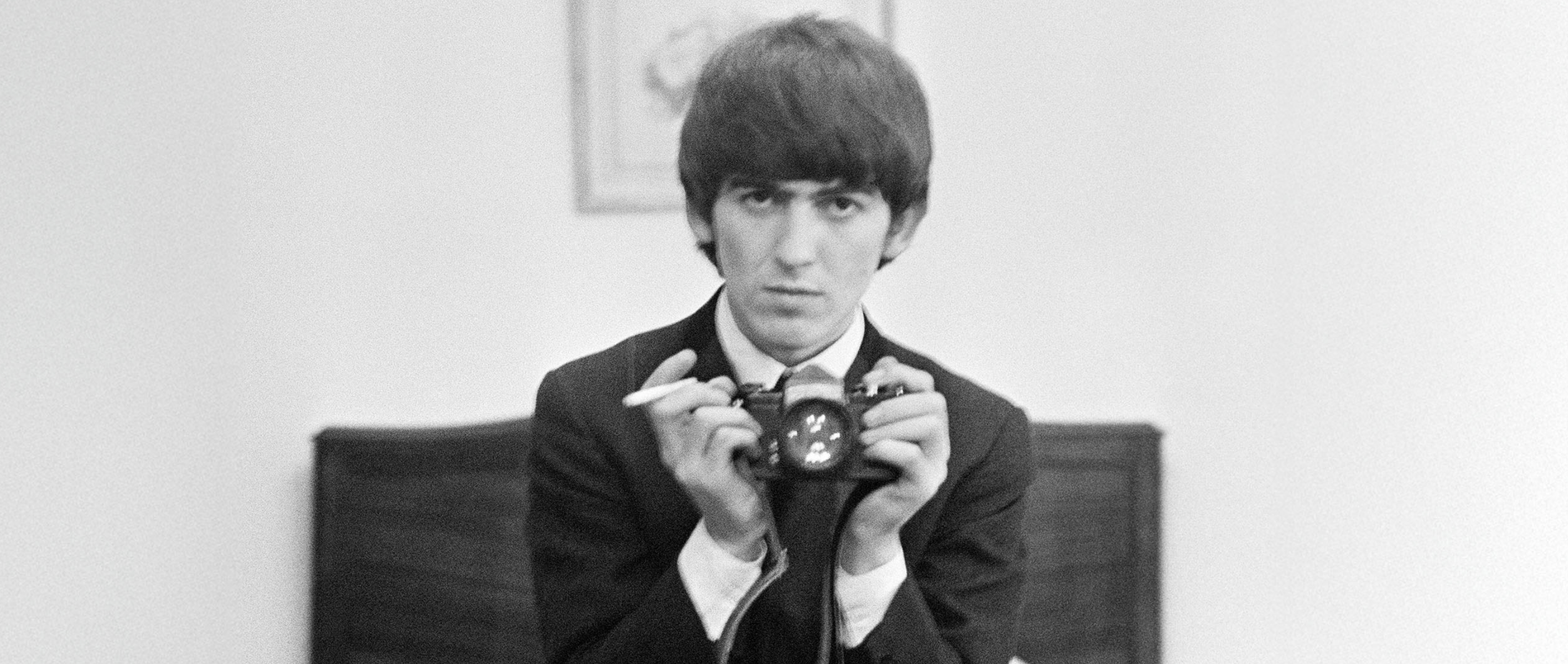
The Lennon versus McCartney post is the most popular thing I’ve ever put up on this music review site. It reliably gets between 50 and 100 hits a month. People do love them Beatles. I’m not sure a focus on George Harrison will produce similar results but that’s not because his efforts are not worthy. George authored 22 Beatles compositions and submitted many more that the band ultimately passed on. Some of these rejections – like “All Things Must Pass” – represent epic failures of judgement by John and Paul. Others, like “Not Guilty,” were more sound. George is both an interesting and divisive figure in the Beatles firmament, lauded for his early solo work on the epic 3-record set All Things Must Pass, but ruthlessly critiqued for the unevenness of everything he did after it. Personally, I think Harrison was a great pop songwriter who too often got in his own way. To make this point, we’ll review his solo work to show how a ‘Harrison versus Harrison’ pitch makes sense, as George was often his own worst enemy when it came putting albums together.
Everything starts with the 1970 release of the triple album All Things Must Pass. Who knew the quiet Beatle would break out of the Beatles break up with the most successful release, simultaneously holding the #1 album and single on both the American and British charts, surprisingly overshadowing releases by both John Lennon and Paul McCartney. Personally though, I find the album a bit bloated. Obviously, “My Sweet Lord” and “What Is Life” are superior tracks while “I’d Had You Anytime” (a co-write with Bob Dylan) and “Apple Scuffs” are strong deep cuts. But the record could have been a tighter single-album release. Two and half years later Harrison released Living in the Material World, which reviewers generally viewed positively, despite containing only one song worthy of single release, “Give Me Love (Give Me Peace on Earth).” The 50th anniversary edition contains the Irish-ish outtake “Sunshine Life for Me (Sail Away Raymond)” which I’m quite partial to. Another year and half later Harrison produced Dark Horse. What is striking here is how the early demo take of the title track really captures the magic of the song, particularly with the harmony vocals.
By the mid-1970s Harrison seemed to running out of ideas. 1975’s Extra Texture was clearly a contractual obligation album to meet the requirements of his Apple/EMI deal while 1976’s Thirty Three and 1/3 was an equally weak outing on his new Dark Horse/Warners label. How things change with his 1979 release, the self-titled George Harrison. “Blow Away” is an amazing single, a perfect example of George’s strong pop instincts. “Dark Sweet Lady” is a strong soft rock number while “Faster” celebrates his love of car racing. Two year later Somewhere In England showed George Harrison was no fluke. The new record had even more strong cuts. While Harrison was annoyed that his original song line up was rejected by the record company the final collection of songs was much improved. For instance, “Blood From a Clone” savaged his record company but it was a better song than many on the original line-up. And of course “All Those Years Ago” was the song so many Beatlemaniacs needed to work through their grief over John Lennon’s tragic death. A year later Harrison released Gone Troppo, an album with no obvious singles or clear artistic direction. Still it contained a few strong compositions, like “That’s the Way It Goes.”
After a break of five years Harrison returned with the commercially successful Cloud Nine. The album saw Harrison return to #1 on the singles chart with a cover of James Ray’s 1962 minor hit “Got My Mind Set On You” and finally acknowledge his Beatles past on “When We Was Fab.” But the key thing about the record was the way that producer Jeff Lynne (of ELO) worked an effective creative tension with Harrison, reigning in his religious and soft rock predilections to push him into a more retro rock and roll feel. The album may be the most consistent song-writing-wise of Harrison’s career. “This Is Love” is evidence of how Lynne disciplined Harrison’s pop instincts to good effect. Of course, Lynne would go on to work with Harrison on the Travelling Wilburys and the Beatles Anthology project with impressive results. Harrison’s last record Brainwashed would be released after his death and while lacking a stand-out single the record as a whole is strong. Album opener “Any Road” made the UK charts while title track “Brainwashed” offered on final political and spiritual message from a performer who had never shied away from either.
Removed from the enormous shadow of Lennon and McCartney, George Harrison was an impressive songwriter who would have held his own in the 1960s and 1970s as a solo artist. But, frankly, in my opinion he was often his own worst enemy, betraying his solid pop instincts to pursue less clear spiritual or esthetic goals. Over the arch of his solo career we can see how he could produce superior pop singles when he put his mind to it. But it appeared he needed a creative tension that would challenge his decisions. In the Beatles John and Paul were ruthless critics and the George material that surfaced on Beatles records was of an exceptionally high standard. In his solo years the critical environment changed, with clearly negative results. However, in his final two decades push-back from his record companies and a supportive relationship with the likes of Jeff Lynne and others got Harrison back on track producing Beatles-worthy hooks. Let’s wrap with his Irish paean “Sunshine Life for Me (Sail Away Raymond).”
It’s not hard to find George Harrison music or commentary on his career. You can start at his website to get your feet wet.

