Tags
Acid Cowboys, Autoramas, Blue Monday, Buke and Gase, Hannah Peel, New Order, Orkestra Obsolete, The Banjo Lounge 4, The Jolly Boys
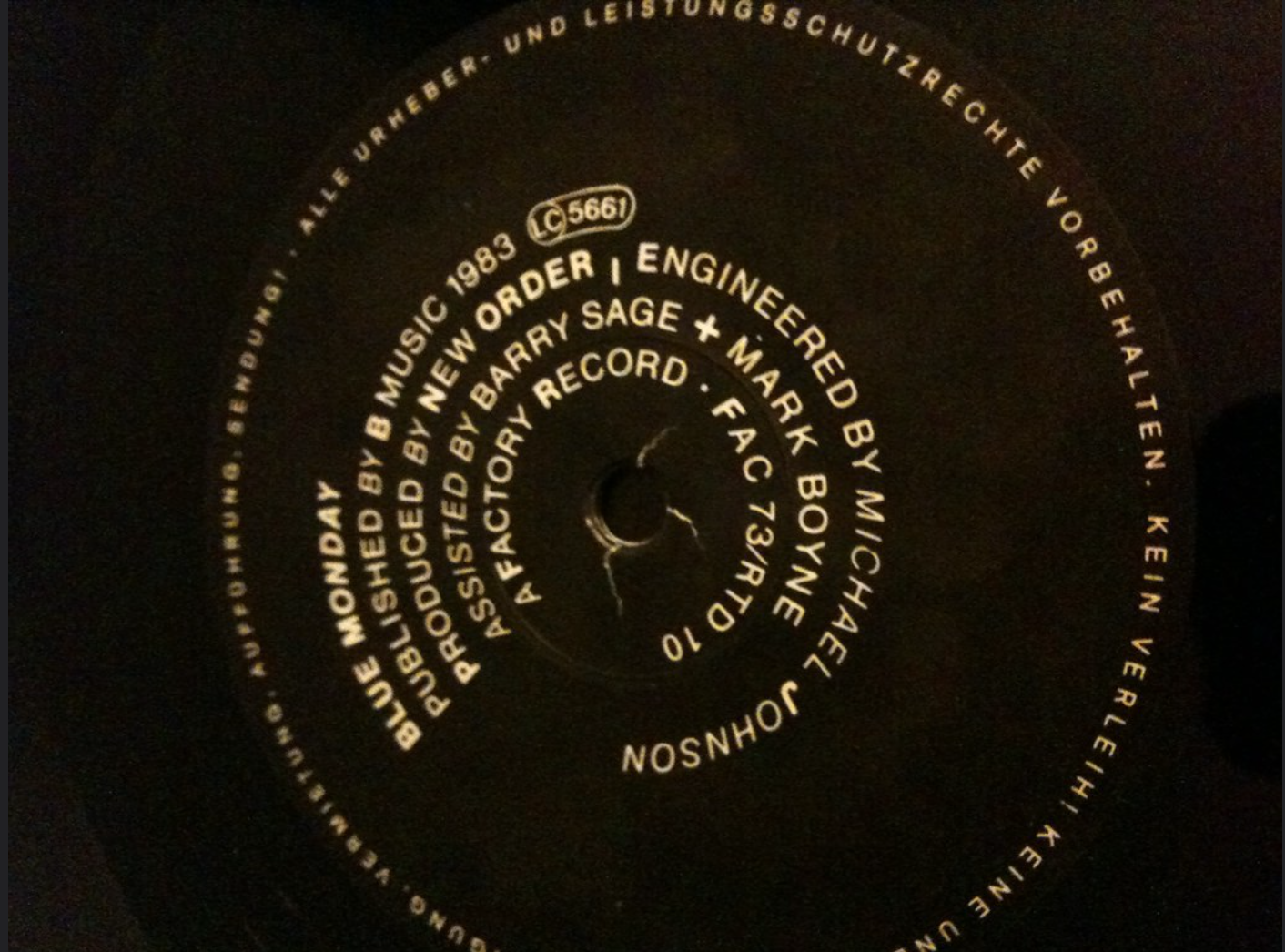
I can’t remember the first time I heard New Order’s “Blue Monday” but I do remember purchasing Power Corruption and Lies in the spring of 1983, largely on the basis of the cover design. Living in a west coast Canadian backwater I had no idea who New Order were or what their music sounded like. Still, I played the album over and over and felt pretty cool while doing so. Then I got an earful of “Blue Monday.” That hypnotic bass line, the wall of overlapping synths parts, the impassive vocals – they were all so captivating I splurged for the first 12” single I ever bought.
This past week my friend Tom posted about Orkestra Obsolete’s amazing cover of the song played on 1930s instruments. The video both sounds good and looks great. That got me wondering: what other groovy covers might there be of this oh-so unusual song? Turns out – quite a few. The reliable SecondHandSongs site lists over 70 versions in all kinds of styles. Quite a few dial up the synth like a bottle of New Order-brand concentrate but you can’t really out-New Order the originals. Why try? More interesting to me were the genre switchers, the covers that tried to put the song into a totally different context. Like the afore-mentioned Orkestra Obsolete, a one-off put-together band for a BBC program that really captured the essence of “Blue Monday” despite a lack of synths and drum machines.
Orkestra Obsolete are just the most recent example of a common tendency in covering “Blue Monday,” namely to strip things down and build them back up again but with radically different instrumentation. Acid Cowboys take things in an urban country direction, adding a loping rhythm and plenty of pedal steel guitar. The Banjo Lounge 4 use their signature instrument to anchor the song, effectively replacing the synth and electric bass guitar. Of course, as a quasi-percussive instrument the banjo can take up this space and then some. Hannah Peel really does a sound reduction on the song, accompanying her spare vocal with just a music box mounted on a mandolin. Funny how all three acts also offer a cover of “Tainted Love” on their respective albums.
Now for something almost completely different, check out The Jolly Boys and their mento reworking of the tune. Mento is a style of Jamaican folk music that pre-dates and heavily influenced both ska and reggae while the Jolly Boys are a band with roots stretching back to the 1940s. They really capture the lurching tempo of the song with their acoustic instruments and the radically different vocal here is inspired. By contrast Buke and Gase mirror the original sound in many ways but twist and stretch its various elements, making some more harsh and others wonderfully strange. Really, a delightful reinvention. But probably my fave cover is from Rio De Janeiro’s Autoramas. It’s all retro guitars to the front of the mix and solid four-on-the-floor drumming in a version with no vocals.
New Order continue to put out interesting music but if “Blue Monday” had been a one-hit wonder I imagine we’d still be hearing about it today. It’s just that cool.
 Time passes and it’s amazing the musical acts you realize you haven’t thought about in a long time. Could even be bands you once loved but now regularly pass over in the record collection. Then something brings them back to mind and you discover they have carried on, despite your indifference. Of course, sometimes such rediscoveries can be painful. But in the case of these three once mega-successful acts, the missing years have some seen them produce great stuff worthy of a bit of musical reconnaissance.
 If ever there was a band that seemed likely to gain the ‘fad artist’ label, it was Duran Duran. Flashy outfits, winning hairstyles, and plenty of jump-cut videos were oh-so-early 1980s. When they abandoned their hook-driven material for more bass-heavy R&B on 1986’s Notorious the exit sign over their career seemed to be flashing brightly. But despite the odds they persevered, turning out ten more albums over the years, all with at least a few pretty solid, hook-driven tunes, songs like “I Don’t Want Your Love,” “Ordinary World,” and “Come Undone.” The new millennium has seen the release of strong albums like Astronaut (2004) and All You Need is Now (2010). But their most recent Paper Cuts (2015) is arguably their best since 1983’s Seven and the Ragged Tiger. Largely written and and produced by recent wunderkind Mr. Hudson, the record still has the remarkably familiar stamp of Duran Duran while breaking new ground musically. Standout tracks include title cut “Paper Cuts” and “Sunset Garage.” If you haven’t checked out the band in a while, it’s time to return to the fold.
 I still remember finding my first used copy of New Order’s “Blue Monday.” I wasn’t really into techno or dance but there was just something so cool about the hypnotic driving bass and keyboard riffs. I dutifully purchased Low Life and Brotherhood when they came out. But I do remember being a bit disappointed with Technique, which seemed a bit too aptly named for comfort. New Musical Express complained that the band should just break up rather than repeat themselves (but then MNE was pretty infamous for hating bands as soon as more than a handful of people started liking them). So, in the nineties me and New Order drifted apart. Imagine my pleasant surprise to catch up on their post-Technique catalogue only to discover some of their best recordings! 1993’s Republic was OK, but 2001’s Get Ready is amazing, upping the traditional indie rock sound without losing the club vibe. And the songs are pretty strong: “Crystal,” “60 Miles an Hour,” and “Run Wild.” Four years later the band did it again with the stellar Waiting for the Siren’s Call, featuring killer tracks like “Krafty” and “Turn.” Songs left off the latter album were released as Lost Sirens in 2013 and they weren’t just leftovers: check out strong tracks like “I’ll Stay with You” and “I’ve Got a Feeling.” 2015’s Music Complete (minus longtime bass player Peter Hook) couldn’t help but disappoint by comparison, though “Superheated” is pretty cool.
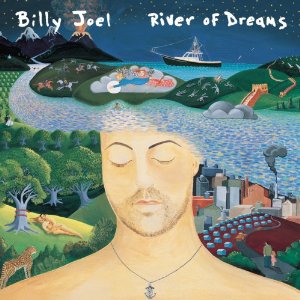 The first record I ever bought was Billy Joel’s 52nd Street. It was 1978 and one of the only non-country albums stocked in the dry goods store in Cassiar, the asbestos mining town in northern BC where we lived briefly when I was 13. On reflection, I don’t like it nearly as much as The Stranger (with its drop dead hit single, “Only the Good Die Young”), or Glass Houses, which really was Joel’s songwriting peak (from a poprock perspective). Sometimes you have to make do. But after The Nylon Curtain and An Innocent Man I kinda lost interest in what Joel was doing. I mean, I really couldn’t figure out how the dirge-like “We Didn’t Start the Fire” could make it from the out-take pile let alone top the charts. Different strokes. And then Joel just stopped making albums altogether after 1993, surely a bizarre development in our music-as-commodity world. I would have said ‘who cares’ until I ran across two beautiful late Joel songs recently, one each from his last two albums. “And So It Goes” from 1989’s Storm Front has a slightly Randy Newman-esque feel to the arrangement, when it’s not just exquisite Joel balladry. But minus the flash – this performance is remarkably restrained and vulnerable. “Lullabye (Goodnight, My Angel)” is the best thing on 1993’s River of Dreams, a beautiful love song for his daughter.
 Poprock Record