
 Aimee Mann snuck up on me. I had one record and then another and before I knew it I had them all on some kind of regular rotation. My Columbia House subscription at the time probably bears some responsibility. Why do I like Aimee Mann so much? I don’t know. There’s something comfortable and sutured about the space she creates, like a self-contained sonic mini-universe. And despite the often sad stories and the sad sacks responsible for them, Mann’s work is never obviously melancholic. Instead, she gives musical voice to the emotional ambivalence of our times. Shit’s happening and people are trying to find love and there seem to be no obvious heroic scripts to draw from. When you can’t work that kind of stuff out sometimes you just want to wallow with someone who isn’t forcing you to smile or cry. Mann gets it. Easy answers are not that satisfying. Her albums are filled with characters struggling to cope with not knowing which way to turn. They’re idealistic enough to want to do something, but wise enough to know each choice has a cost.
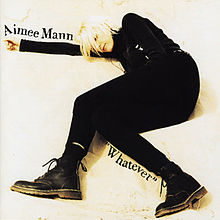 It has been fascinating to watch the trajectory of Mann’s career. Three albums with her band ‘Til Tuesday channeled a lot of 1980s bombast, with a few gems along the way like “Will She Just Fall Down” (which sounds the most like the post-‘Til Tuesday Mann sound). But with 1993’s Whatever Mann declared her creative independence, establishing the rudiments of the style she would continue to develop the rest of her career. You can tell a little about her from the people she has chosen to work with, co-writing songs with Elvis Costello, Jules Shear, and Jon Brion, and inviting the likes of Squeeze’s Glen Tilbrook and the Shin’s James Mercer to add vocals to various tracks. But ultimately comparisons fail because Mann is a category of her own. In terms of stylistic confidence and delivery, she reminds me most of Joni Mitchell. She is post-genre.
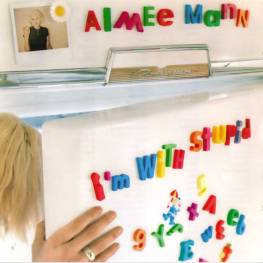 Trying to single out a few songs to feature from Mann’s many albums is painful, there are just so many good tracks. Whatever kicks off with everything Mann has become celebrated for in “I Should Have Known”: a wall of guitar, a solid melodic hook that comes out of left field, great background vocals. But “I Know There’s a Word” showcases the more tender, acoustic side that is never absent from any Mann release. Two years later I’m with Stupid appears to repeat the formula but with a few twists. Opening track “Long Shot” is a bit punchier while the obvious single “That’s Just What You Are” is pulled in a different direction by the distinctive vocal contributions of Squeeze’s lead singer. Though again, the quiet acoustic “You’re with Stupid Now” is a slow burner of a killer tune. Mann came out with Bachelor No. 2 in 2000, which featured songs that had appeared in the film Magnolia. Rightly praised for its strong material, I’m particularly partial to “Red Vines,” “Driving Sideways,” and “Susan.”
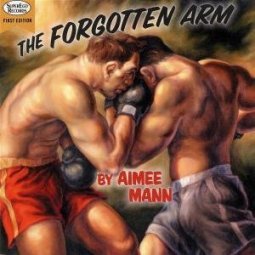 I lost track of Aimee Mann for a few years. You know, I got busy, she got busy. 2002’s Lost in Space passed me by, though now I love “This is How it Goes” and “Invisible Ink.” I did catch the brilliant Forgotten Arm when it came out in 2005. It makes sense that a story-telling songwriter like Mann would want a bigger canvas, a whole album that develops an over-arching story. You can’t pick and choose your 99 cent choices here, you have to buy the whole thing to really get it, but I do tend to hit repeat on “Video,” “Little Bombs,” and the achingly beautiful “That’s How I Knew This Story Would Break My Heart.” I missed both 2008’s @#%&*! Smilers and 2012’s Charmer when they came out. Ok, there are more attentive Aimee Mann fans than me. But I’ve made up for lost time – both these records are fabulous. @#%&*! Smilers adds a wonderful array of keyboard sounds on the uptempo “Freeway,” and the more swinging “Borrowing Time,” while “Little Tornado” is breathtaking with its starkly simple arrangement of guitar, echo-y piano, and whistling. Charmer takes the keyboard exploration to new heights on so many strong tracks, but I really like the title track, “Crazytown,” and “Red Flag Diver.”
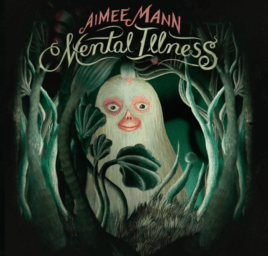 Which brings us to the present and Mann’s stunning new album, Mental Illness. With Whatever I thought Mann had put the bar pretty high but looking back over her career I think she has gotten better and better with every release. Mental Illness has the hooks, the careful attention to arrangement that characterizes all of Mann’s output, and an impressive range of instrumental quirks. The two singles, “Goose Snow Cone” and “Patient Zero” showcase this beautifully, particularly the spooky ‘oohs’ that introduce us to the latter song. Is the record a departure from Mann’s past work? In one sense, not really. Acoustic guitar anchors most of her work and every album usually features more than a few solely acoustic numbers. What is different here is the balance, with “Simple Fix” the only track that employs a more full band sound. Aside from the singles, right now I’m also really enjoying “Rollercoasters” and the more piano-based ballad “Poor Judge.”
Aimee Mann is currently on tour with the hilarious Jonathan Coulton opening her shows and playing in her backing band (he played on Mental Illness as well) so hustle on over the Mann’s website to find when she will be in your town.
 It is great to see acts come out of the woodwork stronger than ever. The Feelies never raced up the charts when they originally hit the scene in the late 1970s and early 1980s but, like the Velvet Underground, they seemed to inspire just about every one of their fans to start their own band. Their original, laid back distinctive guitar sound still seems fresh today. Their soon to be released album, In Between, however, is a bit of departure, with stronger, heavier guitar sound on the pre-release single “Gone, Gone, Gone.”Gone, Gone, Gone
 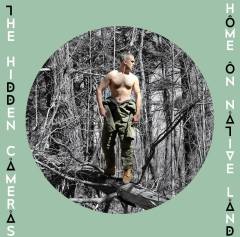 Toronto’s Hidden Cameras continue to release curious reinventions of all manner of traditional poprock. Home on Native Land features a great hooky alt country sounding single in “Don’t Make Promises,” a song that wouldn’t sound out of place on any number of Dwight Yoakam releases. The most recent album also features a remake of “He is the Boss of Me,” a song from HC’s earliest release, 2001’s Ecce Homo. I remember buying an early release of the CD at one of their shows that contained felt marker writing on the disk and a colour photocopied sleeve. The original version of the song is great but stark in its DIY economism. The new version is rich and frankly, voluptuous, by comparison, which really showcases what a great song it is.
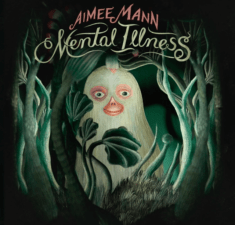 Aimee Mann is back with a new album, Mental Illness, one she claims will explore the acoustic pop sound of the 1960s, with back up from Jonathan Coulton no less. I say claim because at present we have just the one pre-release single to go by, the exquisite “Goose Snow Cone.” But if her track record recommends her, it’s going to be great. In another entry we featured her anti-Trump single “Can’t You Tell” as well as few tunes from her collaboration with Ted Leo in The Both. And her last solo album, Charmer, was solid, with nary a track that wasn’t worth paying 99 cents for. Mann has a distinctive songwriting and performance style, and her lyrics are smart though sometimes confounding (which is good – it gets you thinking). Check out the clever wordplay in her 2014 stand alone single, “I’m Cured,” with its low key acoustic guitar accompaniment that features some nice accordion and piano slipping in as it goes along.Goose Snow Cone
 On the something new front, The Molochs are an outstanding 1960s re-invention from Los Angeles. Their just released new album, America’s Velvet Glory, is so cool you’re going to have to handle it with gloves. The transformation from their 2013 indie debut, Forgotten Blues, is pretty impressive. The latter is a enjoyable DIY affair but the latest release exudes a kind of uber confidence that says you won’t touch that dial. The influences are many but I hear Lou Reed in the Velvets in the vocal style while the sometimes spare accompaniment reminds me of a number of early 1980s indie bands. In a world of single song downloads, this is an album worth buying. If I have to single out a few songs, I’d note “That’s the Trouble with You,” “The One I Love,” and “No More Crying.”
 Poprock Record