
Tags
Air Traffic Controller, Chris Corney, Cupid's Carnival, Daily Worker, Ike Reilly, Lolas, Paul McCartney, Richard Turgeon, Robert Ellis Orrall, Sloan, The Primitives

Workers Playtime was a BBC radio show that ran for two decades after WWII, broadcasting live music and comedy from shop floors across the UK. As culture should do, it held a mirror up to what the great mass of people do day in, day out, as if that mattered. On today’s May Day we revive that spirit with a collection of songs that also focus on work, working, and workers.
I’ve never heard anyone capture the essential problem of work in a song quite like Birmingham, Alabama’s Lolas. Running just shy of two minutes, “Work is the Blackmail of Survival” beats its jangle fueled fist against the tyranny of modern employment. Not that Lolas leader Tim Boykin could be accused of sloth, given how he regularly churns out great tunes. His real concern is about how work for pay tends to stunt out lives, alienating us from ourselves and others. Boston’s Air Traffic Controller are not clear on what kind of employment they’re writing about on “The Work” but it doesn’t sound like a walk in the park. But like Lolas they still sound chipper about it, musically at least. Cotton Mather main man Harold Whit Williams has another project that is right up our themed alley. Writing and performing under the moniker Daily Worker he has a whole album entitled May Day. On “Write If You Get Work” he offers a folk pop rumination on the struggle to get work in seemingly never-ending tough times. In a related vein Canadian power pop juggernaut Sloan weigh up the pros and cons of any given work opportunity on “Nice Work If You Can Get It” with a few Beatlesque guitar hooks just to sweeten the deal.
Our next group of songs are about working. On his website Paul McCartney writes about “On My Way to Work” from his 2013 album New. Ever the wistful one, Macca does capture the mood of his pre-Beatles working class self going to work, mind on other things. On their last album in 2011’s Sky Full of Holes Fountains of Wayne tucked in one of their usual stellar daily-life song sketches with “Workingman’s Hands.” With a quiet respect, the song’s lyrics honour the impact of work on those who do it. Jack Green’s 1980 album Humanesque has a unique blend of guitar and vocals that is so of the era. It also includes the rhythm guitar chord fabulous tribute to working class gals on “Factory Girls.” The light synth touches are just a bonus. Reaching back to 1973, the struggles of working class couples with conflicting shifts gets an airing on the Liverpool Echo’s “Sally Works Nights.” Though I doubt the protagonist’s solution here really met with Sally’s approval.
Shifting gears, work is the focus of a lot anguish in terms of how it limits what people can do with their lives. Philadelphia’s 2nd Grade neatly sum the essential problem on “Work Till I Die” where the singer works and works to gain ‘free time.’ Similarly Richard Turgeon bemoans the days lost to “Workin’ for the Man.” As he notes lyrically “There’s a moral to this story but it might not have a happy ending.” The Primitives left space on their fabulous 2014 comeback album Spin-O-Rama for a soliloquy about how hard labour sucks on the delightful “Working Isn’t Working.” And they throw in some pretty special glam buzz guitar too. Then there’s Cupid’s Carnival giving their best Beatles treatment of their own “Working All Day.” It almost makes suffering the work day worthwhile.
This May Day as much as any we have to ask why the great mass of working people put up with their situation, given that they represent the overwhelming majority of humanity. Chris Corney suggests it might have to do with a particular mindset. On “Do Not Adjust Your Mind” he addresses how people let things go rather than interrupt the flow. Robert Ellis Orrall puts the blame on a broader set of ‘doing stupid man things’ that dominate so much behaviour. What people need, according to angry troubadour Ike Reilly, is to abandon a fake past and embrace of real future and “Fuck the Good Old Days.” Amen.
This moment in history is no workers’ playtime. While AI fiddles our future as workers burns, unless we collectively decide otherwise.
 I discovered Ike Reilly just this last year, a week after he had appeared at the Drake Hotel in Toronto in support of his latest album Born on Fire. What an opportunity missed! But Reilly is not new on the scene, with recordings as far back as 2001, and performing career stretching back to the late 1980s. Imagine Bruce Springsteen meets hip hop, but by someone who could really pull it off. That guy is Ike Reilly. His material has all the great rock and roll vibes accompanied by an effortless alternating talk/singing style. Like Springsteen, Reilly gives voice to the sense of hopelessness and desolation facing working class communities in the face of catastrophic job losses and a general lack of political leadership. And like Bruce, he manages to capture the vignettes that make a life: the broken promises, the failed adventures, the unfulfilled potential.
 From the three albums attributed to just Ike Reilly (there are three more with his backing band The Ike Reilly Assassination) I count at least nine must-listen tracks, though I feature a few less here. From his most recent Born on Fire “Am I Still the One For You” and “Underneath the Moon” are both great songs, but “Two Weeks-a-Work – One Night-a-Love” has a great groove and carries on Reilly’s strong career focus on work and the lack thereof.
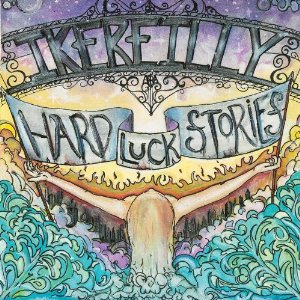 2009’s Hard Luck Stories showcases the struggle for meaningful work on a host of songs but “Good Work” nicely captures the dilemma facing today’s youth who, despite partying together, will see some move effortlessly from privilege to opportunity while others struggle for whatever they can get. From the same record, “Girls in the Backroom” has a raucus sing-a-long quality masking some pretty desperate behaviour.
 Winding back to 2001 and what can only be considered a minor masterpiece, Reilly’s Salesmen and Racists is a no-holds-barred critique of America’s class society but remains a remarkably tuneful indictment. “My Wasted Friends,” “Duty Free” and “Hip Hop Thighs” have hooks galore and a lot for the thoughtful listener to consider after the melodies fade.
 Poprock Record