I remember my first Tom Petty song so clearly. I was working the dish-pit in a spaghetti restaurant when “Don’t Do Me Like That” came on the local FM radio station. What a song! Those distinctive guitar/piano shots were the musical equivalent of crack cocaine. I was never gonna get free of that. Then I heard “Refugee,” “Even the Losers,” and “Here Comes My Girl” and knew Petty and I were going to spend a lot of time together. Over the years I didn’t react to each Petty record quite as strongly but every release had something to love. That made his sudden unexpected passing in 2017 hard to take as the guy clearly had more to give. Four years later Petty’s impact on multiple generations of musicians and fans has only become more apparent. I mean, people write songs about the guy! And some of them are pretty good.
Austin Texas’ Leatherbag add just a dollop of Petty song-style to their “Tom Petty Summer” from 2009’s Tomorrow/Everything I Once Knew album. Ok, it’s there vocally and the guitar lead lines too. You can also enjoy a nice acoustic treatment of the song too from the band’s 2012 Rarities collection. Morgantown Virginia’s Weedhawks dial down their political commentary just a bit to honour TP on “I Miss Tom Petty” from their 2019 release Build a Wall Around Washington. On this tribute, it’s the message that is all about Petty rather than the treatment, which owes more to a country-fied Lou Reed and the Velvets. That the Hanging Stars would ace the Petty sound is really no surprise. The band ooze a Brydsian folk rock meets jangle confidence on all their recordings. So their “Tom Petty” from 2020’s New Kind of Sky is a treat, mixing 12 string electric guitar with some pretty pedal steel work over a solid piece of songwriting. The Satin Cowboy and the Seven Deadly Sins conjure up a bit of Wildflowers with their “Song for Tom Petty,” a lovely tune that hurts bad for Tom and all that we are missing with his death. A more upbeat take on the same sentiment can be found on Dolour’s dynamic 2021 release, Televangelist. His “The Day Tom Petty Died” honours Petty’s sonic legacy in a more rip-roaring melodic sort of way.
He may be gone but today’s songs demonstrate that Tom Petty is very much alive in the music we love. In line with today’s troubadours, I say, long live TP and his influence.
If you need a dose of musical smiles and sunshine, dial up the good times vibe all over the recent Mike Browning releases. A self-admitted musical late bloomer, these recordings are actually brimming with a kind of youthful excitement and joy. Get started with “We’re Hanging Out” which opens Browning’s 2020 debut EP Never Too Late with a splash of that 1960s breezy sunshine pop, one part Buddy Holly, another part Beach Boys. Then “I Can See Nothing But You” combines some lovely jangle with a bit of late 1960s folk rock. “Hide and Seek” is bit more neo-1950s, in that way mid-1960s beach group would do it. Meanwhile “Watching the Lines on the Road” feels so Monkees, leaning particularly toward Nesmith’s influence. Browning followed up this EP with a slick sounding single in early 2021, “Another Bite of the Apple,” a nice poppy number with a great hooky lead guitar break. This is feel good music of the very best kind.
On his most recent release Class Act Browning takes aim at covering hits ranging from the 1960s through to the 1980s, classics like the Beach Boys’ “Do It Again,” the Byrds’ “My Back Pages,” and the Beatles “Norwegian Wood,” What a challenge! But Browning somehow manages to pull it off with solid musicianship and an endearing vocal style. My own personal fave is his somewhat muted take on “Jenny 867-5309” where he manages to capture the song’s energy and excitement while reining its rock excesses. Or there’s the chipper fun cover of The Reflections 1964 hit “(Just Like) Romeo and Juliet, or a super take on the obscure regional US hit “The Little Black Egg.” And so on through 12 tracks in total, covering artists as varied as XTC, the Kinks, Bob Dylan, the Spencer Davis Group, and more. Taken together, the feel of this record is like some kind of fabulous party for a multi-generational group to really enjoy. I, for one, would love to hear Browning’s band do these covers live.
With these recordings Mike Browning demonstrates it’s never too late to take up your musical dreams. And he’s now promising us more is on the way. Keep up with Mike at his website, Bandcamp and Facebook pages.
Cheap Trick are one of those legendary bands I’m supposed to really like. But, as often as not, their material seems either too screaming-guitar-solo rawk or histrionic power ballad for my tastes. When they do turn on the Beatlesque hooks and harmonies, however, the band are unstoppable. The essential winning formula appears on early hits like “I Want You To Want Me,” “Surrender,” “Dream Police” and pretty much all of their best-selling 1979 album Dream Police. But from there Cheap Trick seemed to lose their artistic footing, struggling over the course of their next 15 albums to match differing production styles with their reliably good songwriting. Despite sometimes uneven results, I think every Cheap Trick album has a least a few worthy poprock singles lurking inside. Today we melody test the 19 album catalogue of Cheap Trick to find those melodic gems.
I’m not going to dwell on the early ‘we’re gonna be stars’ period of the band. Rock writers have already penned countless columns noting their musical split personality, sometimes arena-noisy rawk gods, other times commercially slick Beatlesque hitmakers. The noisy rock roots defined their 1977 self-titled debut, with a few exceptions like “Oh Candy.” Less than year later In Color repeated the same formula, but with a few slick AM radio-ready exceptions, like the original version of “I Want You To Want Me” and “Southern Girls.” 1978’s Heaven Tonight saw the influence of new wave come to fore with the band’s first truly amazing single, “Surrender.” 1979’s Dream Police cemented their reputation as one of new wave’s most creative rock-oriented acts with the innovative title track and the more Beatlesque “Voices.” The band’s trajectory seemed to be following a classic rock and roll script, with every album improving on the last both creatively and commercially.
Oh, Candy
But something jarred loose on the way into the 1980s. The confidence of Dream Police seemed to give way to a fourteen year era of uncertainty about just who the band were and what they needed to do to succeed commercially and artistically. It wasn’t for lack of high profile collaborators. The next eight albums would see the band working with the likes of George Martin, Roy Thomas Baker, Todd Rundgren, Jack Douglas, Ritchie Zito and Ted Templeman. But the hits and previous rave critical reviews all but dried up. 1980’s All Shook Up failed to produce many standout tracks, other than “Stop This Game.” 1982’s One on One dialed up the rock vibe but the killer cut is undoubtedly the Beatlesy “If You Want My Love You Got It.” 1983’s Next Position Please was a much more melodic album overall, though critics complained that producer Todd Rundgren had the band sounding a lot like Utopia, particularly on “I Can’t Take It.” There are worse problems a band could have. Then the band reunited with Jack Douglas (producer of their debut album) for 1985’s Standing on the Edge and the results were brilliant. The songs and performances were back to Dream Police levels of confidence with highlights like “This Time Around” and the killer “Tonight It’s You,” a track that ranks with any of their best singles.
If You Want My Love You Got ItI Can’t Take ItTonight It’s You
And then the wheels came off the comeback bus. 1986’s The Doctor stalled the band’s revival. Critics slammed the album’s cheesy drum and keyboard sound but the real problem was the songwriting, with only “Kiss Me Red” catching my attention. Under pressure from their record company to turn out some hits, 1988’s Lap of Luxury bears all the marks of a corporate ‘album by committee’. The band were forced to work with outside songwriters and the production style was essentially a slick FM kind of bombast rock. The gambit worked: the record ended up second in total sales for the group behind Dream Police and a power ballad single, “The Flame,” did go to number one. But the best songs in my view are still the ones written by the band, e.g. “Let’s Go,” “Never Had a Lot To Lose,” and my fave “All We Need is a Dream.” Producer Ritchie Vito returned for 1990s Busted but the formula failed to work a second time. Instead, the standout track here is the throwback sixties-influenced “Had to Make You Mine.” Working with Van Halen producer Ted Templeman brought back the rawk on 1994’s Woke Up With a Monster but a few melodic surprises make an appearance, like “You’re All I Wanna Do” and “Never Run Out of Love For You.”
All We Need Is a DreamHad to Make You MineYou’re All I Wanna Do
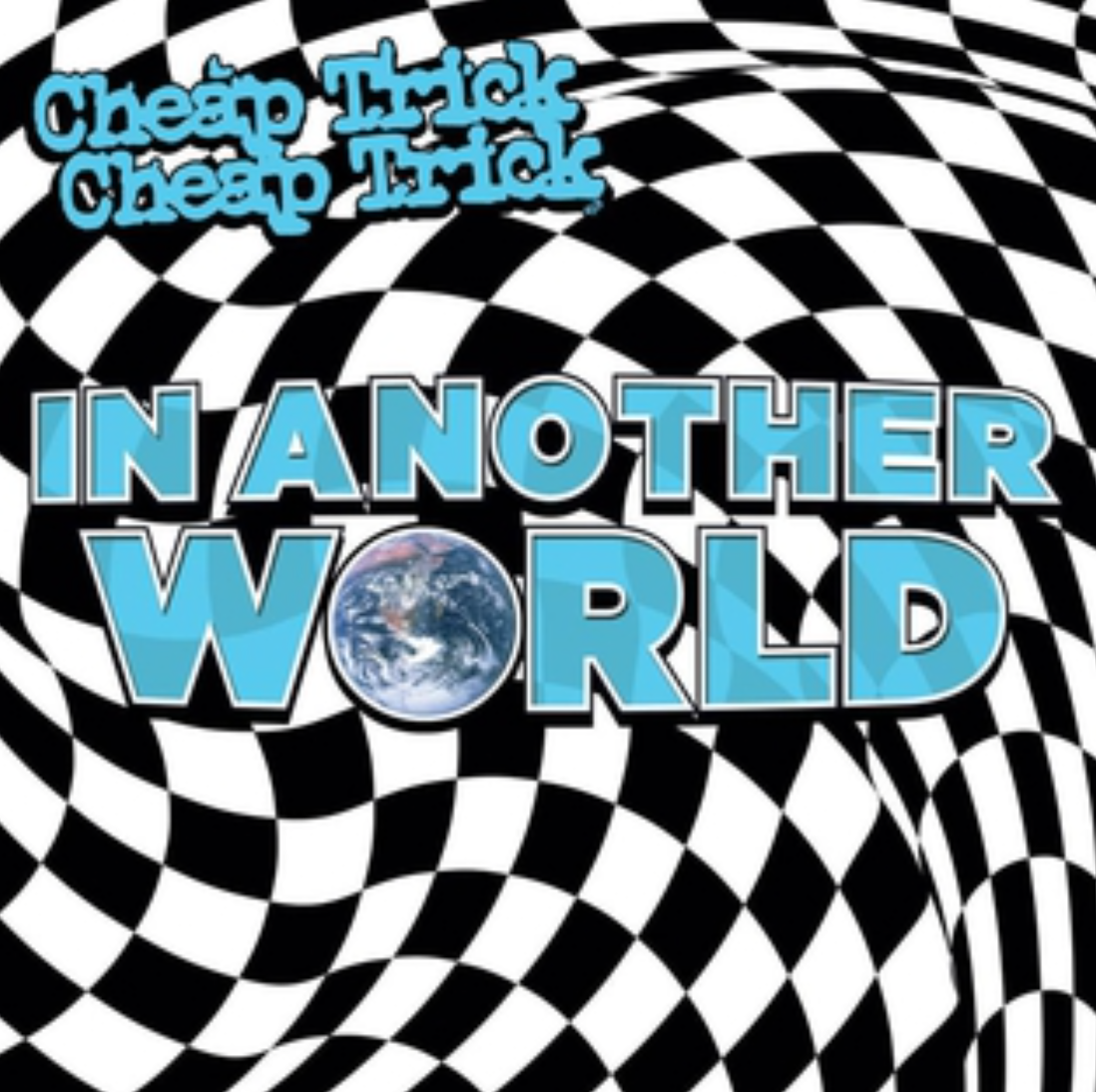
By mid-1990s Cheap Trick were without a major label deal for the first time in their career. This allowed the band to retake control of their musical direction, once again writing and producing most of their albums and releasing them on smaller, more independent labels. The results have generally been applauded by fans and critics alike. 1997’s Cheap Trick marked a creative reset, with stripped back poppy rock and roll numbers like “Hard to Tell” and the sixties-ish “Carnival Game.” Seven years later 2003’s Special One was less rawk than previous efforts but still strong songwriting-wise – case in point, “My Obsession.” 2006’s Rockford was another solid effort, with the single-worthy “All Those Years Ago” and the fab Bill Lloyd co-write “Dream the Night Away.” In 2009 the band delivered another melody-heavy package with The Latest. This one is particularly Beatles stamped – check out “Times of Our Lives.” Another seven years would pass before Bang, Zoom, Crazy… Hello in 2016 but the record has many highlights like “No Direction Home” and “When I Wake Up Tomorrow” (with its slight Bond theme undercurrent). One year later the band would return to their rawk default with We’re All Alright! but more melodic tunes appeared as well with “Floating Down” and “She’s Alright.” And then earlier this year album #19 arrived with In Another World, a collection that almost seems to showcase the band’s stylistic range across their whole career, including quite a few hooky numbers. My faves include “The Summer Looks Good on You,” “Another World,” and the more mellow “I’ll See You Again.”
Hard to TellMy ObsessionAll Those Years AgoTimes of Our LivesAnother World
I can’t say I love all of Cheap Trick’s albums but with every release there’s always been something to like. This melody test just proves that no matter how lost the band gets you can always find a good hook somewhere on any album. And some more than others! Who knows what surprises album #20 will bring. Don’t miss out – keep up with Cheap Trick news at their website and Facebook locations.
It was indeed a ‘wild’ and ‘exciting’ sound when I first heard it back in 1983. I’d stumbled across a ‘DJ-only’ pressing of “Whenever You’re On My Mind” and I was hooked, that Steve Lillywhite, reverb-drenched guitar line forever ingrained on my consciousness. From there I would double back to discover his amazing 1982 self-titled debut and go forward buying every real time release from 1985’s Downtown on. And unlike much of the studio-centric music of the period, Crenshaw’s accessible brand of new wave-tinged rock and roll was made to be enjoyed as much live on stage as on vinyl.
All of the above is just a roundabout way of saying that The Wild Exciting Sounds of Marshall Crenshaw: Live In The 20th and 21st Century will surely be a welcome addition to any Crenshaw fan’s collection. With 26 tracks, the collection is basically what we used to call a double album. One half focuses heavily on Crenshaw’s first two albums and his crack band from the period are in fine form. 12 of the 16 tracks here cover tunes from his debut and follow up album, the self-titled Marshall Crenshaw and Field Day, with two Elvis covers, an Al Green cover, and MC’s early Shake Records single “Something’s Gonna Happen.” The second batch of songs represent a Crenshaw-curated selection of tunes from the rest of his catalogue, with nearly every album getting a look in barring Downtown and What’s in the Bag? (Ok, I’ll admit it, I was bummed to see no Downtown tracks included here but, in fairness, they do appear on both of Crenshaw’s other live album releases). As with all things Crenshaw, the album design is stylish and cool while the song performances give us new insight into their versatility and melodic depth. There’s no doubt in my mind, fans are going to want to get wild with this set.
Buy this record from Marshall’s Bandcamp page to make sure he gets the maximum on your money appreciation and check out his website and Facebook for tour and music news.
Two musical acts separated by a single differentiating letter – there must be some connection? But no, Swedish band Hardy Nilsson are not some Harry Nilsson cover band. Nor do they seem influenced by the commercially successful American friend of the Beatles, originator of a kind of baroque pop and the mash-up song. Hardy Nilsson actually take their name from a Swedish championship hockey player and coach. I guess everything in music doesn’t revolve around an Anglo-American axis after all. Well now that we’ve brought them together we might as well dig into what they do a bit.
A lot has been written about Harry Nilsson. He wrote hits for himself (“Me and My Arrow,” “Spaceman”) and others (“One” for Three Dog Night, “Cuddly Toy” for the Monkees), made other people’s songs big hits (Fred Neil’s “Everybody’s Talkin’,” Badfinger’s “Without You”), and managed to be a big star in the early 1970s without ever touring or playing live much at all, a feat very much against the grain of the times. But eventually his music career appeared to be eclipsed by his more outrageous public behaviour, particularly repeated drunken outings with John Lennon. By the mid-1970s his records had stopped selling and after 1980 he never released another one in his lifetime. To get a sense of his playful inventiveness and what would become his trend-setting production techniques, check out his revisionist take on the Beatles “You Can’t Do That” from his 1967 album Pandemonium Shadow Show. Nilsson slows the song down and then proceeds to invent the ‘mash-up’ form, incorporating snippet references to 18 other Beatles songs into the track. He also recorded a version in Italian.
Harry Nilsson – You Can’t Do That
Swedish band Hardy Nilsson put out three albums in the 1990s, all very pleasant Teenage Fanclubby poprock outings. Shortly after starting one band the same members started another, Tommy 16, with a similar musical MO, though perhaps with a touch of Badfinger thrown in. The big difference between the two was a swap on lead singing duties and a shift from Swedish to English lyrics. Fans of both bands still debate which had the best shot at success and should have been the main focus of the musicians and record companies involved. A good illustration of what both produced can be found in the singles singled out below. Hardy Nilsson’s “Popsang” was a minor hit for them while “Come On Come On” was a single for Tommy 16 that got included on a number of 1990s compilations of Swedish acts.
Hardy Nilsson – PopsangTommy 16 – Come On, Come On
Harry Nilsson died not long after Hardy Nilsson put out their first album. It would have been cool if he’d heard about them, even if he wasn’t their inspiration. Could have made a great double bill.
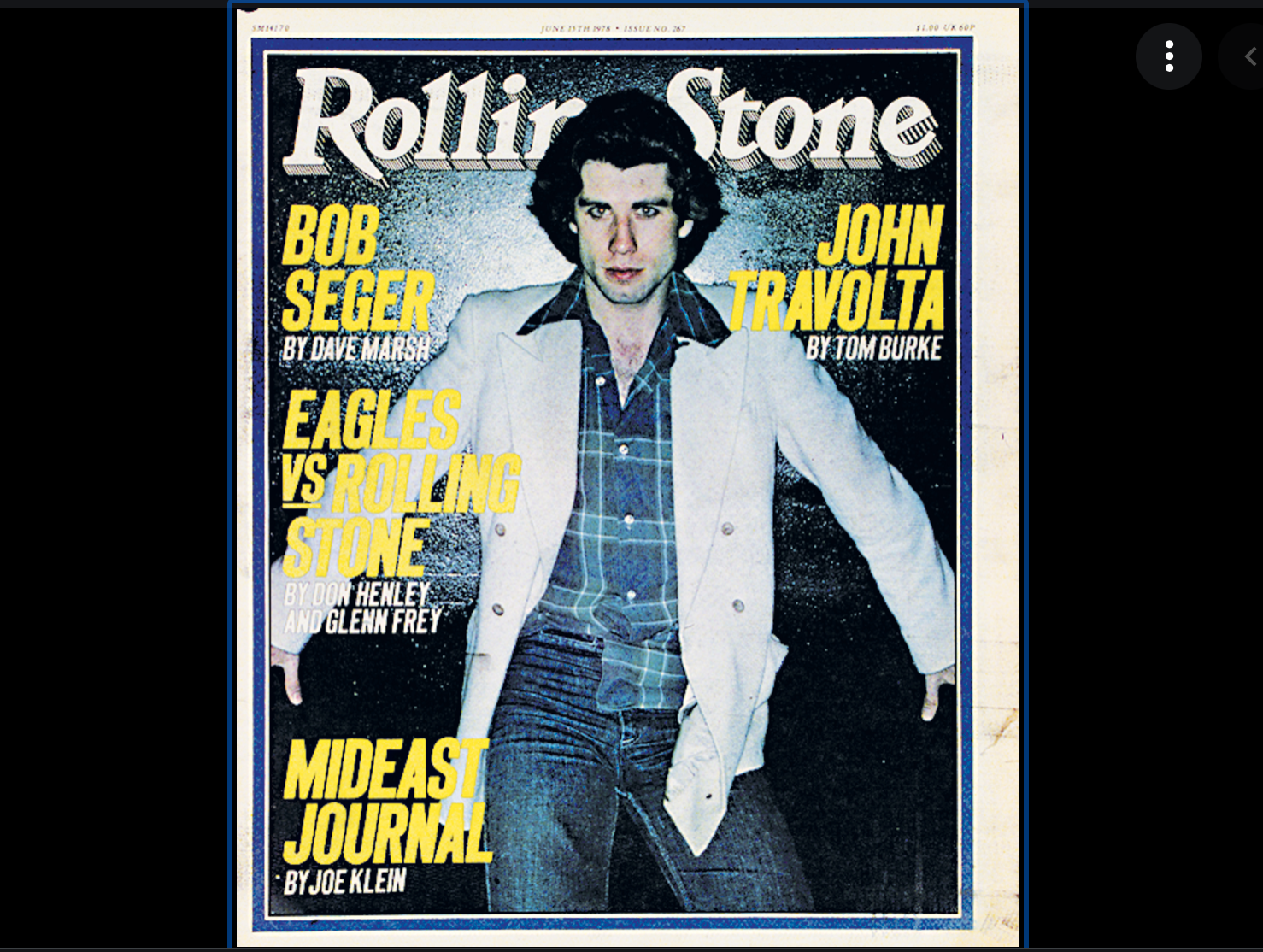
In 1978 John Travolta was everywhere: TV, movies, lunchboxes and on the radio. His success was due, in part, to his ability to traverse the shifting sands of 1970s masculinity. Visually he exuded a stereotypical Italian-American manliness. But his seventies successes had him engaged in (what were considered to be at the time) some pretty questionable manly pursuits, namely dancing, wearing a lot of stretch nylon outfits, and singing a slew of soft rock love songs. The lack of any real rock and roll connection to the Travolta phenomenon is, in retrospect, a bit surprising. No, the cartoonish Grease soundtrack doesn’t count. Luckily others have made the links. So let’s just skip over John’s musical contributions and go right to two great bands that take up the Travolta name and make it rock.
We begin with Salim Nourallah. Over the years I’ve bought a few of his albums but somehow neglected to write about them. This Travolta theme gives me a good excuse to do some backtracking. As a solo artist, Nourallah’s work consists of finely crafted tunes, peppered with subtle melodies and an overweaning aura of melancholy. Oh, he brightens up on occasion. Like with the light upbeat track entitled “Travolta” from his 2012 album Hit Parade. Nourallah had actually formed a band called The Travoltasin 2011 and brought out an album under that name in 2012 (later re-released with more songs in 2017). The record is uneven but only from a band point of view, sometimes sounding indistinguishable from Nourallah’s solo stuff, at other moments sounding more than just Nourallah plus four other guys. Opening cut “I Can’t Say No” and “If You Could be the Star” make the most out of the band setting, with the latter cut reminiscent of early Eels records. “Work of Art” and “Crying Shame” are classic Nourallah sophisticated poprock. And there’s some fun covers of some pretty obscure stuff, like Gene McDaniel’s “Tower of Strength” and Jonathan Richman’s “I was Dancing in a Lesbian Bar.” Altogether the whole record is an enjoyable outing from a guy with a producer’s eye for sonic detail and the artful placement of a killer hook.
The band most associated with our Hollywood star’s name are the Dutch outfit, Travoltas (sans the ‘the’). Oft described as a Beach Boys/Ramones hybrid, you can hear the punky synthesis all over the band’s dozen or so albums. Sometimes they really honour the Beach Boys vibe, as on the first few bars of the 2000 single “You Got What I Need” before the punk kicks in. Other times they riff on both the Beach Boys’ album artwork and sound, with 2003’s Travoltas’ Party looking and feeling like the original that inspired it. It’s a sound that is popular with a host of bands, for instance neighbour Denmark’s Tommy and the Rockets, but there is something distinctive about what Travoltas do with it. More recent releases have stretched the band’s formula in exciting new directions, like the 2020 poppy single “Find You There.” Now they’re returned with a new EP, Back to the City, and it moves the needle more to the pop side of pop punk, particularly on the hooky title cut. Meanwhile, opening track “Escape the Pressure” still leans on some adrenaline pumping guitar assault but the harmony vocals bring the melodic elements more the front. “Start Again” also starts guitar-noisy but here again the vocal style soften the edges in a most melodic way. And there there’s “Nightcrawler” which combines theatric vocals with an early 1980s over-the-top melodic drama. Back to the City signals that Travoltas have not finished their musical evolution just yet.
The difference between John and our various Travoltas is one of spectacle versus substance. John may have looked the rock and roll part but he never really delivered on it. As an entertainment icon and emblem of the late 1970s particularly John Travolta has given us enough. We can safely leave the rock and roll to these bands that bear his name.
If ever there was a man who deserves a Decca records World of … collection it’s Kurt Hagardorn. As a veteran of two bands, two solo albums, a load of session work as a guitarist-for-hire, and, more recently, a slew of one-off, independently released singles, his musical resume may be a bit hard to follow. But it is definitely worth poring over for the fine print. Hagardorn clearly loves all sorts of music, from country rock to singer/songwriter folk to jangly poprock. His choice of cover tunes alone runs an impressive gamut of styles, with songs from Richard Thompson, Kirsty MacColl, Randy Newman, Tom Petty, Ray Davies and Colin Hay. All that is something deserving of some serious curation. So, in that spirit, let me present the completely unofficial, rogue Decca records release, The World of Kurt Hagardorn.
In preparing this special release, I’ve mined Hagardorn’s bandcamp page, which features three albums and many, many stand-alone singles. His two official solo albums consist of Ten Singles and Leaves, released in 2007 and 2009 respectively. But a third album of sorts appears under the title Back in the 90’s, featuring a few songs from his band Gumption and other tracks I assume he put together in that decade. There’s also the relatively new EP Exile in Babylon released earlier this year. And then if we take in the amazing volume of stand-alone single releases from 2018 to 2020 (more than three dozen by my count) they could easily amount to another solo album. In other words, more than enough musical fodder for a comprehensive overview compilation!
Side one of our record kicks off with tunes from Hagardorn’s first solo album, Ten Singles. “Last Time Rewind” has a great long intro, creating a dynamic tension that is one part Rolling Stones, multiple parts all sorts of 1980s indie bands. It reminds us that beneath all the style hopping Hagardorn is basically a 1960s rocker. “You Are My Girl” has a lovely Byrdsian country jangle while “Rock Scissors Paper” comes at the country influence more from a Rockpile/Brinsley Schwarz pub rock angle. Next we draw from solo album #2. On Leaves you can feel a qualitative change to a country-inflected indie sound recently make popular by acts like Lord Huron, among others. “9 Broadway” has a somber intimacy, intensified by Hagardorn’s striking vocal and pedal steel/organ work. Elsewhere the record features a latent late-period Beatles vibe on tracks like “Tail Lights” and “Heartbeat,” though the sound is also very contemporary – think recent releases from Matthew Milia and Nicholas Altobelli. Side one concludes with “Leaves,” a song that sounds like a Elliott Smith contribution to the Amélie soundtrack.
On side two we reach back to Hagardorn’s earlier 1990s work, starting with Gumption’s “The Way,” a rollicking guitar chord slasher in a Guadalcanal Diary or Green on Red vein. But here I also like the up-front chord basher “Lemonhead” with its sweet vocal harmonies and surprising melodic twists. From there we select a few choice releases from the cavalcade of singles that have come out between 2018 and 2021. “Seven Six Seven” has a nice, almost new wave acoustic swing. “Everything and Nothing” has a bigger sound, with a slight uneasiness lurking around the edges of the melody. “Waited So Long” kicks off with a strong jangle base, offset by Hagardorn’s wavering, vulnerable vocal. The recent Exile in Babylon EP represents another stylistic departure for Hagardorn, with songs embodying an almost Sparks-like playfulness. But here I’m drawn to the big chords, subtle synth lead line and ELO-style hooks of “Tractor Beam.” And to end our album, something from Hagardorn’s collection of more spare, delicate slow songs. So many good choices here but the Randy Newman-esque simple beauty of “Metronomic Heart” really captures this artist’s emotional range and depth.
While The World of Kurt Hagardorn is an imaginary album, the accomplishments are real and readily available. Get thee to the Kurt Hagardorn bandcamp page now to make your own individual selections.
My radio dial seems stuck on 1965, if today’s featured tracks are anything to go by. But both selections are actually brand new releases. Justin Angelo Morey knows the 1960s well, mining the psychedelic rock sounds of the time for multiple albums with his band The Black Hollies. But on this outing he dials things back a few years, with drums, guitars and a song structure that is so Beatles for Sale or anything by The Searchers. “Something’s Got A Hold On Me” brims with jangly guitar accents and an economical lead line that would make George Harrison proud. While Morey’s other recent singles (“I Want Your Love” and “Tell Me What’s Your Name”) also lean into the mid-1960s for inspiration, they’re more in the Yardbirds or Rolling Stones milieu. Personally I’d love to hear a few more tracks in this poppy Merseybeat vein. John Myrtle comes at things from a softer side of the 1960s. His earlier releases gave off a Donovan folkie vibe or the Moody Blues in a poetic moment. But his new album Mytle Soup ups the tempo and turns to more sunny pop hooks. “How Can You Tell If You Love Her” opens with a riff reminiscent of XTC’s “Love on a Farmboy’s Wages” but from there the song is firmly rooted in 1965, calling up flashes of Peter and Gordon and The Hollies. The song is a stunning evocation of the period, complete with a delightfully understated instrumental break at the one minute mark.
I end up in 1965 – musically – so often some might say my radio is broken. But I’m not complaining. There’s a joy in that moment of musical history that contemporary artists keep going back to and making their own. Today’s artists are exhibit A.
Some performers really lean on the excitement part of music. They’re a barely containable blast of pure energy. You can tell they just can’t wait to get on stage, to roll tape, and let go. That’s today acts, though in very different ways.
The word I associate with The Blendours‘ creative force Trevor Trieber is ‘glee.’ He’s kinda like that foul-mouthed, badly-behaving distant cousin your parents worry about but you can’t wait to hang with. His work conjures up a pristine world of early 1960s song structures, melodies and harmony vocals, but slathered with obscenities and observational lyrics that wouldn’t make it on American Bandstand. But as Trevor might say, ‘Fuck it.’ There’s just too much fun going on here. Go On Vacation is the band’s fabulous, delightfully crude new EP. It’s only ten minutes long but manages to space it over seven songs. Trevor doesn’t linger or belabor the point but, hey, you can always hit replay. Some tracks race along, like the manic “Buzzkill” with great lead guitar runs and a clever juxtaposition of vocals. Others, like “Tell Me the Truth,” take their time, expertly mimicking that early 1960s feel of teenage emotional drama. Instrumentally the album is pretty spare, often just acoustic rhythm guitar carrying things with some electric lead guitar adornments. But Treiber somehow makes it sound pretty rock and roll on tracks like “I’ll Be the Guy.” And how many writers can slip a ‘sha na na na’ into a song so effortlessly? I love it in “Good to You.” Album closer “Goodbye Christine” even offers up some jazzy electric guitar shots. You can read this blog’s love letter to The Blendours back catalogue here. Go On Vacation is definitely keeping that love alive.
After a long career in various rock and roll outfits Ed Ryan’s recent string of solo efforts has allowed us see the many, many sides to his musical personality. Albums Roadmap and Furious Mind both kicked off with screaming guitar solos but last year’s Even Time softened us up with a hooky keyboard effect on its opening cut. Then inside each release were songs cast in a range of styles spanning decades of melodic rock and roll influences. Now he’s back with another installment that both confirms and challenges our expectations. Don’t Follow Where They Lead is not just a timely caution given our recent political winds but another celebration of melody, in a variety of fun jaunty styles. First on my agenda are the straight ahead poprock gems. Album opener “Anytown” sets the tone with jangly guitars and hooky descending bass lines. Or there’s the choppy rhythm guitar and those distinctive early 1980s vocals driving “Biggest Fan.” Another fun poprock confection is “Maybe I’m Dreaming,” easily a missing deep cut from some cool 1979 guitar band. But the obvious should-be hit for me is the sneaky earworm, “Everyone Wonders.” I love how the song shifts intensity and attack, while offering striking changes in the structure and melody. Beyond the expected poppy rock and roll Ryan shakes things up tempo and style-wise on the mellow John Waite-ish title track or with the hepcat shuffle defining “Fish in the Sea.” Or listen to how the piano line weaving through the chorus of “Made Me” adds an extra allure to tune. I also like the guitar tension Ryan creates on “Why Doncha Do It,” only to serve up a glorious release in the chorus. The album also includes a few delightful slower numbers like “What’s True” and “So Far Away.” Altogether, Don’t Follow Where They Lead is another winner from Ed Ryan.
Who am I kidding? I’m clearly the excitable boy in this post scenario. There are just some acts I can’t wait to hear more from, like The Blendours and Ed Ryan. Check them out online and see they don’t raise your pulse just a little.
Those Brits really know how to throw historical shade, cooking up a host of put downs for their Dutch political and economic rivals in the 17th century that are still in use today. But the time is long overdue to reclaim these expressions and use them in more positive ways. Here ‘double Dutch’ just means doubling up on some exciting power pop groups from the Netherlands. Now our two bands – Want Want and Fokko – are actually the creation of a single creative force, songwriter Fokko Mellema. And their earliest and most recent releases sound remarkably similar, bearing the unmistakable influence of Weezer and Fountains of Wayne. I mean, Want Want’s debut album Mijn Meisje Vindt Me Leuk Zoals Ik Ben even includes a pretty fab Dutch language cover of FOW’s “Sink to the Bottom.” But in between there are some interesting stylistic detours in the transition from one band to another. But, in the end, everything usually comes back to crashing guitars, sweet harmonies, and irresistible melodic hooks.
Kip Paard Koe (Sink to the Bottom)
Want Want hit the record scene in 2010 with Mijn Meisje Vindt Me Leuk Zoals Ik Ben, which roughly translates as My Girl Likes Me the Way I Am. Unlike a number of European acts trying to make it in the music business, Want Want do not sing in English but in Dutch. Ok, I have little idea just what they are singing about but with tunes this catchy, who really cares? What comes through is the sense of freewheeling fun on title track “Mijn Meisje Vindt Me Leuk Zoals Ik Ben,” “Klaasjan” and “Stuff Scoren” (Scoring Stuff). These songs remind me a lot of another great Dutch band, Sunday Sun. There’s even a bit of the irrepressible positivity of Linus of Hollywood on tracks like “Denk Er Niet Meer Aan” (Don’t Think About It Anymore). Things go a bit more indie with “Kip Paard Doe,” the band’s Dutch-ified cover of Fountains of Wayne’s “Sink to the Bottom,” and “Heleen” with its hints of Oasis in the verses. Other songs harken back to more 1960s influences, like “Klote” (Shit) and Beatle-ish “Niet Aardig Meer” (Not Nice More). Then there’s the sonically interesting juxtaposition of organ and guitar on “Hoog” (High) and lovely Big Star-like guitar palate on “Sanne.” 2012 saw the release of the band’s follow up EP Neit Huilen (Do Not Cry) which featured an even more concentrated dose of hooks, like the monster should-be hit single “Angelique,” with its addictive chorus and some tasty lead guitar work, and the relentlessly chirpy “Ik Denk Aan Jou” (I Think of You).
Mijn Mesje Vindt Me Leuk Zoals Ik Ben (My Girl Likes Me the Way I Am)Ik Denk Aan Jou (I Think of You)
Yet despite some positive notices, Mellama shut down the band in favour of playing some solo living room gigs post 2012. Exactly when this all turned into Fokko is a bit unclear. Three EPs appear under the band name over 2014-15 period, the sound decidedly more acoustic and playful, a little less frenetically power pop. “Anna” is carried by a boppy acoustic guitar, “Ahoe” adds piano and some darker melodic shading, “Tijdbom” (Timebomb) puts a pretty cool violin into the mix, while “Eeuwig en Altijd” (Eternal and Always) dramatically scales things down to a lovely delicate juxtaposition of voice and instruments, reminding me of Farrah in their more mellow moments. Things pick up tempo-wise by the third EP with the gently raucus “Ruzie Op De Radio” (Quarrel on the Radio) and the very FOW “Hoofdpijn” (Headache). But the EP ends with the restrained “Tot Je Van Me Houdt” (Till You Love Me), another lovely acoustic guitar number delivered with the quiet, intimate confidence a la Elliott Smith.
Hoofdpijn (Headache)
2019 saw the band back with a big, big power pop sound on the full album release, Stadaarnietzodoeiets. This time, the return of crashing guitars and a more manic pacing was accompanied by a bit more menace than Want Want’s take on the genre. “Goeroe” (Guru) combines big guitar crunch with guest talk-vocals and a smooth hooky chorus. “Hose,” “Kim,” and “Plekje in De Zon” (A Place in the Sun) all balance melody with some killer lead guitar work. “Met Een Biertje Op De Bank” (With a Beer on the Couch) is a rollicking retro romp while “Is Het Nog Steeds Vandaag” (Is It Still Today) has some very Matthew Sweet adornments. The whole record is like one long surge of adrenaline, offering up 14 songs in just 35 minutes! Since then more stand-alone singles have emerged (“Ktll” and “Alles Gaat Kapot En Ik Trek Het Niet Meer”) that confirm a continuing focus on the power side of poprock.
Plekje in De Zon (A Place in the Sun)Is Het Nog Steeds Vandaag (Is It Still Today)Alles Gaat Kapot En Ik Trek Het Niet Meer (Everything is Going to Break and I Can’t Take It Anymore)
Those Brits, they don’t know what they’re missing with all their Dutch hating. This double scoop of melodic rock and roll from the Netherlands is proof positive that great art transcends borders, language and historic animosities. Want Want and Fokko’s recorded output is readily available at all the usual e-music outlets – get yours there or from the source.
(My thanks to Ron Bormans for introducing me to this band!)