Today’s acts sound like hit machines to me, so reliable are they in putting out solid albums year after year. In this post we’ve got psychedelia, postmodern new wave, and a return to the sixties American-style.
Portland is some kind of magical indie music city, so many great artists seem to hang out there. Like Eyelids. On their recent LP A Colossal Waste of Light their reliably hooky tunes get a more sonorous, dissonant treatment. Don’t be fooled by opening cut “Crawling Off Your Pages.” It’s all Brydsian turns with hints of early U2 and New Pornographers. But from there things get more spacey and psychedelic. “Swinging in The Circus” leads with its affecting, unadorned vocal, giving way to a Rogue Wave feel as it gets going. Love the guitar effects gently driving “That’s Not Real At All (B. Midweek Pg. 207).” Then “Only So Much” kicks off sounding like a low-key hit single. It’s smouldering, atmospheric, and magnetic – like something Simple Minds might cook up. Many of the tracks here step hard on the moody pedal but without losing their sense of melodic direction. “Colossal Waste of Light” comes on like a slow psychedelic mediation, “Runaway Yeah” colours the mood with an early U2 sort of vibe, while “Everything That I See You Better” has that textured Rogue Wave feel. “They Said No” and “I Can’t Be Told” do pick up the pace whereas “Misuse” goes in the opposite direction, working an acoustic guitar folk seam. A Colossal Waste of Light marks an interesting turn from a phenomenally talented bunch of players.
Album #9 from The New Pornographers Continue as Guest is a blast of sonic pop goodness. From the get go “Really Really Light” kicks things off sounding like a sophisticated hit single, the mesh of vocals and thrown-in bits of what sound like computer alerts and quirky keyboard shots giving everything a Peter Gabriel/Kate Bush elevation. Then “Pontius Pilate’s Home Movies” is a classic TNP hooky pop number crowned with a literary lyrical precision. Elsewhere it’s like the songs come from New Pornographers central casting. “Last and Beautiful” offers up an off-kilter rock and roll pace with a sweet hooky melodic turn in the chorus. “Bottle Episodes” plays up an essential trick in the TNP song-writing formula, adding just a little melodic uplift in the chorus to make the song soar. Meanwhile “Marie and the Undersea” lets the acoustic and electric guitars keep the song simmering with barely contained energy. I could go on. Continue as Guest is no striking creative departure for The New Pornographers. It’s just another damn fine example of what they do best.
On their second record together Turning on the Century Vol. 2 Marc Jonson & Ramirez Exposure pick up where they left off on Vol. 1, basically reinventing The Beach Boys Pet Sounds vibe for a new age. You can practically hear Carl, Mike and Brian lean into “Good Vibes Never Lie.” From there it’s an easy pivot to a seam of American sixties rock and roll that is less well travelled in our current era of nostalgic reinvention. Artists like Dion, who seems to haunt “Night Full of Dreams” with its invocation of 1963 emotional drama at the drive-in. Or I think The Four Seasons might be lurking somewhere in the mix of “Baby Gets Close.” By contrast, “Streetlight Boys” has the muscular rock and roll heft of a Mitch Ryder or Del Shannon, with the requisite killer organ fills. There is a bit of an English sixties feel to “I Don’t Wanna Go” with its arresting mix of instruments, particularly the strings and acoustic guitar. But the vocal is all-American. “When Worlds Collide” takes the sixties accents in a more modern direction, reminding me of The The and The Shins in places. Turning on the Century Vol. 2 opens and closes with “Happy Sparrow” and “In the Rain (Happy Sparrow)” which are essentially the same song but performed in two different distinct sunshine pop registers. With songs this good, perhaps a Vol. 3 is in order.
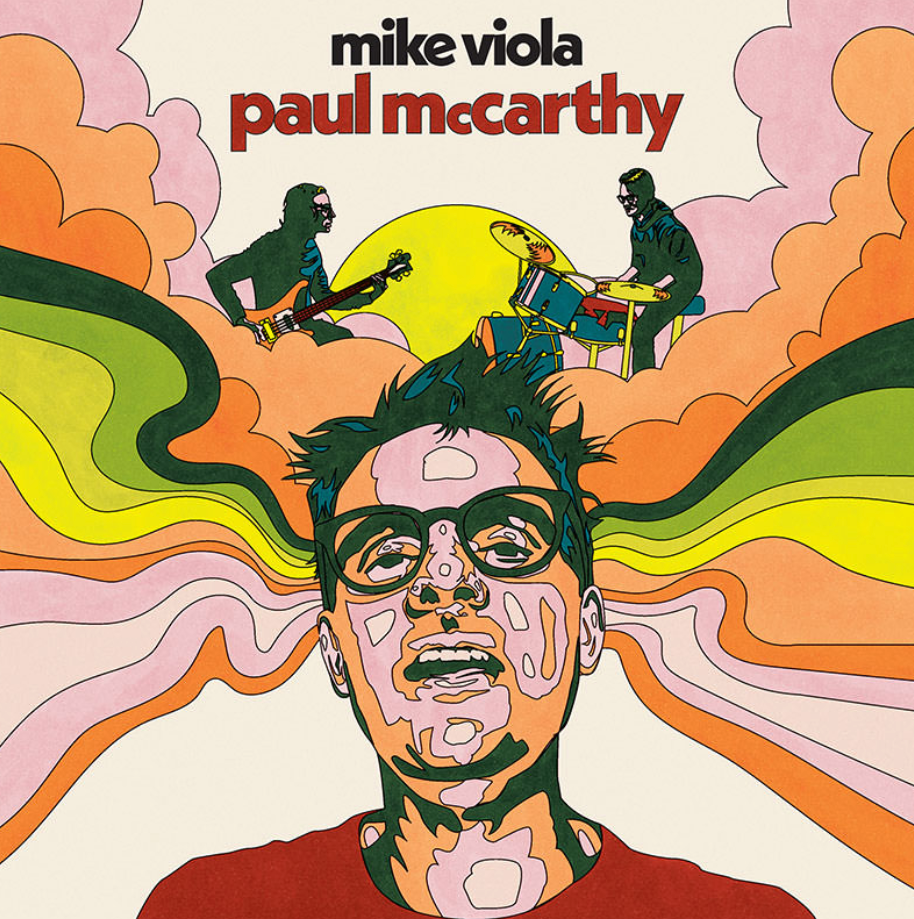
Mike Viola could easily crank out catchy hook-filled pop numbers like “That Thing You Do” and “Strawberry Blonde” for every release but he clearly prefers to challenge our expectations of what a conventional poprock song should be. His latest album Paul McCarthy is alternatively smooth and dissonant, hooky and dirge-like. Opening cut “Bill Viola” sets the scene, its spare opening electric guitar lines and isolated vocal coming to clash with a symphony-style rhythm guitar attack, all the while the song’s melodic hook struggles to surface – but it is definitely there. Next up “Water Makes Me Sick” resets everything to a more rough-edged Matthew Sweet melody and lurching pace. Then “Love Letters from a Childhood Friend” pulls back to a more recognizable Viola bittersweet commentary. And repeat throughout. As an album, Paul McCarthy repeatedly works the tension between the familiar and the jarring. “Scientist Alexis” starts with guitar reminiscent of Abbey Road-era Beatles but jams a talking blues vocal on top and a host of jazzy guitar and drum interludes throughout. “Paul McCarthy” reinvents Paul McCartney, not surprisingly, taking familiar Macca guitar sounds and vocal ticks but turns them on their head. The record has some classic Viola hooks too on tracks like “Torp,” the Private Eyes Hall and Oatesy “I Think I Thought Forever Proof,” and the Macca stomper “You Put the Light Back in My Face.” There’s even some gentle psychedelia to wrap things up on “2323.” You really should take the Paul McCarthy challenge. But remember, it’s more like Glenlivet than Pepsi or Coke.
This quartet of should-be hit records should keep you busy for a moment or two. Hit the hyperlinks to learn more about these hit machines.
Top photo courtesy Ryan Hickox Flikr page.
 Poprock Record